
Tree Pollen Season: When It Starts, Peaks and Ends
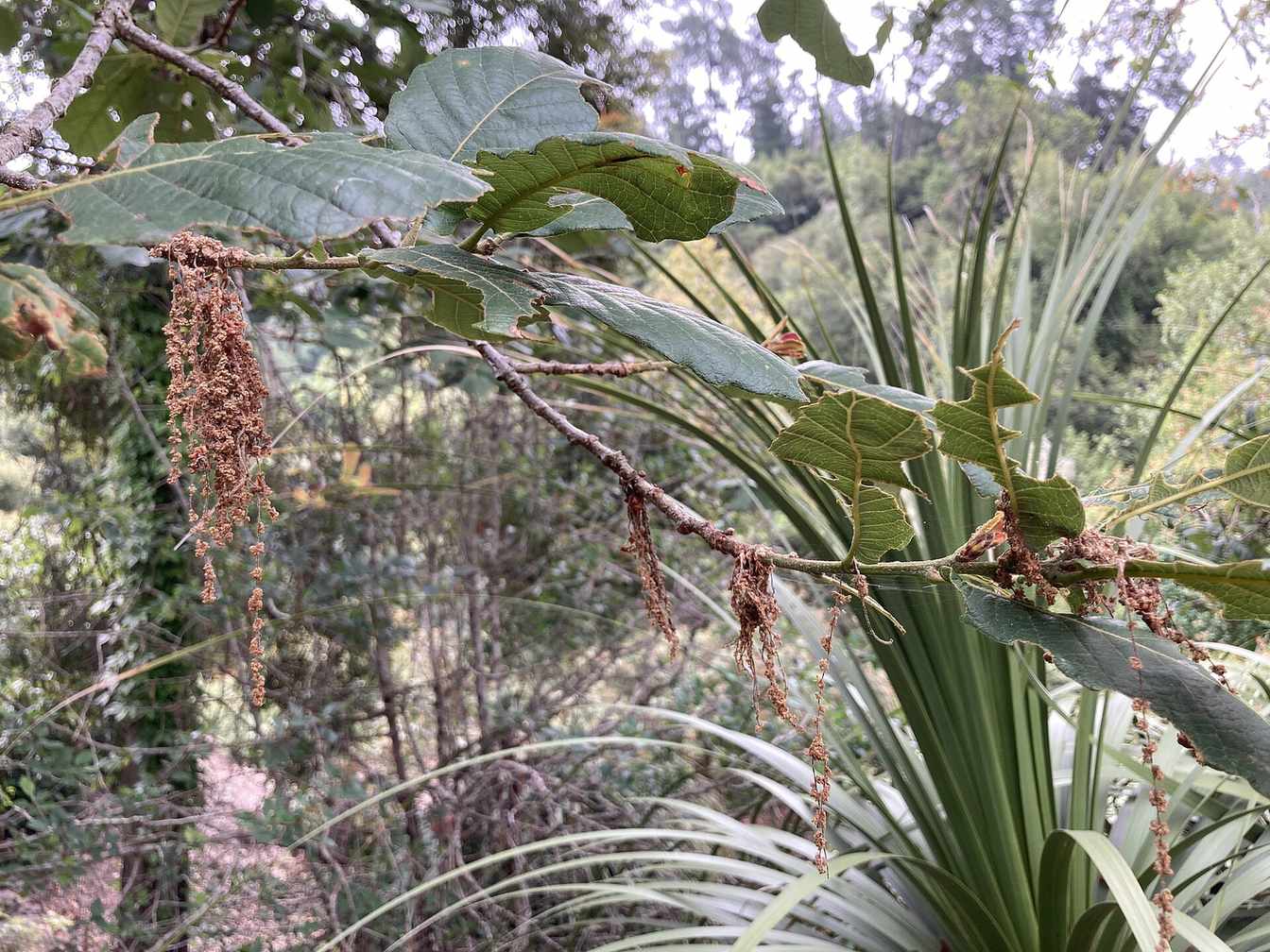
Tree pollen season is the first major pollen wave of the year, and for many people it arrives before spring feels fully underway. A few mild late-winter days can wake trees up, catkins open, and suddenly a morning walk brings itchy eyes and a run of sneezes. Because trees begin the sequence — before grasses take over in late spring and before ragweed dominates late summer — understanding this first wave helps set expectations for the whole allergy year. The broad pattern is February through May, with a peak in March and April in many regions, but latitude, elevation and the mix of trees around you shift the dates considerably.
Key takeaways
- Tree pollen season runs roughly February to May in much of the United States, peaking in March and April.
- Oak, birch and pine lead the spring wave, but they behave differently — pine's yellow film is the most visible, while oak and birch are generally considered more allergenic.
- Pollen Atlas data shows the season moving north through the daily city rankings, with southern cities prominent earlier and northern cities rising later.
- On Pollen Atlas, the Tree Index is scored 0 to 100 — Low 0 to 33, Moderate 34 to 66, and High 67 to 100 — so a sustained climb matters more than any single calendar date.
When tree pollen season starts across the United States
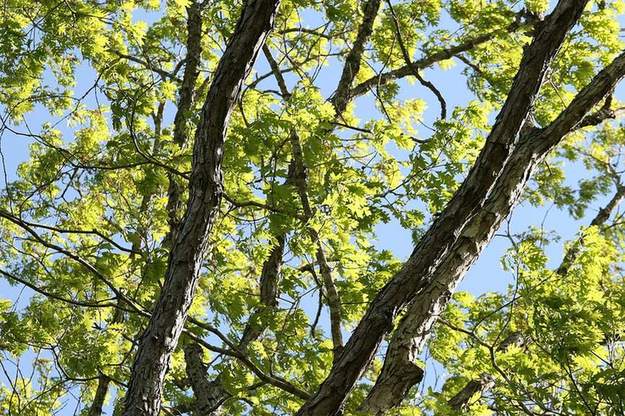
In the warmer South, tree pollen season can begin in February, sometimes earlier during a mild winter, as early species respond to lengthening days and warmer spells. Further north, the start usually slides into March, and in cooler or higher places it may not build until April. There is no single national opening day. A street planted with early-flowering trees can be releasing pollen while a sheltered neighbourhood a few miles away, with different species and colder ground, is still quiet.
Regional calendars show the staggered start
Regional pollen calendars are a useful guide to that staggered start. Filterbuy regional pollen calendars (2026) and other regional pollen calendars published for 2026 describe tree pollen as the opening season of the year, running roughly February to May in much of the country. The Asthma and Allergy Foundation of America pollen allergy overview also places tree pollen at the start of the United States pollen year, before grasses and weeds. Those calendars are best read as a shape, not a promise for a particular street: they show the order of the seasons and the usual window, while daily weather decides what happens on any given morning.
Watching the Tree Index climb
On Pollen Atlas, this wave is tracked as the Tree Index, scored from 0 to 100 — Low from 0 to 33, Moderate from 34 to 66, and High from 67 to 100. Watching the Tree Index climb out of the Low band on several days in a row is a stronger sign that the season has started near you than any fixed date on a calendar. A single warm afternoon can produce a brief rise, but a sustained climb means many trees are now contributing at once.
| Region | Typical start | Typical peak |
|---|---|---|
| Warmer South | February, sometimes earlier in a mild winter | March to April |
| Georgia, including Atlanta | Early in the national sequence | April is the highest month, with the oak peak from mid-March to mid-April |
| Further north | March | March to April |
| Cooler or higher places | April | Later within the February to May season |
When does tree pollen peak?
The question people ask most in spring — when does tree pollen peak? — usually points to March and April. That is when the largest number of common wind-pollinated trees are flowering at the same time, days are warm enough for regular release, and dry breezes can spread grains well beyond the trees that produced them.
Why the peak is local, not national
Regional calendars illustrate how local that peak can be. A Georgia calendar cited in regional pollen calendar sources for 2026 puts April as the highest month for tree pollen in Georgia, with the Atlanta oak peak described as running from mid-March to mid-April. That does not mean every Georgia city peaks on the same day, and it is not a Pollen Atlas measurement for today. It does show why someone in Atlanta may feel the season most strongly weeks before someone in a cooler state, and why checking a local tree pollen count matters more than memorising a national peak date.
Weather can sharpen or soften the peak. Warm, dry and windy conditions favour release and travel. The American Academy of Allergy, Asthma & Immunology pollen glossary explains how wind and humidity affect how pollen moves and settles. Cool rain can pause release and wash some grains from the air, although a wet spell followed by warmth can also encourage a strong burst as trees catch up. The peak is therefore better thought of as a stretch of higher-risk weeks than as one dramatic day.
The trees behind tree pollen season: oak, birch and pine
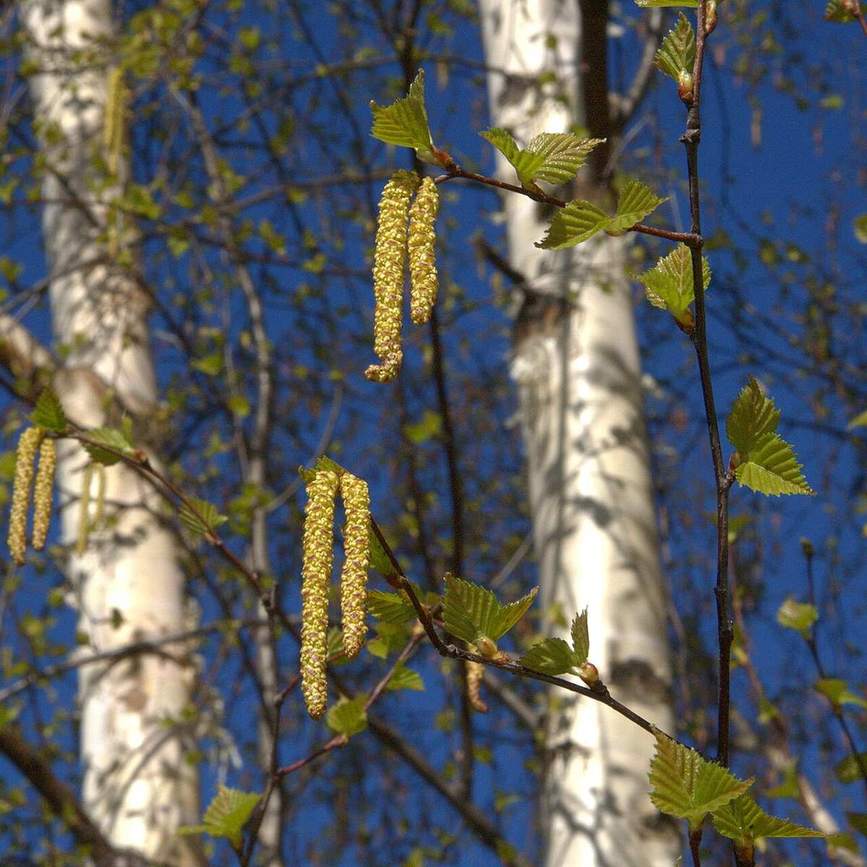
Three names come up again and again in spring, and they do not behave in quite the same way.
Oak and birch: the potent spring pollens
Oak is one of the most important spring pollen trees across the eastern and central United States. Oaks produce catkins that release large amounts of light pollen, and because oaks are common in yards, parks and woodland edges, their combined output can dominate a city's Tree Index during their flowering window. The Atlanta example above fits that pattern, with oak given a defined mid-spring peak in regional calendar sources.
Birch is especially notable in northern and cooler regions, where it is planted as an ornamental tree and also grows in natural stands. Birch pollen is widely discussed by allergy clinics as a potent spring allergen, and its season tends to be more concentrated than the broader oak window. Where birches are common, a short period can feel intense even if the overall season is not especially long.
Pine: the most visible tree pollen
Pine is the most visible of the three. In parts of the Southeast, pine pollen coats cars, pavements and outdoor furniture with a yellow-green film in spring. That visible dust proves pines release a great deal of pollen, but visibility alone does not tell the whole allergy story. Pine grains are larger and heavier than many other tree pollens, so they do not stay airborne in the same way, and pine is generally considered less allergenic than oak or birch. The yellow film is a useful sign that tree season is active, not proof that pine is the main cause of every symptom that week.
Other trees add local colour to the season, including maple, elm, ash, cedar relatives and mulberry in different regions. The mix matters. Two cities at the same latitude can have different peaks simply because their street trees, parks and surrounding woodland are different.
How tree pollen season differs by city and region
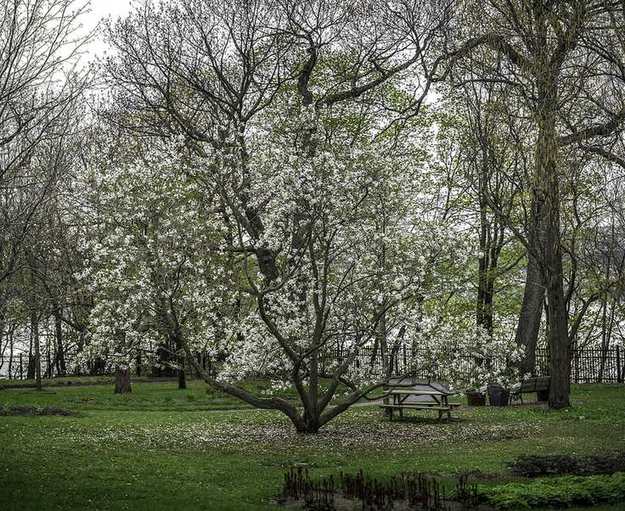
Start with the Southeast, where spring often arrives early and the tree mix is rich. Readers can follow the Atlanta, Georgia pollen page for a city where regional calendars highlight an oak-led peak, the Charlotte, North Carolina pollen page for a Piedmont city with a long spring build, and the Raleigh, North Carolina pollen page for another Carolina view of the same regional season. Comparing nearby cities on the same day can show whether a high reading is a broad regional event or something more local.
Texas adds a different timing problem. Winter and early-spring tree pollen there can begin before many northern states have started at all, and the state's size means north and south do not move together. The Dallas, Texas pollen page is a helpful anchor for North Texas, where spring tree season can build quickly once warm weather settles in. A traveller moving between Dallas and Atlanta in March, for example, could step from one peak pattern into another without leaving the South.
To put any one city in context, the daily city rankings show how cities compare nationally on a given day. During March and April those rankings often tell a story of the season moving north, with southern cities prominent earlier and more northern cities rising later. That movement is one reason a national headline about peak week should never replace a local check.
Reading a tree pollen count without overreading it
A tree pollen count is a guide to exposure, not a personal prediction. If you are new to the numbers, our explainer on what a pollen count is walks through how counts and indexes are presented and why they change from day to day. On Pollen Atlas the Tree Index translates the count into the 0 to 100 scale described earlier, so a Low, Moderate or High reading can be understood at a glance before you plan a run, garden work or a day outdoors with children.
Pay attention to patterns over several days rather than reacting to one number in isolation. A Moderate reading after a week of Low days may mark the real start of your local season. A High reading on a dry, windy day deserves more caution than the same reading described for a calm, wet morning, because weather changes how much pollen stays in the air you breathe. The forecast matters here as well: a falling forecast can signal that the peak stretch is easing, while a rising one suggests giving outdoor plans a second look. The Centers for Disease Control and Prevention guide to pollen and health likewise advises checking pollen forecasts and limiting outdoor time when levels are high.
This article is general information only and is not medical advice. If spring symptoms return every year, are severe, or are hard to sort out from other causes, talking with a specialist can help clarify which pollens are relevant for you — you can find an allergist near you through the Pollen Atlas directory.
What comes after the trees
Tree season does not end with a hard stop everywhere on the same date. As May progresses, most spring trees finish flowering, the Tree Index falls more often, and grasses begin to take over, especially in late spring and early summer. Later in the year, a different plant family drives the best-known fall season, which we cover in our guide to ragweed season. Knowing which wave you are in helps you interpret the index correctly: a high reading in March points first to trees, while a similar reading in September points elsewhere.
Some overlap is normal. In warmer regions a late tree can still be releasing while early grasses start, so symptoms in May may not have a single neat source. That overlap is another reason to follow the separate Tree and Grass Indexes rather than relying only on a single combined impression of a bad day.
Frequently Asked Questions
When does tree pollen season start?
Tree pollen season starts in February in the warmer South and in March or April further north. There is no single national opening day, because latitude, elevation and local tree species shift the start.
When does tree pollen peak?
Tree pollen usually peaks in March and April, when the largest number of common wind-pollinated trees flower at the same time. In Georgia, regional calendars put April as the highest month, with Atlanta's oak peak running from mid-March to mid-April.
Which trees produce the most spring pollen?
Oak, birch and pine are the trees named most often in spring. Oak is a major producer across the eastern and central United States, birch is especially notable in northern regions, and pine produces the visible yellow film seen across parts of the Southeast.
How can I check the tree pollen count for my city?
You can check the Tree Index for your city on PollenAtlas.com, where it is scored from 0 to 100. A sustained climb out of the Low band over several days is a stronger sign that the season has started near you than any fixed calendar date.
Conclusion: tree pollen season rewards an early check
Tree pollen season is the opening act of the pollen year — roughly February to May, peaking in March and April, led in many places by oak, birch and pine, and shaped at every step by local trees and weather. Do not wait for the yellow dust or the first rough week to start paying attention. Check the pollen before it checks you — see free pollen counts and forecasts for your city and cities worldwide at PollenAtlas.com, and start with today's Tree Index before you head out.