
Riyadh, Saudi Arabia Pollen Count
Riyadh, Saudi Arabia · Last updated Friday, November 6, 2026
This page shows the most recent reading available for Riyadh — from Friday, November 6, 2026 (1 day ago) — not today's reading.
Pollen Overview
Today's overall pollen level and the dominant type (trees, weeds, grass, or mold).
Total Pollen Index
The combined pollen level across all types (0–100).
Riyadh, Saudi Arabia
Weeds Index
How active weeds pollen is today (0–100).
Riyadh, Saudi Arabia
Pollen Types
Pick a pollen subtype to update the species forecast
5-Day Riyadh Overall Pollen Forecast
Bars are colored by severity (Low/Moderate/High).
Pollen count Riyadh residents check each morning
The Riyadh pollen count today is 24 (Low). The main driver is Ragweed, with weed pollen at 27 today. That total sits on a narrow base: weed pollen is 27 while tree pollen is just 19 and grass pollen 9. Plant-by-plant detail for Riyadh, Saudi Arabia follows, along with the outlook for the days ahead. Pollen Atlas updated this count on Friday, November 6, 2026.
A Low band on the Pollen Atlas index means the Total Pollen Index has stayed in the lower part of the 0–100 scale. Readings in this band are built from low individual category values rather than from one large spike, and the category split above matters more than the headline number: a low total can still contain one category, such as weed pollen or mold, reading noticeably higher than the rest, which is why the split is printed on every Riyadh page.
Fall is ragweed season across most of the United States: ragweed plants release pollen from late summer into autumn, and weed pollen is typically the last major outdoor pollen category to fade as the weather cools. That pattern is why an autumn total is so often weed-led even when the headline number is low — tree and grass pollen have usually receded by then, leaving weed pollen, and on damp days mold, to make up most of what the index records.
To see whether today’s pollen level holds, check the 5-day Riyadh pollen forecast below — it is currently holding, with Friday the highest day in the window.
This is the pollen count Riyadh residents check each morning, built from the day’s tree, grass, weed and mold readings.
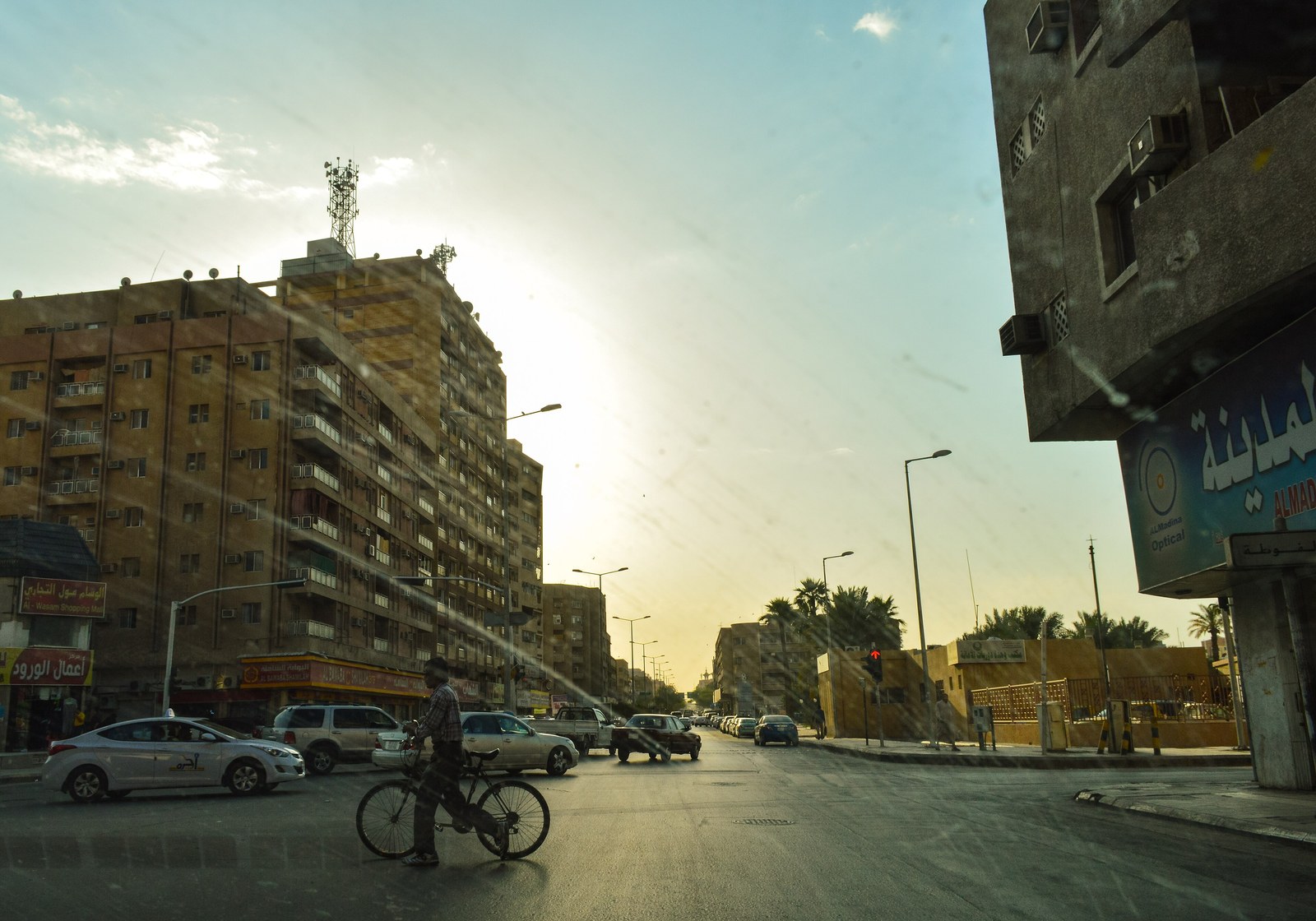
What is the Riyadh pollen count today?
The Riyadh pollen count today is 24 out of 100 (Low) on the Pollen Atlas Total Pollen Index, driven mainly by Ragweed.
Short answer for anyone searching pollen count today Riyadh: this page is updated every morning with the day’s modelled reading.
Riyadh allergies today
Riyadh allergies today are set by the same reading as the pollen count above: the Total Pollen Index is 24 (Low), driven mainly by Ragweed. When people ask about Riyadh allergies, this is the number that answers them — one daily index built from today’s tree, grass, weed and mold readings for Riyadh.
Allergies in Riyadh follow the Saudi Arabia calendar set out below — the chapters, the plants behind them, and the 5-day forecast on this page show whether today is typical for the season or an exception to it. If you are checking allergies today in Riyadh before heading outdoors, the split at the top of this page is the part to read: it shows which pollen is doing the work today, not just how high the total sits.
Read the five-day table on this page as the Riyadh allergy forecast: today reads 24 (Low), and the day-by-day outlook shows whether Riyadh allergies are set to ease or build across the week — the days to plan outdoor time around are the ones where the index steps down, not just today.
In practice, the allergy count Riyadh today records is this same combined reading — tree, grass, weed and mold in one index.
The Riyadh allergy count today is 24 (Low) — the same Total Pollen Index as the pollen count above, in one combined reading.
Pollen count today Riyadh: the 5-day forecast
| Day | Total Pollen Index | Band |
|---|---|---|
| Friday, November 6 | 24 | Low |
| Saturday, November 7 | 24 | Low |
| Sunday, November 8 | 23 | Low |
| Monday, November 9 | 23 | Low |
| Tuesday, November 10 | 16 | Low |
Pollen Atlas forecasts Riyadh’s pollen count to peak on Friday at 24 (Low) over the next 5 days.
Pollen by type in Riyadh
What is driving Riyadh’s pollen today
The shape of today’s 24 (Low) is set by weed pollen at 27 (Low on its own scale) — about 49% of the four category readings added together, 8 points clear of the next category, tree pollen at 19. A weed-led total is the classic late-year shape: tree and grass pollen have usually receded, leaving weed pollen — and on damp days mold — to make up most of what the index records. Weed pollen leading in November is a modelled reading, reported as modelled — no regional calendar is asserted for Saudi Arabia, and the modelled value outranks any general seasonal expectation.
Plant-level detail is not in today’s feed for Riyadh, so the drivers have to be read from the category split above — it shows how much of today’s total each category is actually carrying, and plant detail returns here automatically on any day the feed includes it.
Across the five-day window the Total Pollen Index runs from 16 to 24, never changing band. Today’s 24 sits 2 points above the window’s average of 22 — a moving window, worth reading day by day rather than from the average.
Plants affecting Riyadh now
Detailed plant-by-plant readings for Riyadh were not returned in today\u2019s source data, so this section summarises the pollen types the index above is built from instead of listing individual plants.
Tree pollen is one of the categories with a non-zero reading today, at 19 (Low).
Grass pollen is one of the categories with a non-zero reading today, at 9 (Low).
Weed pollen is one of the categories with a non-zero reading today, at 27 (Low).
In the Global pattern, the plants that shape this city’s year vary with its local climate and vegetation, and no single regional calendar is published for this area — named here as regional context only, not as today\u2019s measurements.
Plant detail returns here automatically on any day the source data includes it.
Every pollen type, with photos and seasons: the pollen directory.
Riyadh pollen through the year
Chapter by chapter, the Riyadh pollen year runs like this:
- Tree pollen seasons vary with local climate and vegetation, so this page reports the measured readings first and treats any calendar as background only.
- Grass pollen seasons vary with local climate and vegetation, and the measured value outranks any general seasonal expectation.
- Weed pollen seasons vary with local climate and vegetation, and no regional calendar is asserted for this area.
No Saudi Arabia allergy season guide is published yet, so this page does not single out signature pollens for Riyadh — the calendar above is the Global regional pattern, and the plant detail on this page names what today’s feed actually records.
November in Riyadh is reported from its modelled readings, not from a regional calendar — no regional calendar is asserted for Saudi Arabia, so the calendar alone explains little today, and the modelled split above carries the story. No Saudi Arabia allergy season guide is published yet — this calendar follows the Global regional pattern. See Riyadh pollen count rankings and Riyadh on the pollen heatmap.
How to read this index
Pollen Atlas reports the Riyadh pollen count on a Total Pollen Index from 0 to 100, built from separate tree, grass and weed readings. The total is a summary, not an average of the three: a single strong category can lift it, and three quiet categories can hold it down even in a month when Riyadh, Saudi Arabia pollen is usually more active. Index values are a modelled pollen risk index computed by Pollen Atlas from open weather, vegetation and phenology data, calibrated against CDC/NAB season data, with plant detail by the Google Pollen API. The index is a modelled 0–100 scale, not a measured count, and figures update through the day, so a morning and an evening visit to this page can legitimately show different numbers.
Riyadh in today’s national picture
At 24 (Low), Riyadh ranks joint 37388th of the 90896 cities Pollen Atlas tracks today — in the middle of the national table. The highest reading in the country today is Beja, Portugal at 52, and the lowest is Los Ángeles de San Rafael, Spain at 5. The whole table spans 47 points today — a wide-open day, when the top and bottom of the table are effectively in different seasons.
Around Riyadh: Al Kharj, Saudi Arabia (86 km away) reads 26 (Low); Al Hufūf, Saudi Arabia (298 km away) reads 23 (Low); Unaizah, Saudi Arabia (315 km away) reads 14 (Low). Riyadh reads 2 points lower than its nearest tracked neighbour today. Across Saudi Arabia’s 20 tracked cities, today runs from 14 in Hafar Al-Batin to 31 in Şabyā.
Pollen totals are population numbers; symptoms are personal. The same reading can leave one Riyadh resident untouched and floor another, depending on which pollens they are sensitised to. If this pattern finds you every season, allergists in Riyadh, Saudi Arabia can test whether tree, grass, weed or mold is the category that matters for you — the four readings at the top of this page are the starting point for that conversation.
Riyadh in its local area
Riyadh is in Riyadh Region, Saudi Arabia. Its population is 4,205,961 (GeoNames).
Across Saudi Arabia’s 20 tracked cities, Riyadh ranks joint 7th today.
Like every Pollen Atlas city page, the Riyadh, Saudi Arabia pollen count is refreshed each morning.
Nearby cities
- Al Kharj pollen count (86 km away)
- Al Hufūf pollen count (298 km away)
- Unaizah pollen count (315 km away)
- Buraydah pollen count (330 km away)
- Al Jubayl pollen count (389 km away)
- Dammam pollen count (391 km away)
From Pollen Atlas News
See how Riyadh ranks in today's pollen count rankings — the worst cities for allergies today
Pollen indexes: a modelled pollen risk index computed by Pollen Atlas from open weather, vegetation and phenology data, calibrated against CDC/NAB season data. Plant detail: Google Pollen API. Index values are modelled, not measured counts. Sources: CDC/NAB; USA-NPN; GBIF (CC BY); ESA WorldCover (CC BY 4.0).