
Phoenix Pollen Count: Why Arizona Desert Allergies Are Not What You Expect
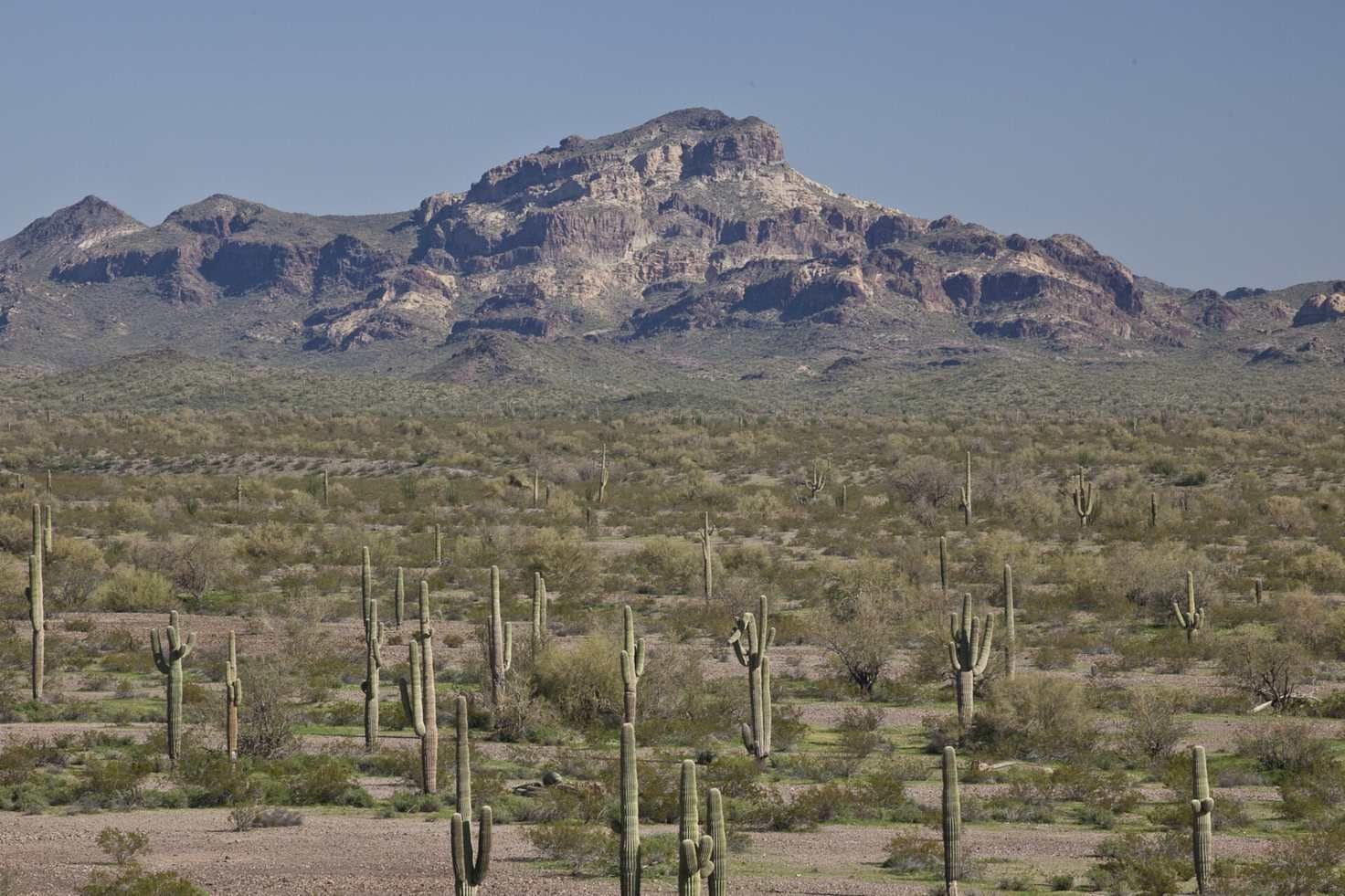
If you moved to the desert expecting the phoenix pollen count to be near zero, Phoenix, Arizona probably corrected that idea within your first spring.
Key takeaways
- Phoenix, Arizona has a substantial pollen season driven by both desert plants and irrigated city planting.
- Mulberry and olive trees, Bermuda grass and ragweed are among the main drivers, alongside native mesquite, palo verde and other Sonoran species.
- On Pollen Atlas, Phoenix pollen is tracked on a 0 to 100 scale — Low 0 to 33, Moderate 34 to 66, and High 67 to 100 — separately for trees, grass and weeds.
- No single Phoenix count stands for the city, because Phoenix pollen is a daily measurement, not a fixed reputation.
Why a desert city has pollen at all
The short answer is that a desert is not empty, and a desert city is not pure desert. Native Sonoran plants flower, and many of them are wind-pollinated, which means their pollen is built to travel on air rather than on insects. Add a large city — with street trees, gardens, golf courses, parks, irrigated lawns and plants imported from wetter climates — and you have layered a second, human-made pollen landscape on top of the natural one.
How irrigation changes the desert picture
Water changes everything. In open desert, plant growth is limited by rainfall. In Phoenix neighbourhoods, irrigation removes that limit for the plants people choose to grow. A watered lawn grass, a fast-growing shade tree and a hedge that would struggle outside the city can thrive on a residential street, flower on schedule, and release pollen into the same air as the native plants beyond the block. Desert allergies, in other words, are often not about the desert alone. They are about the meeting point between desert plants and city planting.
How desert weather moves pollen
Weather then decides how far that pollen goes. Dry, warm and breezy conditions help grains stay airborne and spread, while a rainy period can knock pollen down briefly before dry conditions return.
What drives the Phoenix pollen count through the year
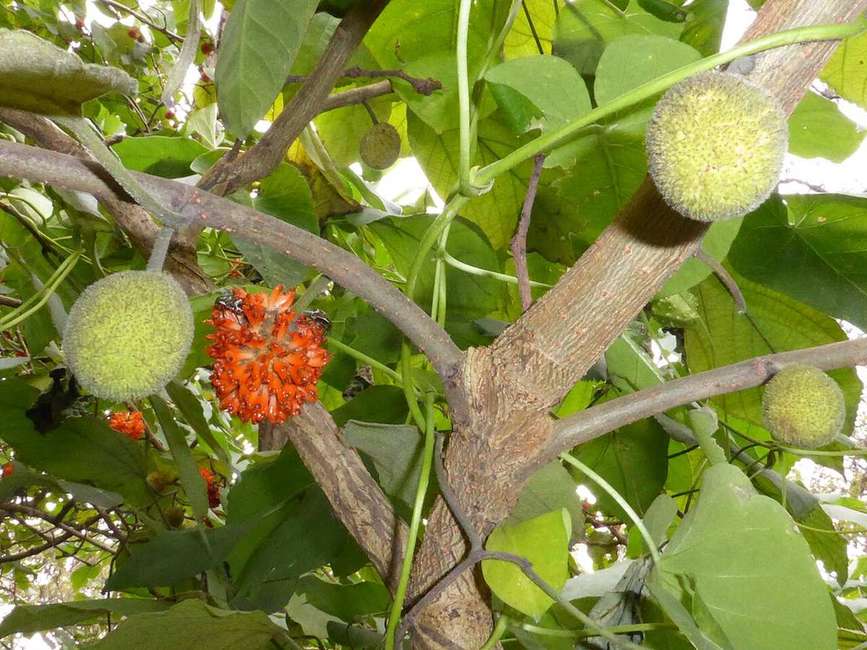
Start with trees in the cooler-to-warm part of the year. Mulberry is one of the names most associated with Arizona city pollen: fast-growing, widely planted for shade in past decades, and a heavy pollen producer when male trees flower. Olive is another imported tree that became a common landscape choice in the Southwest and is known for strongly allergenic pollen where it is present. Reporting in the Tucson Citizen in 2009 summarised how Pima County, elsewhere in Arizona, had tried to discourage new planting of mulberry, fruiting olives and seeding Bermuda grass — a sign of how seriously Arizona communities have taken these particular plants as pollen sources.
Native and desert-adapted trees
Native and desert-adapted trees add their own share. Mesquite, palo verde and other Sonoran species flower in spring, and junipers in the wider region can release pollen in the cooler months. Not every showy desert flower is a major airborne problem — plants pollinated by bees and other insects tend to carry heavier grains that do not travel as far on wind — but a city ringed by desert still receives whatever the surrounding landscape releases on a breezy day.
Bermuda grass through the warm season
Grass follows, and in Phoenix that story is dominated by warmth. Bermuda grass is a warm-season grass used on lawns, sports fields and golf courses across the hot parts of the United States, and it can pollinate across a long warm stretch rather than in a short spring burst. On Pollen Atlas, grass is tracked on a 0 to 100 scale — Low from 0 to 33, Moderate from 34 to 66, and High from 67 to 100 — and in a desert city the Grass Index is worth watching well beyond the weeks people in cooler states think of as grass season. If you want the basic framework behind any of these numbers, our guide to what a pollen count is and how it is measured explains counts, indexes and dominant allergens in plain terms.
Ragweed and desert weeds later in the year
Weeds close out the year. Ragweed is present in Arizona, alongside other desert weeds such as pigweed and tumbleweed-type plants that thrive in disturbed, dry ground — vacant lots, roadsides and field edges are classic habitat.
| Part of the year | Main drivers in Phoenix | Notes from this guide |
|---|---|---|
| Cooler to warm months | Mulberry, olive, native mesquite and palo verde, and junipers in the wider region in cooler months | Mulberry is a heavy producer when male trees flower; olive is known for strongly allergenic pollen where present |
| Warm season | Bermuda grass | Can pollinate across a long warm stretch rather than a short spring burst |
| Later in the year | Ragweed, pigweed and tumbleweed-type desert weeds | In mild desert winters, the hard frost that ends ragweed elsewhere may be late or light. Their season generally builds later in the year, which is why a Phoenix reader should not assume spring is the only pollen problem. Our overview of ragweed season, its peak and its end at first frost covers that plant in depth; in mild desert winters, the hard frost that ends a ragweed season elsewhere may be late or light, so the local forecast matters more than a national calendar. |
Dust, wind and the desert difference
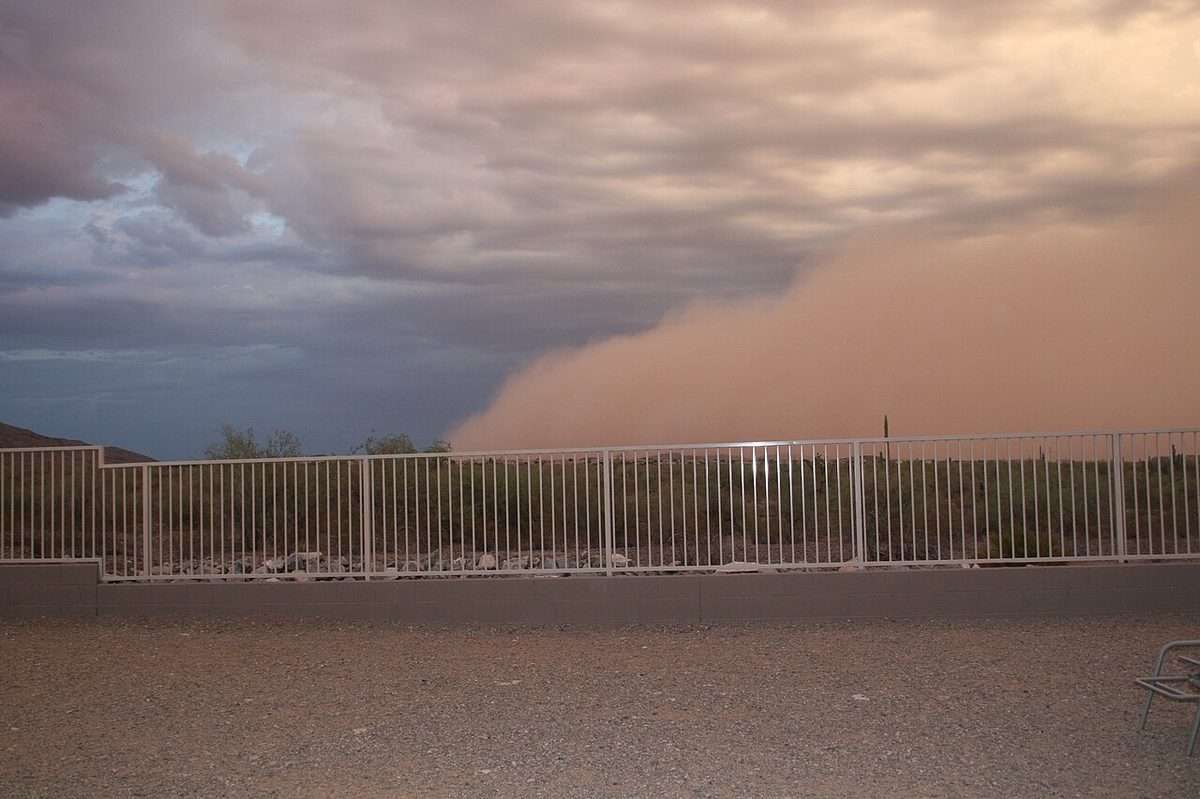
Phoenix adds a factor that greener cities know less well: dust. Wind across dry ground lifts desert dust, and on a gusty day residents may be dealing with airborne particles that irritate eyes and airways at the same time as pollen, even though dust is not itself a pollen. Separating those two experiences from a number alone is difficult, which is one reason a daily total should be read alongside its dominant allergen rather than in isolation.
Geography shapes the comparison with nearby cities, too. Phoenix does not stand alone in the Valley. Compare its reading with Mesa, Arizona's pollen count and forecast to see how conditions move across the metro area on the same day, and with Tucson, Arizona's pollen count and forecast for a second Sonoran Desert city at higher elevation to the southeast. The Pollen Atlas heatmap puts that picture on a map, so you can see whether a rough day is a Valley-wide event or something narrower. Official local context is also available from Maricopa County, the county Phoenix sits in, whose departments cover environmental and public-health services for the area.
A note on honesty about numbers: this article does not quote a specific Phoenix count or ranking, because a single quoted figure would be out of date almost immediately and a ranking invented for a story would help nobody. Phoenix pollen is a daily measurement, not a fixed reputation. Use the city page for today's number.
Landscaping choices and the plants around your home
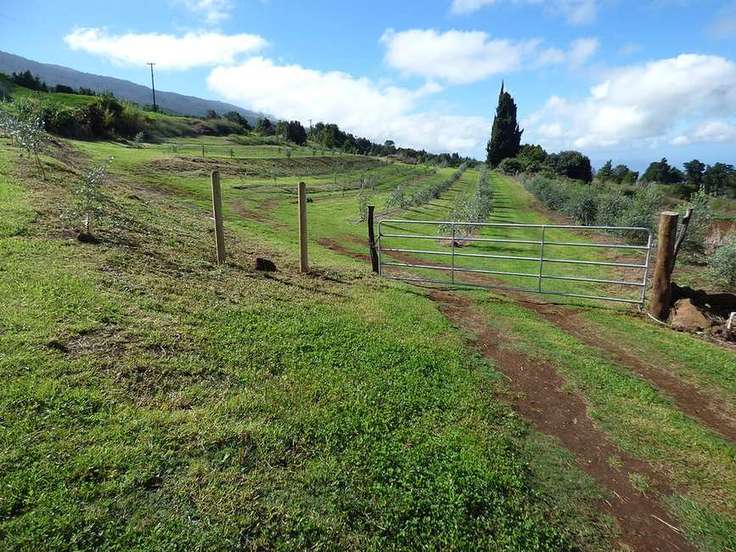
Because so much of Phoenix pollen comes from planted landscapes, the plants closest to you can matter out of proportion to the regional picture. The University of Arizona Cooperative Extension is a useful Arizona source for desert landscaping and plant-selection guidance, and its resources are a sensible starting point if you are choosing trees or ground cover for a Phoenix yard and want to factor pollen into that choice alongside water use and shade.
A few general principles follow from the plants already named. Fruitless or low-pollen varieties exist for some popular landscape trees precisely because the fruiting or male forms release so much pollen. And a yard is only part of the exposure: street trees, a neighbour's hedge, a school field and the desert at the end of the road all feed the same air. Landscaping choices can change your immediate surroundings; they do not switch off a city's season, which is why tracking remains necessary even in a carefully planted neighbourhood.
How to track Phoenix pollen through an Arizona pollen season
Check in the morning, and check the type, not just the total. On Pollen Atlas, the Phoenix page reports tree, grass and weed indexes on that same 0 to 100 scale, a total, and a dominant allergen, with a forecast so you can see whether a High day — 67 to 100 — is a one-off or the start of a run. A tree-driven spring day, a Bermuda-grass summer stretch and a ragweed-driven fall day may show similar totals and mean quite different things depending on which pollen affects you most.
Watch the sequence across the week, especially around weather changes. A breezy spell in dry conditions can keep levels up; a rare rainy period may bring a short break that does not last once the ground dries. Monsoon-season storms later in the summer change the picture again, mixing wind, dust and moisture in ways a spring calendar never predicts. That variability, more than any single peak, is the real character of an Arizona pollen season: long, layered, and capable of surprising people who expected the desert to be an escape.
This article is general information only and is not medical advice. For plain-language background on allergies in general, the Asthma and Allergy Foundation of America publishes education resources for patients and families. If desert allergies are a recurring, disruptive pattern for you year after year, you can find an allergist near you through the Pollen Atlas directory and discuss your own history with a professional.
Frequently Asked Questions
Does Phoenix have pollen even though it is a desert city?
Yes, Phoenix has pollen because a desert city is not pure desert. Native Sonoran plants flower, and irrigated street trees, lawns, gardens and parks add a second, human-made pollen landscape.
Which plants drive the Phoenix pollen count?
Mulberry, olive and Bermuda grass are among the main planted drivers, alongside native mesquite and palo verde. Ragweed and other desert weeds such as pigweed add a later-season wave.
When is Arizona pollen season in Phoenix?
Arizona pollen season in Phoenix is long and layered, rather than a single spring peak. Trees lead in the cooler-to-warm part of the year, Bermuda grass follows through warmth, and weeds build later in the year.
How can I check the Phoenix pollen count today?
You can check today's Phoenix, Arizona pollen count, dominant allergen and forecast on PollenAtlas.com.
Conclusion: the Phoenix pollen count rewards a daily check
The phoenix pollen count is not a desert paradox once you see the ingredients: Sonoran Desert plants outside the city, mulberry, olive and Bermuda grass inside it, ragweed and desert weeds later in the year, and dry wind to move all of it. No single number in an article can capture that for today, and none has been invented here. Before your next hike, round of golf or morning run, grab a free look at today's count and the days ahead — PollenAtlas.com offers free pollen counts and forecasts for Phoenix and for cities worldwide.