
Pet Dander Allergy: Living With the Allergen That Stays Home

Pet dander allergy has a cruel feature that pollen does not: it does not leave when the source leaves. A cat can move out in spring and a sensitive visitor can still react in that living room months later, because the proteins that trigger pet dander allergy are small, sticky, and built to persist in carpets, upholstery, and dust. For millions of households, though, the pet is not leaving at all — it is family. So pet dander allergy becomes less a problem to eliminate than an environment to understand: what dander actually is, why cats and dogs differ, where it collects, and why it travels to places no pet has ever been.
Key takeaways
- Pet dander allergy is triggered by proteins from an animal's skin glands, saliva, and urine — for cats the major allergen is Fel d 1, and for dogs the best-known is Can f 1.
- Dander is unusually persistent: published indoor-allergen research has found cat allergen levels can take many months of thorough cleaning to fall after a cat is removed.
- There is no truly hypoallergenic cat or dog breed, according to the AAAAI, because the allergens come from skin glands and saliva, not from fur length.
- Pollen Atlas data shows the outdoor half of a city's allergy picture rarely peaks at the same time as indoor exposure, so the two halves are worth reading separately.
"Dander" means the tiny skin flakes animals shed continuously, but skin is only the vehicle. The allergens themselves are proteins produced in an animal's skin glands, saliva, and — for some species — urine. When a cat grooms, it spreads saliva proteins over its coat; those proteins then dry on the flakes and hairs that shed into the home.
Fel d 1 and Can f 1: the proteins that matter
For cats, the major allergen is a protein called Fel d 1, produced mainly in the cat's sebaceous and salivary glands. For dogs, the best-known allergen is Can f 1, also found in dander and saliva. The U.S. National Institute of Environmental Health Sciences (NIEHS) describes pet dander as one of the most common indoor allergen sources in American homes — unsurprising, given how many households keep indoor animals and how long their proteins persist.
Why dander travels so far
Two properties make pet allergens unusually mobile. First, many of the particles are very small and light, so unlike heavier dust-mite particles they can stay airborne for long periods, especially cat allergen. Second, they are sticky: they cling to clothing, hair, and soft furnishings, which is how they are carried into schools, offices, public transport, and homes with no animals at all. Studies of classrooms and pet-free homes have repeatedly found measurable cat and dog allergen that arrived on people's clothes.
So a pet dander allergy can be triggered in a home that has never had a pet — a genuinely counterintuitive fact that explains a lot of confusing symptom patterns.
Pet Dander Allergy and the Cat–Dog Difference

Cat and dog allergens are related problems, not identical ones. Cat allergen is generally considered the more persistent of the two: Fel d 1 particles are small, remain airborne well, and published indoor-allergen research has found cat allergen levels in a home can take many months of thorough cleaning to fall after a cat is removed — and can linger in a mattress or carpet reservoir far longer without it.
Dog allergen tends to concentrate where the dog spends time and is somewhat less prone to the long airborne persistence of cat allergen, but "somewhat less" is a difference of degree, not kind. Both allergens accumulate in soft furnishings, both transfer on clothing, and people can be allergic to one species and not the other — or to both.
Is there a truly hypoallergenic breed?
One widespread belief deserves careful handling: the idea of a completely hypoallergenic breed. The American Academy of Allergy, Asthma & Immunology (AAAAI) states that there is no truly hypoallergenic cat or dog breed, because the allergens come from skin glands and saliva, not from fur length. Individual animals vary in how much allergen they produce, and some people find certain animals easier to live with — but a breed label is not a guarantee, which is why the AAAAI suggests spending substantial time with a specific animal before committing, rather than relying on the label.
| Cat vs. dog allergen | Cats | Dogs |
|---|---|---|
| Best-known allergen | Fel d 1, from sebaceous and salivary glands | Can f 1, found in dander and saliva |
| Airborne behaviour | Small particles that remain airborne well | Concentrates more where the dog spends time |
| Persistence after the animal leaves | Can take many months of thorough cleaning to fall | Persistent in soft furnishings, generally to a lesser degree |
Where Dander Builds Up Indoors
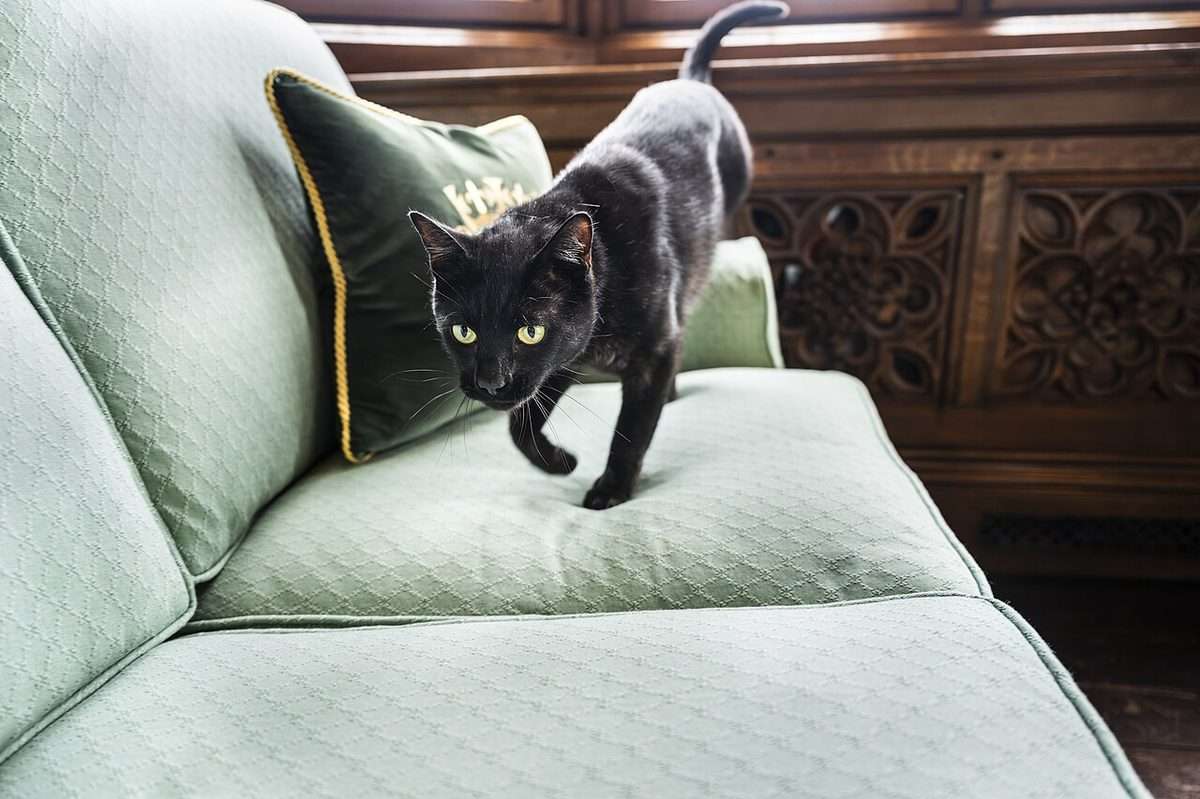
Think in reservoirs. Carpets, rugs, sofas, cushions, curtains, and bedding collect dander continuously and release it when disturbed — sitting down, making a bed, vacuuming without a good filter. The EPA reference guide for indoor air quality in schools likewise lists pet dander among the biological contaminants that accumulate where dust collects — in draperies, bedding, and carpet. The AAAAI's guidance on managing indoor allergen culprits covers pet allergens alongside dust mites for the same reason: they share the same reservoirs. Bedrooms deserve special attention because exposure there lasts all night, which is why the pet's access to the bed and the bedroom is the single most-discussed variable in published guidance on living with a pet you react to.
Hard surfaces vs. soft furnishings
Hard floors and leather or wipeable surfaces hold far less. Homes in dense cities — a small apartment in New York or Los Angeles — concentrate the same animal into fewer rooms, while a larger home in Chicago or Denver spreads it out; the allergen physics are identical, the concentrations differ. Comparing a city's outdoor picture on the city rankings with a rough indoor week is a useful habit, because the two halves of exposure rarely peak together.
Dander also overlaps with the other indoor allergens in this series. A carpeted bedroom with a cat, warm humid bedding, and settled dust can stack dander on top of dust mite allergy triggers — one reason identifying which trigger actually matters for a given person usually takes testing rather than guesswork.
The following is widely published general information, not medical advice, and it does not replace individual guidance from a clinician:
- The bedroom boundary matters most. Keeping the pet out of the bedroom and off the bed cuts the longest single block of daily exposure.
- Hard surfaces and washable fabrics hold less. Reducing carpet and heavy upholstery in main living areas reduces the reservoirs that store allergen.
- Air cleaning plays a supporting role. Guidance from allergy organisations commonly describes HEPA filtration as helpful for airborne particles in a room, while noting it does nothing for allergen already settled in fabrics.
- It also travels with you. Changing clothes and washing hands after close contact reduces what you carry into beds, cars, and other people's homes.
If you are trying to work out whether a pet is actually your trigger — as opposed to pollen, mold, or dust mites — that is a testing question. You can find an allergist near you through Pollen Atlas and filter by specialty and insurance. And if you want the outdoor half of the picture explained as carefully as the indoor half, start with our pillar guide, What Is a Pollen Count?
Frequently Asked Questions
What is pet dander?
Pet dander is the tiny skin flakes animals shed continuously, carrying allergen proteins from skin glands and saliva. The flakes and the proteins on them settle into carpets, upholstery, bedding, and household dust.
How long does pet dander last after a pet leaves?
Pet allergen can linger for months after an animal leaves a home. Published research has found cat allergen levels can take many months of thorough cleaning to fall, and can persist far longer in mattress or carpet reservoirs without it.
Are any cat or dog breeds truly hypoallergenic?
No. The AAAAI states there is no truly hypoallergenic cat or dog breed, because the allergens come from skin glands and saliva rather than fur length, though individual animals vary in how much allergen they produce.
Can pet dander trigger symptoms in a home with no pet?
Yes. Dander particles are small, light, and sticky, so they are carried on clothing and hair into schools, offices, and pet-free homes, where measurable cat and dog allergen has repeatedly been found.
The Bottom Line on Pet Dander Allergy
Pet dander allergy is an exposure defined by persistence: proteins that stay airborne, stick to everything soft, hitchhike on clothing, and outlast the animal itself by months. Cats and dogs are not interchangeable, no breed is truly allergen-free, and the bedroom is where the exposure concentrates. Understand the reservoirs and the travel routes, and the pattern stops being mysterious.
Then check the other half of your air — free pollen counts and forecasts for your city, worldwide, at PollenAtlas.com.