
English Plantain Pollen: The Marathon Weed in Every Lawn
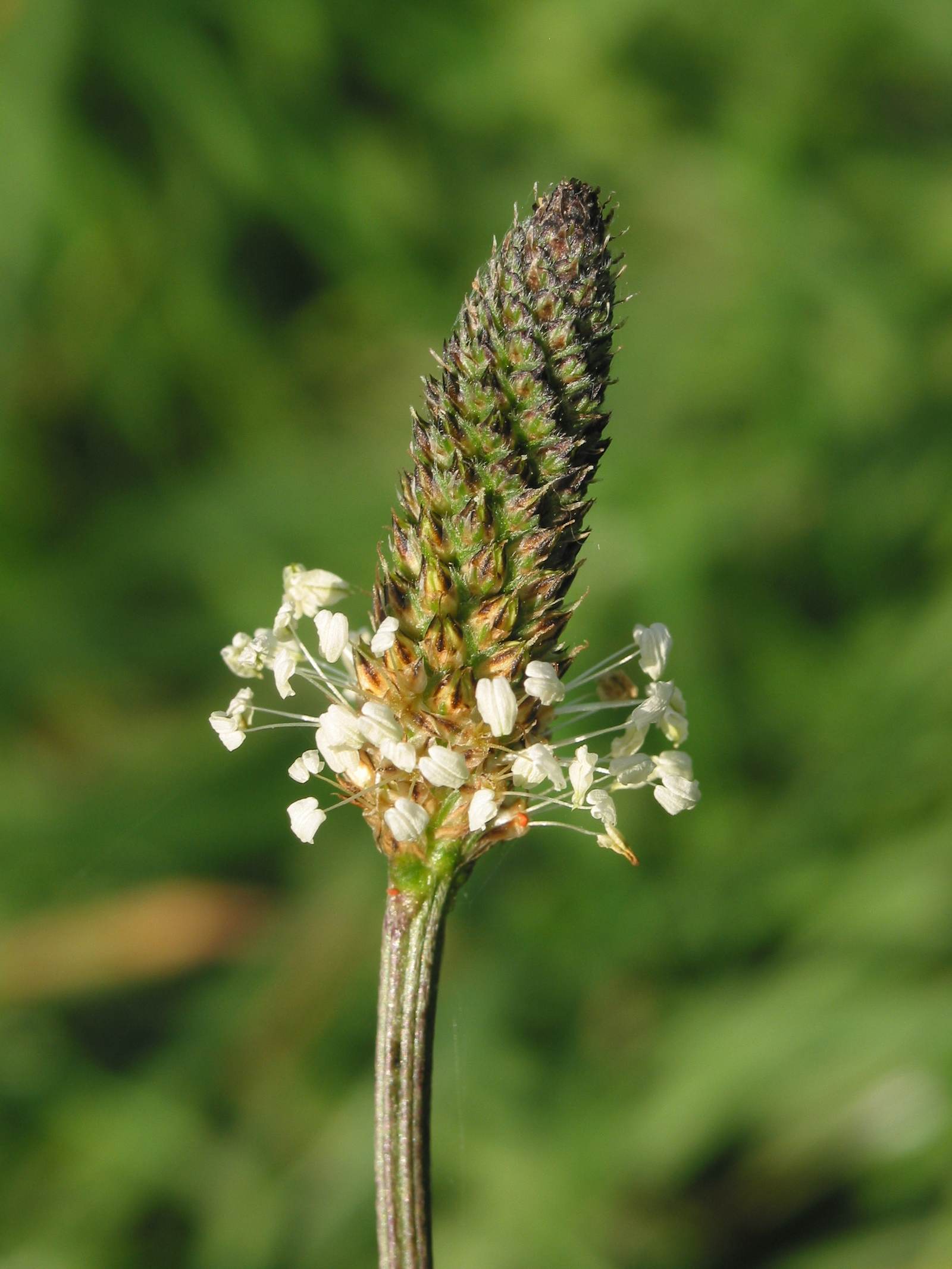
Most weeds keep a season. English plantain pollen keeps a calendar. Plantago lanceolata — English plantain, also called ribwort or narrowleaf plantain — flowers from spring into fall, sending up fresh flowering spikes month after month from lawns, roadsides, pastures, and pavement cracks on every continent it has colonized. English plantain pollen is rarely the highest reading on any single day, and that is precisely its significance: it is present, at meaningful levels, across one of the longest windows of any weed in the count, quietly underwriting the weed-pollen baseline from May to September and beyond.
The plant is a European introduction that followed settlement across North America so faithfully that it became a fixture of the continent's disturbed ground. The USDA PLANTS Database records it in essentially every state. If you have walked across a lawn, you have walked past it: a flat rosette of ribbed, lance-shaped leaves with wiry stalks topped by dense little flower heads.
Key takeaways
- English plantain pollen is produced over one of the longest windows of any weed pollen, typically from spring through fall in temperate regions.
- The American Academy of Allergy, Asthma & Immunology (AAAAI) lists plantain among the weed pollens tracked in counts across the United States.
- Pollen Atlas data shows plantain's contribution as a long, low plateau beneath the sharper peaks of ragweed, rather than a single dramatic spike.
- The USDA PLANTS Database records Plantago lanceolata in nearly every US state, reflecting its status as a universal lawn and roadside weed.
Botany of a plant built to persist
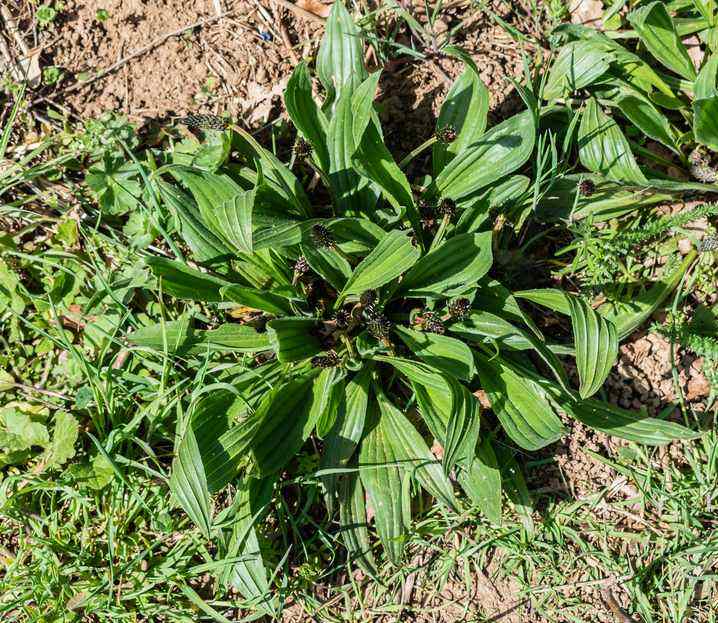
English plantain is a perennial rosette plant: leaves flat to the ground, safe below mower blades, with deep parallel veins that give ribwort its name. Its flowering stalks are leafless wires rising a foot or more, each topped by a compact spike that ripens in a ring — a band of pale anthers opens around the head, sheds pollen, and is replaced as the spike keeps growing. That sequential ripening is the botanical engine of the marathon: a single plant does not flower once but continuously, and a lawn of plantains staggers its flowering across the entire warm season.
The lawn as an airshed
Habitat is the other half of the story. English plantain specializes in compacted, disturbed, frequently mown ground — exactly the ground humans surround themselves with. It lines the paths in New York parks, the sidewalk strips of Denver neighborhoods, and the boulevard lawns of Minneapolis. Unlike ragweed, which concentrates in rough lots and field edges, plantain grows at ankle height in the middle of daily life, releasing its pollen at breathing level along the routes people walk every day.
The English plantain pollen window: spring through fall
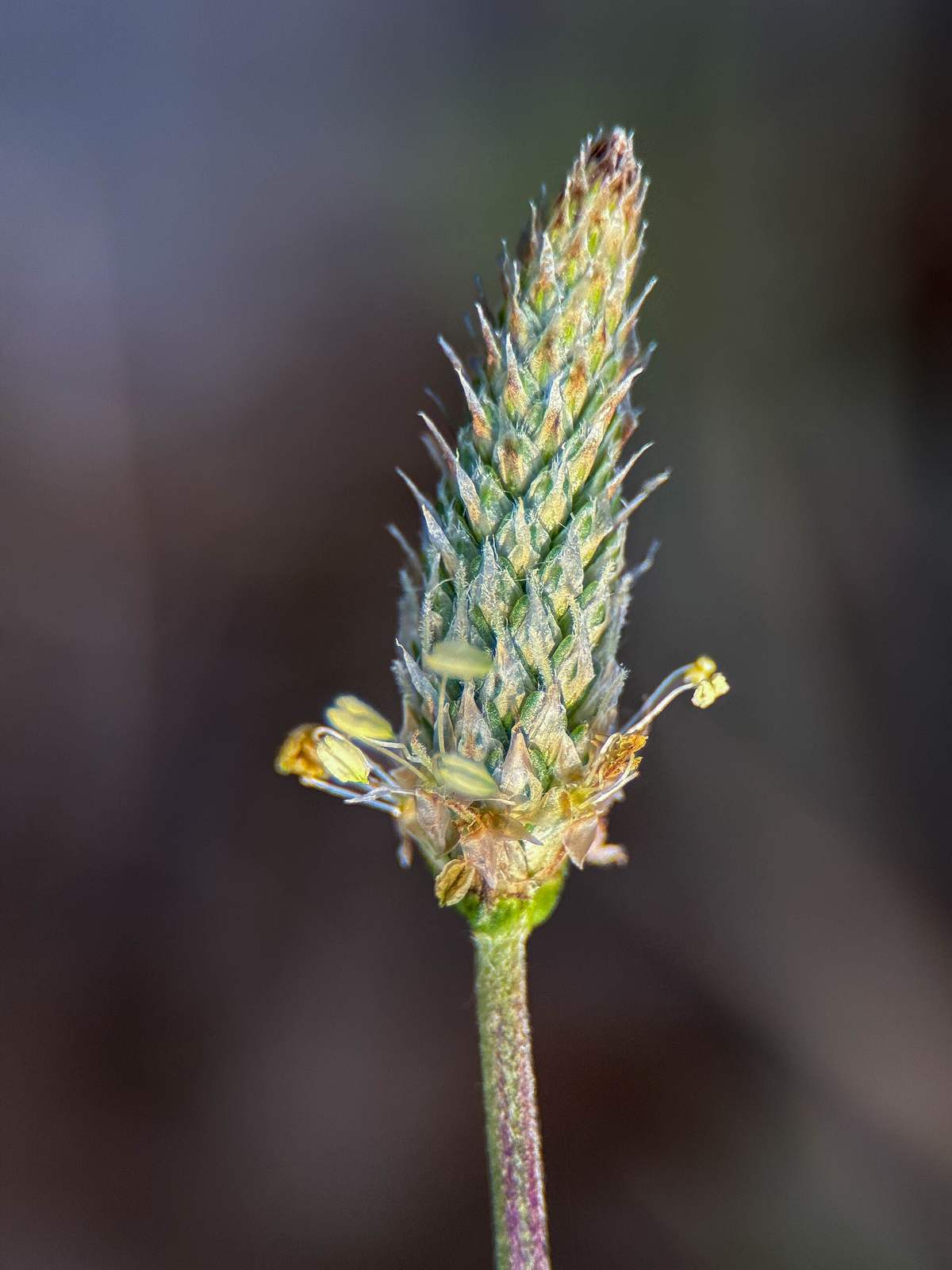
Plantain flowering typically begins in mid-spring, as soils warm, and continues until hard frost. The Asthma and Allergy Foundation of America's (AAFA) weed pollen guidance groups plantain with the weeds whose seasons bridge the famous ones, and counting-station records bear that out: plantain grains appear in counts in late spring alongside the grasses, persist through the summer lull, and are still present when ragweed takes over the headlines in August. Our ragweed season guide covers the fall headliner; plantain is the supporting act that never leaves the stage.
Reading a plateau instead of a peak
Pollen Atlas data shows plantain's signature most clearly on the city rankings in midsummer, when tree and grass indexes have fallen but the Weed Index refuses to bottom out in temperate cities. That floor is plantain, with sorrel and nettle in support. The pattern teaches a general lesson about counts: a moderate reading held for five months can represent a larger cumulative presence than a spectacular reading held for two weeks, and plantain is the clearest example in the entire calendar.
| English plantain fact | Detail |
|---|---|
| Scientific name | Plantago lanceolata (ribwort / narrowleaf plantain) |
| Type | Perennial lawn and roadside weed, European introduction |
| Main window | Mid-spring through fall — among the longest of any weed |
| Habitat | Lawns, paths, roadsides, pastures, compacted ground |
| Count signature | A long, low plateau under the ragweed peak |
Why mowing does not end it
Mowing feels like the obvious countermeasure, and plantain is built to defeat it. The rosette hugs the ground below blade height, and a cut flowering stalk is replaced within weeks by fresh spikes from the same crown. Only frost ends the sequence. This resilience is why plantain's window should be read as a property of the landscape rather than of maintenance effort: any city with lawns has plantain, and any city with plantain has a weed-pollen floor under its summer.
English plantain among the weeds
The weed cluster divides by strategy. Ragweed is the sprinter: explosive, seasonal, impossible to ignore for six weeks. Dock, sorrel, and nettle are middle-distance runners of waste ground and damp places. English plantain is the marathoner, modest on every given day and unmatched across the year. Together they explain why the Weed Index almost never reads zero between May and October in temperate North America — some member of the cluster is always flowering, and for most of those months, plantain is one of them.
The marathon claim is easy to verify. The USDA PLANTS Database maps Plantago lanceolata across nearly every state and describes the disturbed-ground habitat it prefers. The AAAAI's public resources explain how weed pollens are categorized and counted through the season, and the AAFA's pollen allergy guidance places plantain among the weeds that bridge the headline seasons. Distribution, counting method, and allergen status all point the same way: no other common weed is present in the air for as much of the year.
Frequently Asked Questions
When is English plantain pollen season?
English plantain pollen season runs from mid-spring through fall, one of the longest windows of any weed pollen. Individual plants flower sequentially for months, and populations stagger their flowering across the whole warm season.
Where does English plantain grow?
It grows in lawns, roadsides, paths, pastures, and compacted disturbed ground throughout North America and in temperate regions worldwide. The USDA records Plantago lanceolata in nearly every US state.
Is English plantain pollen a major allergen?
Plantain is a recognized weed allergen tracked by counting stations and listed among weed pollens by the AAAAI. Its importance comes from duration and ubiquity rather than from extreme single-day counts.
Why does the weed count stay up all summer?
Because the weed cluster overlaps: English plantain flowers from spring to fall, bridging the gap between the spring weeds and fall ragweed. Its long plateau keeps the Weed Index from bottoming out during the summer lull.
Sources: USDA Natural Resources Conservation Service, PLANTS Database, Plantago lanceolata profile (accessed 2026); American Academy of Allergy, Asthma & Immunology / National Allergy Bureau, weed pollen resources (2024); Asthma and Allergy Foundation of America, Weed Pollen Allergy guidance (2024). This article is general information only. Readers looking for specialists can browse the allergist directory as a directory resource.
Conclusion: respect the marathon of English plantain pollen
English plantain pollen will never own a headline week, and it does not need to: its spring-to-fall plateau, rising from every lawn and roadside in the temperate world, makes it one of the most persistent presences in the entire pollen calendar. Learning to spot its ribbed rosettes and wiry spikes gives that quiet background a name. See what your city is breathing this week — free counts and forecasts at PollenAtlas.com.