
Cocklebur Pollen: In Ragweed's Shadow, On Ragweed's Schedule
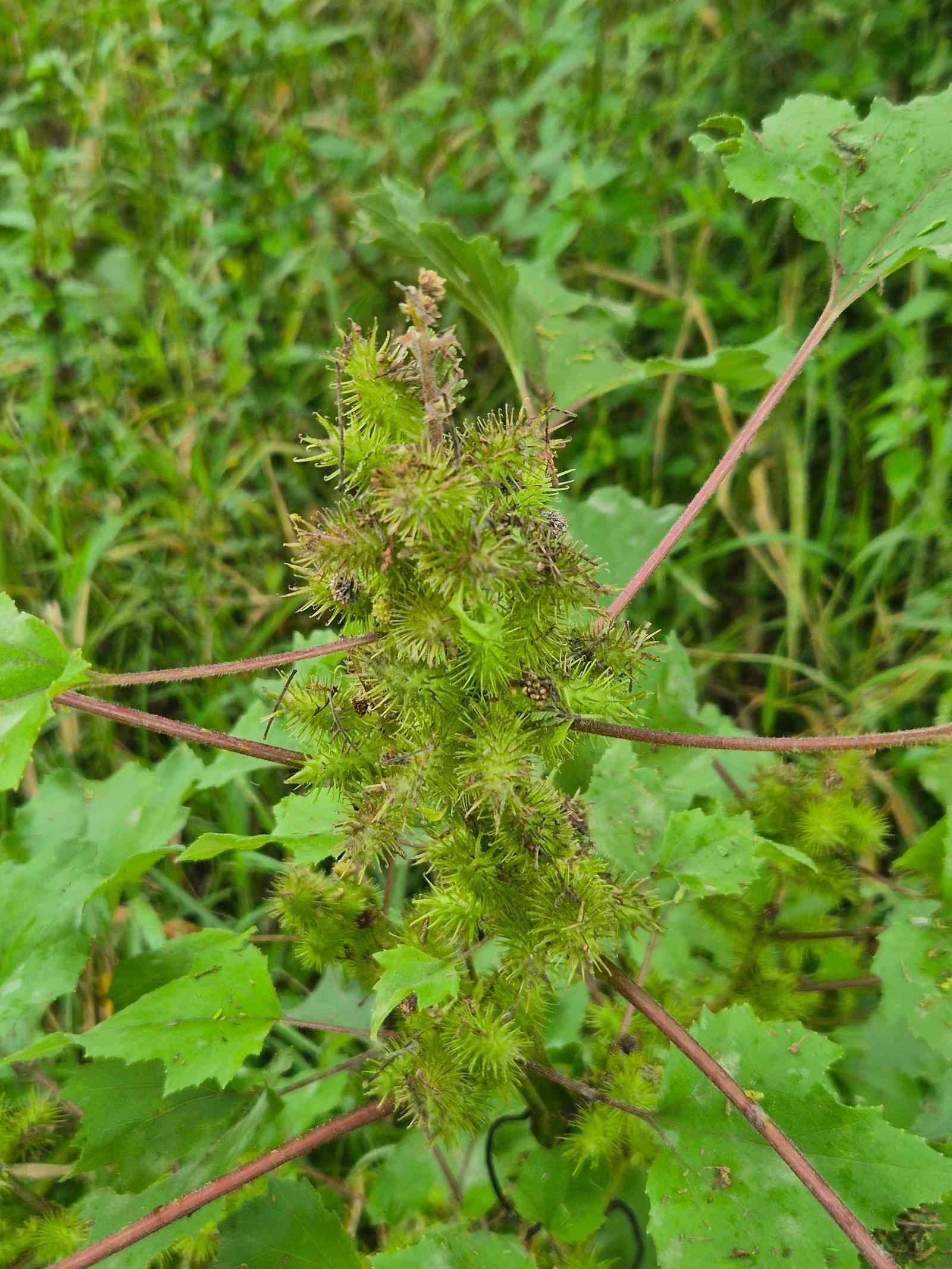
Everyone knows the cocklebur by touch: the oval, spine-covered bur that comes home in a dog's coat or a sock cuff after a walk along the river, engineered to be picked off and dropped somewhere new. Fewer people know the plant behind the bur is ragweed's close cousin — same family branch, same late-summer flowering trigger, same wind-pollinated design. Cocklebur pollen accordingly flies on ragweed's schedule, in ragweed's weather, over the same bottomlands and field edges. Whether it deserves equal blame is a genuinely interesting scientific question — and the honest answer is that allergists have argued it both ways.
Key takeaways
- Common cocklebur (Xanthium strumarium) sits in the subtribe Ambrosiinae — the same branch of the sunflower family as ragweed itself and the marsh elders.
- Cocklebur is a short-day plant: it begins flowering as the days shorten in August and keeps at it until frost, on a schedule set by the calendar rather than the weather.
- Each bur holds two seeds that germinate in different years, and the plant colonises ground that has flooded — its best years follow wet ones.
- Whether cocklebur cross-reacts with ragweed is genuinely unsettled: one investigation found strong competition for ragweed antibodies, a later study found little significant cross-reactivity, and both results stand in the literature.
The Bur Is the Marketing; the Plant Is the Business
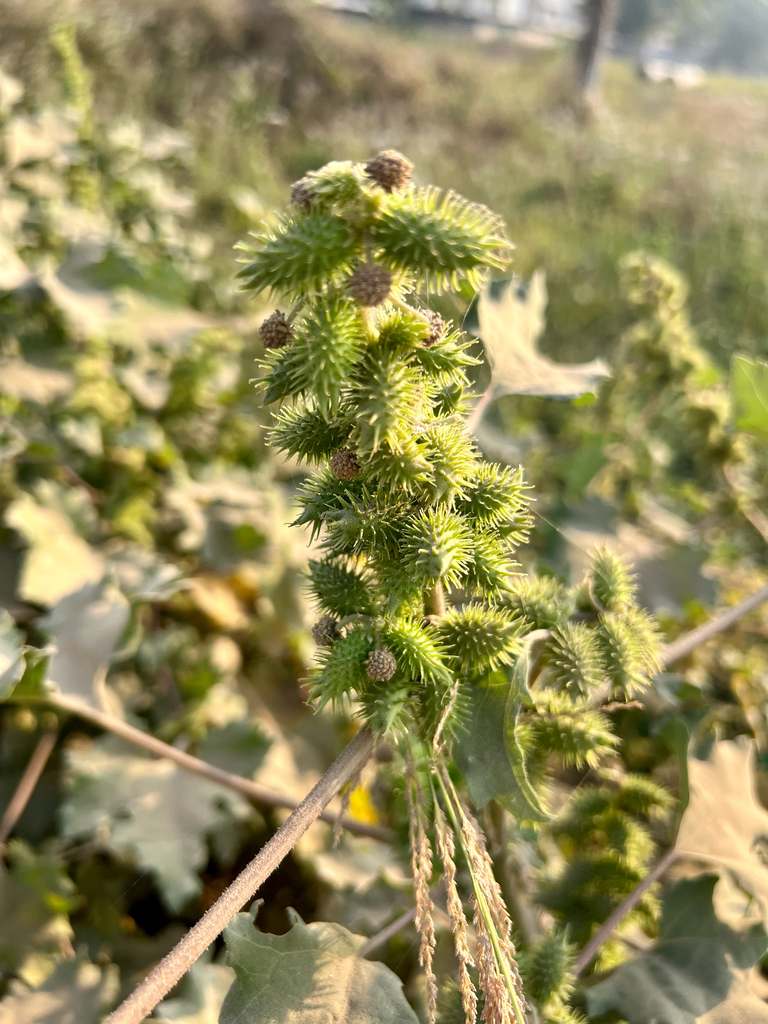
Common cocklebur (Xanthium strumarium) is a coarse annual of the sunflower family, and the Bugwood weed profile maintained through the University of Georgia maps its preferred ground: stream and river banks, the edges of ponds and marshes, previously flooded land, and disturbed soil in fields, pastures and waste places, throughout most of the United States. It is a plant of the wet footprint — it germinates where water has been, grows fast through summer, and can stand taller than a person by August.
Its seeds travel in the famous bur: a hard, two-chambered case covered in hooked spines that fasten to fur, feathers, clothing and machinery like Velcro — the resemblance is not a coincidence; burs of this design were among the inspirations studied for hook-and-loop fasteners. Each bur holds two seeds that germinate in different years, a bet-hedging trick that makes cocklebur maddeningly persistent in ground it likes. The plant earns its keep in weed manuals for a darker reason too: its seedlings are toxic to livestock, a fact every pasture manager in bur country learns early. But for our purposes the bur is a distraction from the plant's other output — the one that leaves on the wind.
Botanically, cocklebur is an American original: weed references describe its native heartland as the great river valleys — the Mississippi and the Rio Grande — from which it has spread to disturbed ground on every continent. The plant itself is monoecious, carrying its sexes in separate flower heads on the same stem: the pollen-making male heads cluster at the branch tips, small and brownish, and the female flowers sit below them, each destined to become a bur. That arrangement is a wind-pollination design with a gravity assist — pollen sheds from above and sifts down through the plant, fertilising its own females on the way. Only the fraction the breeze intercepts on the way down ever becomes the public's business, but a riverside colony of ten thousand plants intercepts a great deal of breeze.
Cocklebur Pollen and the Ragweed Question
The kinship is exact. Thermo Fisher's allergen encyclopedia places cocklebur in the subtribe Ambrosiinae — the same branch of the sunflower family as ragweed itself and the marsh elders — and allergen researchers have isolated named cocklebur allergens, including proteins catalogued as Xan Ib and Xan VIa. Cocklebur pollen is documented to produce hay-fever symptoms in sensitive people, and it flowers as the days shorten, from August onward — the same photoperiod trigger, the same weeks, the same goldenrod-and-ragweed weather that defines ragweed season.
So does a ragweed allergy mean a cocklebur allergy? The encyclopedia's summary of the evidence is a model of scientific honesty, because the studies disagree. An earlier investigation found that cocklebur extract competed strongly for the antibodies that bind giant ragweed — evidence of real cross-reactivity between the cousins. A later study, testing cocklebur against ragweed and other weeds directly, found little significant cross-reactivity. Both results stand in the literature. The fair reading is that the family resemblance is real but the clinical overlap is unsettled — which is precisely why component-level testing, rather than assumptions from botany, decides individual cases. If your worst days involve river-bottom walks in bur season, that nuance is worth raising when you find an allergist. This article is general information only and is not medical advice.
The subtribe's bench is deeper than two. Marsh elders (Iva) — salt-marsh and bottomland shrubs of the Gulf and Atlantic coasts and the interior west — sit in the same Ambrosiinae group, flower in the same late season, and are established allergens in their own right in the regions where they grow. Read the three together and a pattern emerges: the Ambrosiinae are a late-summer alliance of waterside and disturbed-ground plants, all wind-pollinated, all shedding into the same August-to-frost window. Counts never separate them household by household, and neither does the weather. What a bottomland resident breathes in September is the alliance's combined output — ragweed loudest, cocklebur and the elders in support — and an allergy workup that tests only ragweed reads only the alliance's headline.
| Ambrosiinae member | Preferred ground | Season |
|---|---|---|
| Ragweed | Drier, steadier ground — field edges and open lots | August to the first frost, the alliance's loudest voice |
| Cocklebur | Riverbanks, pond and marsh edges, previously flooded land | August onward, on the same photoperiod trigger |
| Marsh elders (Iva) | Salt marshes and bottomlands of the Gulf and Atlantic coasts and the interior west | The same late-season window |
When Cocklebur Pollen Flies
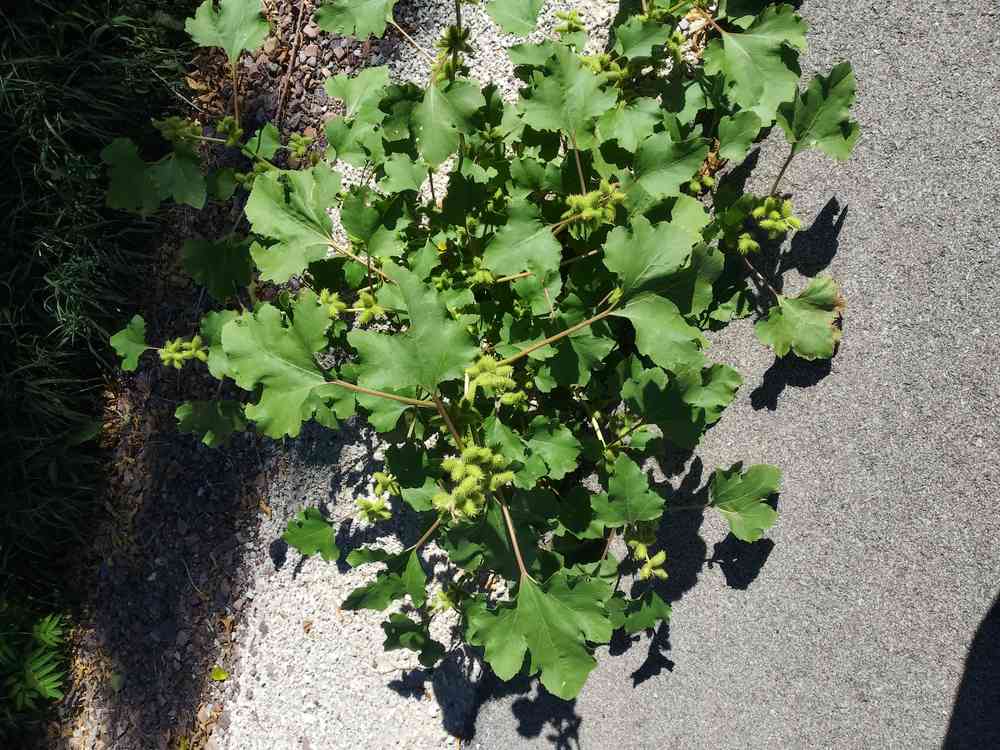
Cocklebur is a short-day plant: whatever its size or age, it begins flowering as the days shorten in August, and it keeps at it into the fall until frost. That trait made it famous in a second field — plant physiology. Xanthium became the classic laboratory subject for photoperiodism, the study of how plants measure night length: a cocklebur kept under artificially long days will simply refuse to flower, which is how researchers proved the trigger is the length of the uninterrupted dark period. The weed in the river bottom is, in the laboratory's family album, a celebrity — the species that taught botany that plants keep time. For allergy purposes the lesson is practical: its season is set by the calendar, not the weather, so a cool August delays it little and a hot one hurries it less than the heat-loving summer weeds around it. Its pollination is a split strategy — botanical summaries note that much of its pollen rains down within the plant itself, with a meaningful minority carried between plants by wind. That airborne share is the exposure that matters, and it concentrates exactly where the plants concentrate: the river corridors, floodplains and low field edges of the Midwest and South.
Pollen Atlas data shows the regional signature clearly enough: the weed index in Dallas, Houston and Kansas City spending September stretches in the Moderate band and notching High-band days at the season's peak, when the whole Ambrosiinae bench — ragweed first, cocklebur and the marsh elders behind it — flowers at once. The city rankings on an early-September morning are a map of that shared schedule. Cocklebur will never get its own column in the count; its grains ride inside the weed total alongside its famous cousin, the plant profiled in our ragweed plant guide.
Its habitat adds one more twist to the exposure math. Because cocklebur colonises ground that has flooded, its best years follow wet ones — the springs that leave riverbanks scoured, pond margins bare and low fields puddled are the springs that sow the fall's colonies. A drought year starves it; a flood year plants it by the mile along every waterway in the region. That is why bur season varies so much between years while ragweed, rooted in drier and steadier ground, varies less. The river giveth in September what it deposited in April.
The bur writes one more line in the farm ledger: the hooked cases are a notorious contaminant of sheep's wool, downgrading fleeces that pass through bur country — one more reason the plant is unwelcome far beyond the allergy clinic. Add it up and cocklebur is a rare triple agent of rural complaint: toxic seedlings in spring, pollen in late summer, burs in every coat and fleece by fall. The middle charge is the one this series exists to document, and on the evidence — its own named allergens, its Ambrosiinae pedigree, its flood-following acreage — it is a charge worth taking seriously even while the cross-reactivity verdict stays, honestly, unrendered.
Frequently Asked Questions
When does cocklebur pollen fly?
From August onward, until frost. Cocklebur is a short-day plant that begins flowering as the days shorten, and its season is set by the calendar, not the weather — a cool August delays it little and a hot one hurries it less than the heat-loving summer weeds around it.
Does a ragweed allergy mean a cocklebur allergy?
Not necessarily — the evidence is unsettled. An earlier investigation found cocklebur extract competed strongly for the antibodies that bind giant ragweed, while a later study found little significant cross-reactivity; both results stand in the literature. Component-level testing, rather than assumptions from botany, decides individual cases.
Why doesn't cocklebur get its own column in the pollen count?
Much of cocklebur's pollen rains down within the plant itself, fertilising its own female flowers, and the airborne share rides inside the weed total alongside ragweed and the marsh elders. Counts never separate the Ambrosiinae bench household by household — what a bottomland resident breathes in September is the alliance's combined output.
Why is cocklebur pollen worse in some years than others?
Because cocklebur colonises ground that has flooded. Wet springs leave riverbanks scoured and low fields puddled — exactly the ground that sows the fall's colonies — while a drought year starves it. Ragweed, rooted in drier and steadier ground, varies less between years.
The bur made cocklebur famous; the pollen makes it relevant. A ragweed relative with its own named allergens, an unsettled cross-reactivity file, and a late-summer season measured in the same air — cocklebur pollen is the shadow entry in fall's ledger, and it belongs there. Free counts. Free forecasts. Worldwide. Check yours before the river walk at PollenAtlas.com.