
Chestnut Pollen: The Ghost Season of the Appalachian Forest
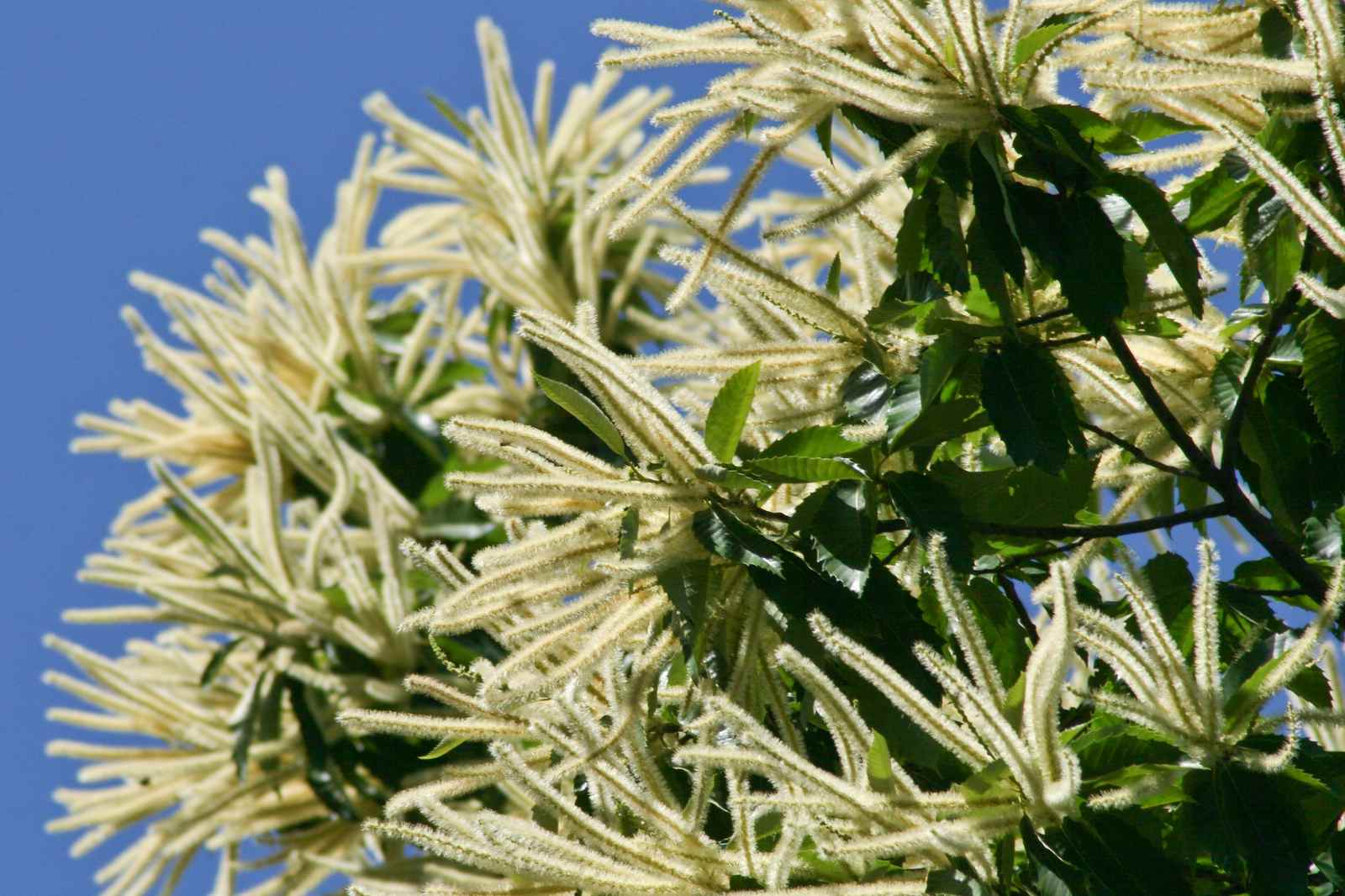
Every June, a few weeks after the oaks and maples have finished, the American chestnut does something almost no other eastern tree does: it flowers in early summer, unfurling creamy catkins six to eight inches long at the tips of its branches. Before the blight, when chestnuts stood by the billions along the Appalachian spine, those catkins were so profuse that old accounts describe whole mountainsides looking snow-covered in midsummer. Chestnut pollen was the last great tree pollen of the eastern spring — a season unto itself. Today it is the faintest entry in the family album, and the story of why is the story of the greatest ecological catastrophe in American forest history.
Key takeaways
- The American chestnut (Castanea dentata) flowers in June — after the spring tree rush — unfurling creamy catkins six to eight inches long.
- Before the blight, chestnuts stood by the billions along the Appalachian spine and were the dominant canopy tree across much of their range.
- The blight fungus Cryphonectria parasitica, first identified in 1904 on trees at the Bronx Zoo, wiped out an estimated four billion American chestnuts within a few decades.
- The species survives as root sprouts, but most are knocked back in their teens or twenties, before they can flower heavily — the quiet arithmetic behind the missing season.
- Since 1983, The American Chestnut Foundation has bred blight-resistant crosses, and every restoration tree that reaches flowering age puts chestnut pollen back into June air.
The Tree That Owned the Eastern Forest
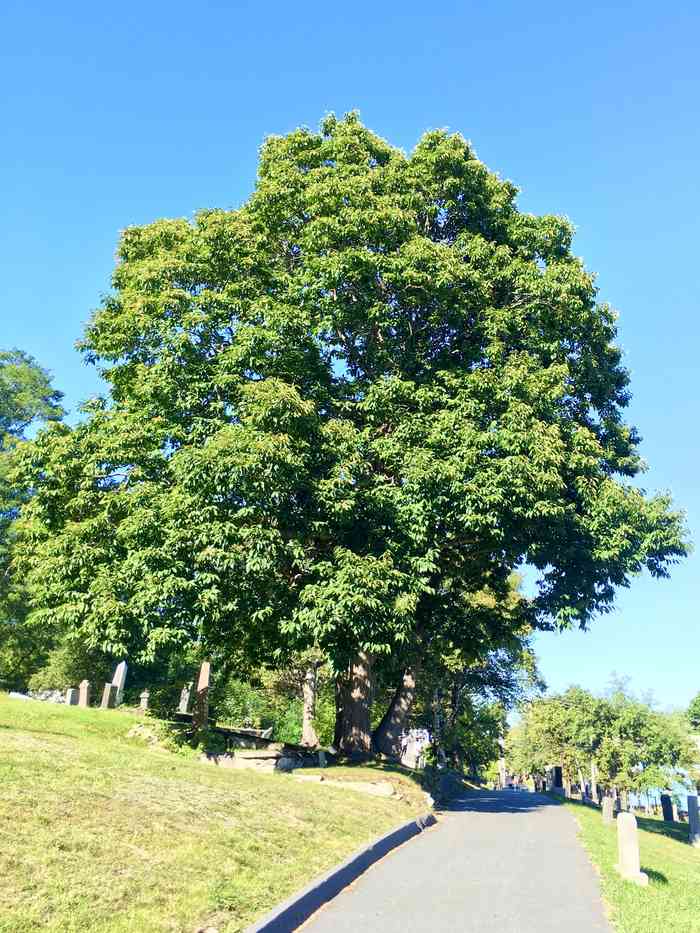
The American chestnut (Castanea dentata) ranged from Maine down the Appalachians to Georgia, Alabama and Mississippi, and west to the Ohio River valley. It was not just common; in much of that range it was the dominant canopy tree, growing fast and straight to a hundred feet, with trunks broad enough that early photographs show families picnicking in their shade. Its rot-resistant wood built barns, fences, railroad ties and telegraph poles. Its nuts — produced reliably nearly every year, unlike the boom-and-bust crops of oak — fed wildlife, livestock and a cash economy that shipped chestnuts to city markets by the boxcar.
For allergy purposes, what matters is the sheer tonnage of flowers. A forest where a quarter of the canopy is one wind-and-insect-pollinated species produces a pollen event of a different order than anything the modern East experiences. Chestnut pollen itself is generally classed as a mild allergen, but mild grains in mountain-range quantities will still find the people sensitive to them. The chestnut's June bloom also made it a season-extender: it flowered after the spring tree rush, in the gap our tree pollen season guide maps between the oak peak and the summer grasses.
The floral machinery itself is built for abundance. The chestnut is monoecious — each tree carries both sexes — with its male flowers crowded onto those long catkins and a few female flowers tucked at the base of some of them. The American Chestnut Foundation's identification guide notes two facts that shaped the old season: the American chestnut flowers in June, when the creamy catkins stand on full display at the end of each growing tip, and nut production takes two trees — cross-pollination is required, so a lone tree sets few fertile nuts, which is why orchards have always planted chestnuts in compatible groups. For pollen, that incompatibility is beside the point: a solitary tree still sheds its full load of June pollen into the neighbourhood, fertile or not. Bees work the catkins hard, and the wind takes the surplus, so a flowering chestnut reaches both the insect world and the air column at once.
1904: The Blight Arrives
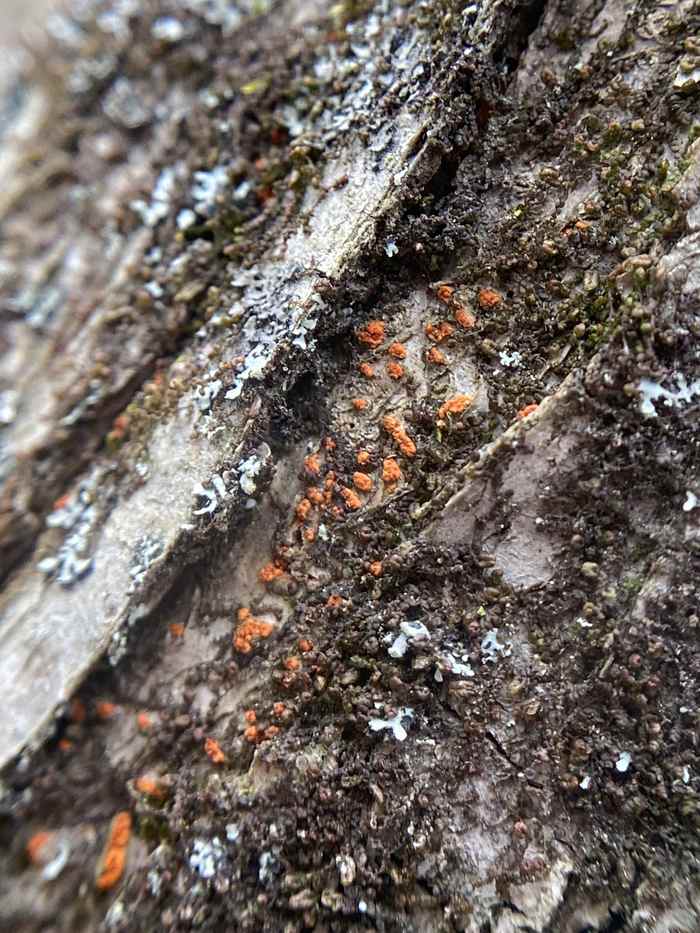
The fungus Cryphonectria parasitica arrived on imported Asian chestnut stock and was first identified in 1904 on trees at the Bronx Zoo in New York. It enters through wounds in the bark and grows cankers that girdle and kill everything above them. As the Virginia Department of Conservation and Recreation recounts, within a few decades the blight had effectively wiped out an estimated four billion American chestnut trees — a dominant species reduced, in one human lifetime, to a memory and a root system.
Because that root system is tough, the species is not extinct. Millions of sprouts still push up from old stumps every year. But the blight persists in the bark of the surrounding forest, and it typically finds them young: most sprouts are knocked back in their teens or twenties, before they reach the size and age — roughly eight to ten years at minimum, and usually well beyond it in the wild — needed to flower heavily and set nuts. A forest can be full of chestnut sprouts and hold almost no flowering chestnut trees. That is the quiet arithmetic behind the missing pollen season.
When Chestnut Pollen Still Flies
The season itself survives in fragments. The NC State Extension Gardener plant profile lists the American chestnut's bloom period plainly: male catkins from June into July. Scattered large survivors — trees that somehow escaped or tolerated the blight — still flower on that schedule, and so do the chestnuts people plant: Chinese and Japanese chestnuts, and the American-Chinese hybrids bred for blight resistance, all shed Castanea pollen in the same early-summer window. In a yard or orchard setting, one mature planted chestnut is a real, if local, pollen source.
On modern counts the effect is subtle. By the time chestnut catkins open, Pollen Atlas data shows the tree index in cities like New York, Philadelphia and Boston sitting in the Low band on most days, the spring wave spent — with Moderate-band days possible when late oaks, planted chestnuts and the first grasses overlap under dry, breezy conditions. On the heatmap, June reads as a changing of the guard: tree colour draining out of the Northeast while grass colour builds. Chestnut is a whisper inside that transition, not a headline. Its nearest living relatives in the same family carry the modern season instead — the oaks in April, and its cousin the beech, flowering quietly under smooth gray bark in the same weeks.
A Restoration Written in Chestnut Pollen
Since 1983, The American Chestnut Foundation has been breeding American chestnuts crossed with blight-resistant Chinese stock, selecting generation after generation for trees that keep the American form and survive the fungus. The programme began from the rarest raw material in American forestry — the scattered mature trees, sometimes called large surviving Americans, that had reached flowering size despite a century of blight — and backcrossed their descendants toward pure American form while keeping the borrowed resistance. The Virginia DCR describes the modern phase of that work: research farms and seed orchards, including a four-acre orchard at Sky Meadows State Park planted from 2018, where young trees are deliberately inoculated with blight and rated for resistance, the best kept and bred onward. The foundation expects the selection process at a single orchard to run six to ten years before its final trees are chosen.
The scale of the effort is worth pausing on: the foundation's network runs to hundreds of breeding orchards across the tree's former range, worked by chapters in state after state, plus parallel university research into breeding with modern genomic tools. None of it is fast, and all of it is aimed at the same endpoint — a self-sustaining wild population. That endpoint has a pollen corollary the planters rarely mention: a restored chestnut forest does not flower a little. A species that once scented whole counties will, stand by stand, put a measurable June signal back into eastern counts. Restoration ecologists count seedlings; allergy sufferers, a few generations from now, may count something else.
Read those orchards through an allergy lens and they are something more than conservation: they are pollen infrastructure returning tree by tree. Every restoration tree that reaches flowering age puts chestnut pollen back into June air that has not carried it in quantity for a century. Nobody should expect a return to snow-covered mountainsides on any near horizon — the four billion are not coming back on our watch. But a season can regrow from fragments, and this one has people actively planting it.
| When | The chestnut story |
|---|---|
| Before the blight | Billions of trees dominate the Appalachian canopy; June catkins turn mountainsides white |
| 1904 | Blight fungus Cryphonectria parasitica first identified on trees at the Bronx Zoo |
| Within a few decades | An estimated four billion American chestnuts wiped out; the species survives as root sprouts |
| 1983 onward | The American Chestnut Foundation breeds blight-resistant crosses in orchards across the former range |
| Today | Scattered survivors and planted Chinese, Japanese and hybrid chestnuts still shed Castanea pollen each June |
If June brings you a late, unexplained flare after the main tree season should be over, a planted chestnut nearby is worth considering — and worth confirming properly. Finding an allergist who can test the tree pollens of your actual neighbourhood beats guessing from the calendar. This article is general information only and is not medical advice.
Frequently Asked Questions
When does chestnut pollen fly?
In June. The American chestnut flowers a few weeks after the oaks and maples finish, unfurling its creamy catkins at the tips of its branches in early summer — the last great tree pollen of the eastern spring.
Why is there so little chestnut pollen today?
The blight fungus Cryphonectria parasitica, first identified in 1904, girdled and killed an estimated four billion American chestnuts within a few decades. The species survives as root sprouts, but the blight usually knocks them back in their teens or twenties, before they reach the age needed to flower heavily.
Can a planted chestnut tree still shed pollen near my home?
Yes. Chinese and Japanese chestnuts and American-Chinese hybrids shed Castanea pollen in the same June window, and a solitary tree sheds its full load of pollen even though cross-pollination from a second tree is required for fertile nuts. One mature planted chestnut is a real, if local, pollen source.
Does chestnut pollen show up on modern pollen counts?
Only subtly. By June, Pollen Atlas data shows the tree index in cities like New York, Philadelphia and Boston sitting in the Low band on most days, with Moderate-band days possible when late oaks, planted chestnuts and the first grasses overlap under dry, breezy conditions.
The chestnut's lesson is that a pollen season is not a law of nature; it is a census of what is alive and flowering. A century ago chestnut pollen owned June in the East. What owns it now is whatever we plant, spare and restore. The ghost season still flies, a little more of it every year. Check the pollen before it checks you — free counts and forecasts, worldwide: PollenAtlas.com