
Beech Pollen: The Quiet Cousin in the Oak Family
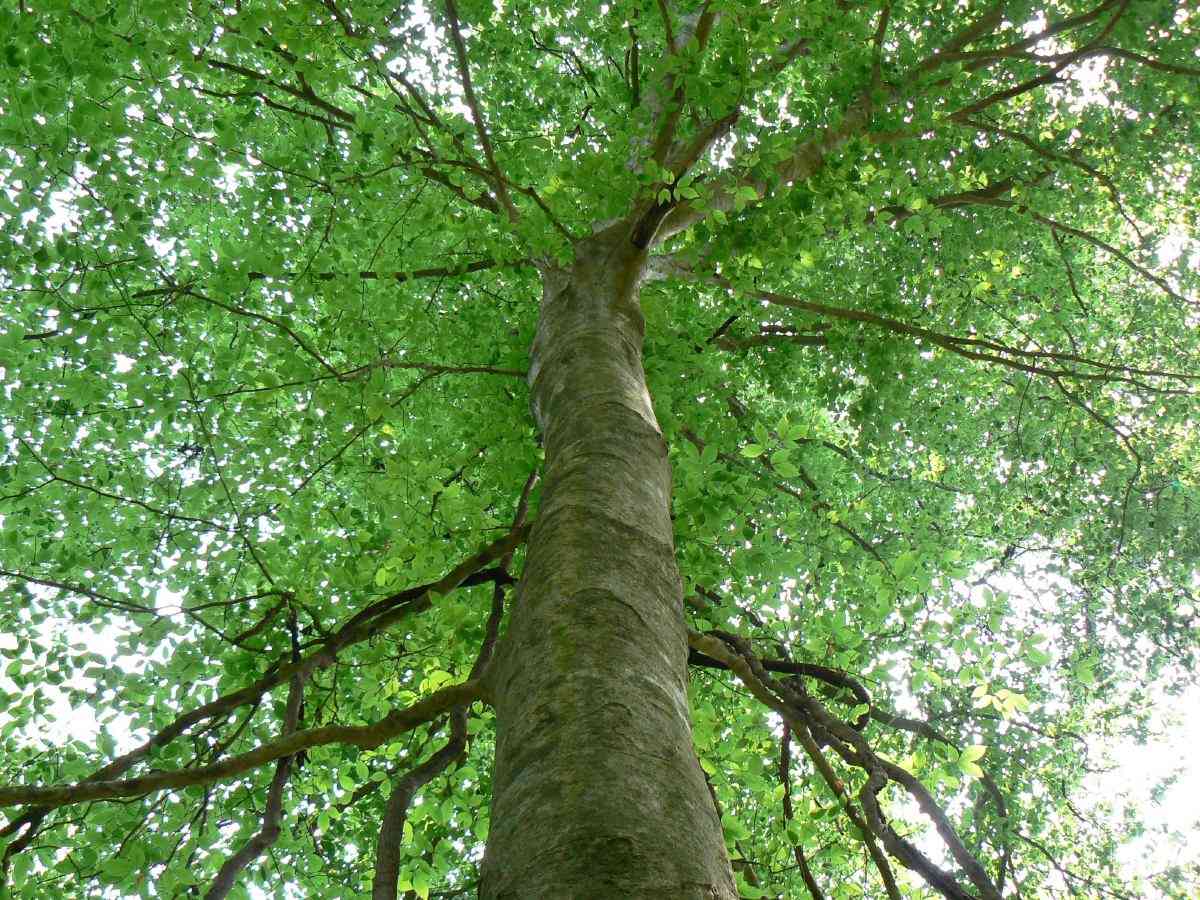
You can identify an American beech from across the forest by its bark alone: smooth, steel-gray, unlined even on old trees — the bark that generations of initials-carvers could not resist. Beech is the introvert of the great eastern hardwoods, and beech pollen matches the temperament. It causes no dramatic season of its own, gets no headline on the counts, and yet it is there every spring, part of the first wave of tree pollen that opens the year across the Northeast and Appalachians. To understand the spring tree mix, you have to count the quiet cousins too.
Key takeaways
- The American beech (Fagus grandifolia) belongs to the beech family, Fagaceae — the same family as the oaks and the chestnut — and ranges from Nova Scotia and Maine south through the Appalachians to northern Florida and eastern Texas.
- Beech flowers in mid to late spring, through April and into May, and is pollinated by the wind; its modest output rides inside the general tree reading rather than appearing as a line item of its own.
- Beech is exceptionally shade-tolerant, spreads by root suckers as well as seed, and drops a heavy crop of nuts only in mast years, on an irregular cycle of roughly three to eight years.
- Beech bark disease and beech leaf disease — the latter first detected in Ohio in 2012 — are both thinning the canopy behind the Northeast's spring pollen baseline.
Meet the American Beech
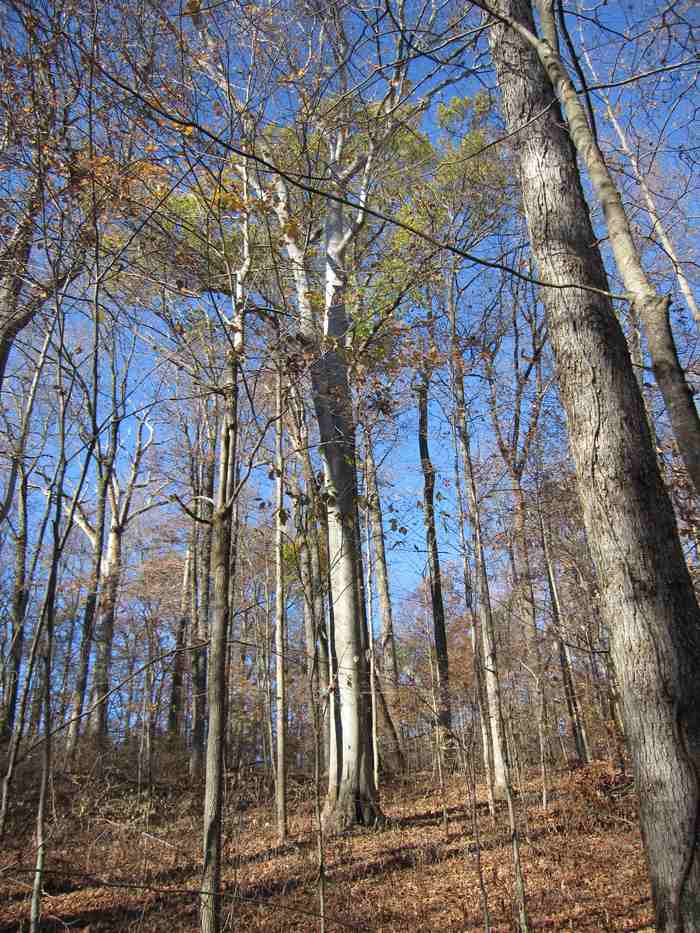
The American beech (Fagus grandifolia) is a climax-forest tree of the beech family, Fagaceae — the same family as the oaks and its cousin the chestnut. The USDA Forest Service's Fire Effects Information System maps its range from Nova Scotia and Maine west to the Great Lakes and eastern Wisconsin, and south through the Appalachians and Ohio Valley to northern Florida and eastern Texas. With sugar maple it forms the classic beech-maple forest that still clothes much of the northern hardwood country.
Beech is built for the long game. It is exceptionally shade-tolerant, able to wait decades in the understory for a gap in the canopy, and it spreads by root suckers as well as seed, so an old beech grove may be one genetic family holding the same ground for centuries. Forest Service descriptions put mature trees at sixty to eighty feet, with broad crowns and lifetimes measured in centuries rather than decades — beech is frequently the oldest living thing in its forest. Every few years — on an irregular cycle of roughly three to eight — the forest gets a mast year, when beeches drop a heavy crop of the small triangular nuts that bears, deer, turkeys and squirrels fatten on. Ontario's official tree profile describes the signature smooth, bluish-gray bark — "resembles an elephant's skin" — and notes a modern threat: beech bark disease, in which scale insects open the bark to a canker fungus that deforms and eventually kills the tree, now working through the northern part of the range.
The tree earns its place in the human ledger, too: Forest Service profiles describe beech wood as hard, strong and close-grained, long used for furniture, flooring, tool handles and fuel, and the sweet little nuts were once gathered as food and pressed for oil in the eastern settlements. A beech in the woods behind a New England house is thus never just scenery — it is a survivor of the working forest, still on the job.
A second, newer threat has joined it. Ontario's forestry pages track beech leaf disease, caused by a microscopic nematode that feeds in the leaf buds: infected leaves emerge thickened and striped with dark bands between the veins, canopies thin year by year, and severely affected trees decline. First detected in Ohio in 2012 and since spread through the northern hardwood belt, it attacks exactly the quality that made beech dominant — its patience — by taxing the leaves it waits with. Foresters now watch two diseases closing on the same slow tree, and every beech lost is a small subtraction from the spring pollen baseline of its neighbourhood: quiet trees, when they go, go quietly from the counts too.
| Trait | The American beech |
|---|---|
| Scientific name | Fagus grandifolia |
| Range | Nova Scotia and Maine west to the Great Lakes and eastern Wisconsin; south through the Appalachians and Ohio Valley to northern Florida and eastern Texas |
| Mature size | Sixty to eighty feet, with lifetimes measured in centuries |
| Bark | Smooth, steel-gray — "resembles an elephant's skin" |
| Reproduction | Seed plus root suckers; heavy nut mast on an irregular three-to-eight-year cycle |
| Pollination | By the wind, flowering as the leaves unfold in mid to late spring |
When Beech Pollen Flies
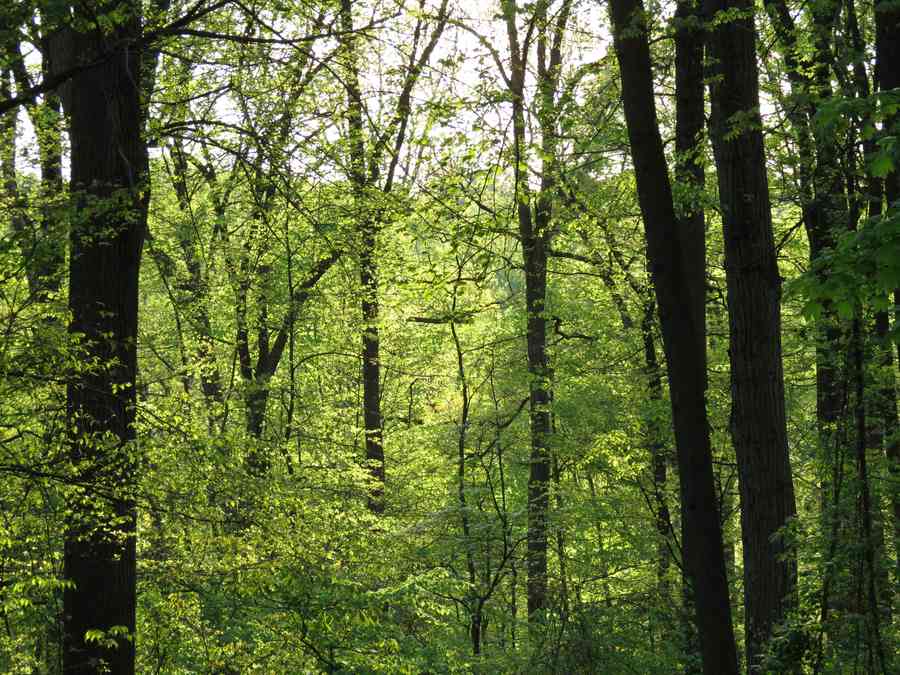
Beech flowers are easy to miss and impossible to mistake once seen on a low branch: small yellowish-green clusters that emerge in mid to late spring, as the leaves unfold. Both sexes ride the same tree — male flowers in dangling, catkin-like heads, female flowers in small clusters — and, as Ontario's profile confirms, they are pollinated by the wind. The season runs through April and into May in most of the range, squarely inside the spring tree rush: beech pollen travels with the maples and birches at the front of the wave and the oaks building behind it.
That company is exactly why beech rarely appears as a line item. Counting stations tend to report the big genera and lump the rest of the tree mix together, and beech's contribution — real, but modest beside a mature oak's output — rides inside the general tree reading. Pollen Atlas data shows the tree index in New York, Boston and Philadelphia reaching the High band on warm April days when the whole hardwood canopy flowers at once, and settling into the Moderate band through the longer tail of the season. Beech is part of both readings: an early voice in the chorus rather than a soloist. Pull up the heatmap on an April morning and the Northeast's tree colour is, in some unmeasurable but genuine fraction, beech-coloured.
There is also a planted beech population that forest maps never capture. European beech and its copper- and purple-leafed cultivars have been prestige plantings in the Northeast's parks, cemeteries, campuses and estate lawns for two centuries, and a mature specimen is an enormous flowering machine placed deliberately beside sidewalks and windows. Urban tree inventories in the older eastern cities list beeches among their largest canopy trees. Their pollen is the same family's pollen, released at city scale in the same April–May window — one more reason the urban tree index can run ahead of the countryside around it, and one more candidate when a Boston or Philadelphia spring feels stronger than the forest statistics suggest.
The grove structure of wild beech cuts the other way and can concentrate its season locally. Because beech spreads by root suckers, a hillside grove is often a single genetic individual — dozens of trunks, one tree in the evolutionary sense — and clones flower as one. Where a neighbourhood's woods hold such a grove, its beech bloom arrives synchronised, all the catkins of one vast organism opening in the same week. Counter readings average that away across a whole city; a sufferer living against that hillside does not experience the average. Forest pollen is lumpy in a way citywide numbers are not, and the beech, quietest of the eastern trees, may be the lumpiest of all — invisible in the regional data, unmistakable on the right street, under the right grove, in the right April.
Beech Pollen and the Family Resemblance
Beech's allergy significance is best understood as a family matter. Fagaceae is the family that dominates eastern spring counts — oak above all — and beech shares the family's wind-pollinated, catkin-bearing design. People whose spring is driven by the big tree genera often find the whole April–May window difficult rather than one species' week, and beech is one of the background reasons the window feels seamless: its flowering bridges the early maples and the main oak event.
It is also worth knowing what beech is not. It is not a top-tier allergen in the North American literature, and nobody should restructure their spring around it. Its place in this series is the honest one: a common, widespread, wind-pollinated tree whose pollen forms part of the baseline of the eastern spring — the part of the count that belongs to the forest itself rather than to any planted landscape. If your symptoms track the general tree index faithfully from the first warm week, the forest mix — beech included — is your story, and finding an allergist who can separate the family's members is the way to read it precisely. This article is general information only and is not medical advice.
Frequently Asked Questions
When does beech pollen fly?
Beech flowers in mid to late spring, as the leaves unfold, and the season runs through April and into May across most of the range. It travels with the maples and birches at the front of the spring wave and the oaks building behind it.
Why doesn't beech pollen appear as its own line in the counts?
Counting stations tend to report the big genera and lump the rest of the tree mix together. Beech's contribution is real but modest beside a mature oak's output, so it rides inside the general tree reading — Pollen Atlas data shows that index reaching the High band on warm April days in New York, Boston and Philadelphia when the whole hardwood canopy flowers at once.
Is beech pollen a major allergen?
No — beech is not a top-tier allergen in the North American literature, and nobody should restructure their spring around it. Its significance is the family resemblance: as a wind-pollinated member of Fagaceae, it forms part of the seamless April–May baseline that makes the whole window difficult for people driven by the big tree genera.
Why can beech pollen feel stronger on one street than the next?
Because beech spreads by root suckers, a hillside grove is often a single genetic individual whose clones flower in the same week, concentrating the bloom locally in a way citywide averages hide. Planted European beeches in older eastern cities add a second, urban source in the same April–May window.
The beech will never be the loudest tree in the count, and it does not need to be. It is the canopy's memory — slow, smooth-barked, centuries deep — shedding its modest share of beech pollen into the same spring air its ancestors have breathed into since long before there were counts to read. Free counts. Free forecasts. Worldwide. PollenAtlas.com has your day covered.