
Brome Pollen: The Hayfield Grass the North Runs On
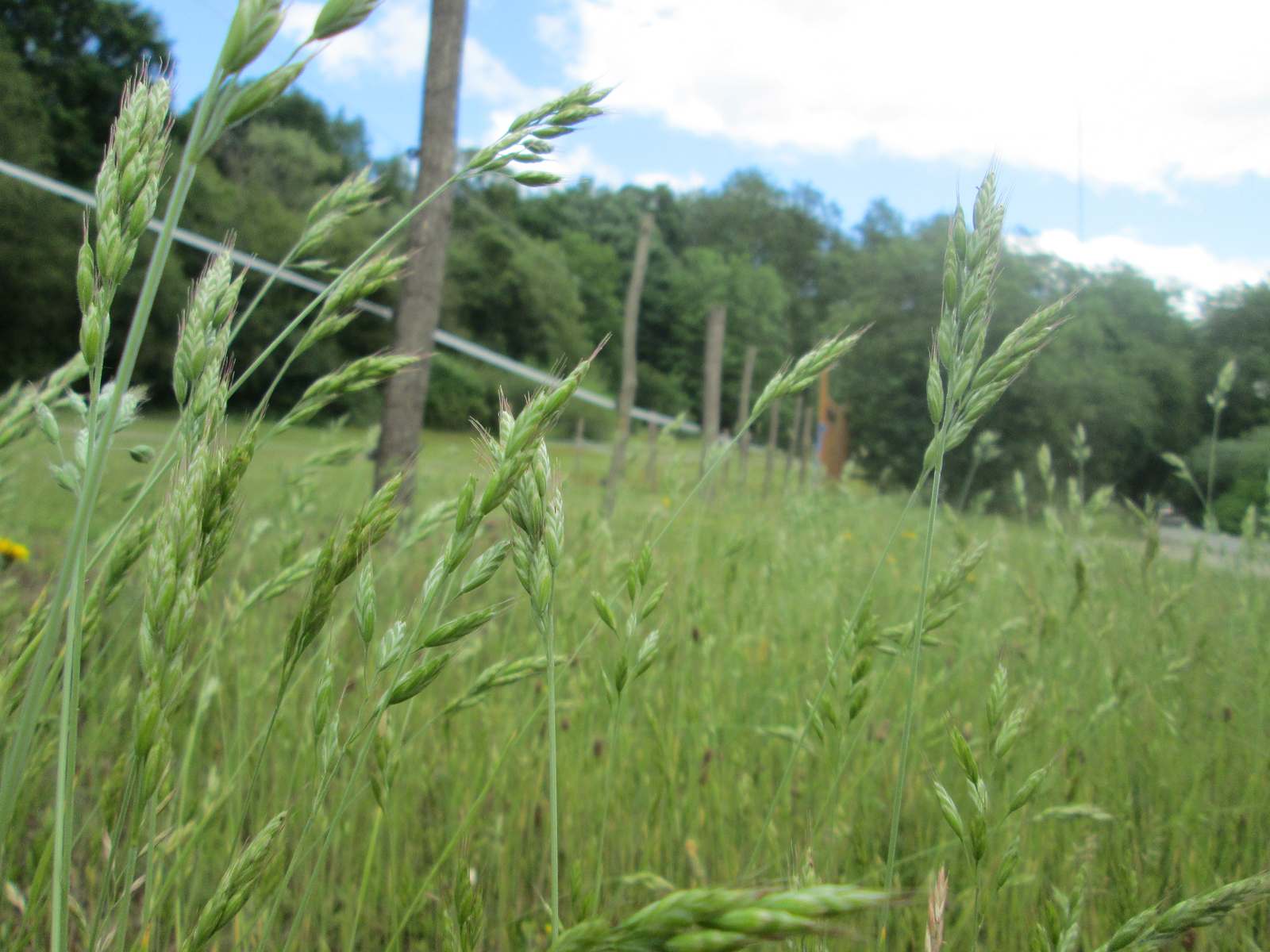
From the Dakotas to the Great Lakes and down the high plains, the standard hayfield grass is smooth brome — a sod-forming perennial so thoroughly planted that it reads as native. It greens the road ditches, holds the waterways, fills the pastures, and every late spring it raises millions of open, airy seedheads and lets the wind take the pollen. Brome pollen is the northern counterpart to fescue's southern season: the same grass family, the same shared allergens, a different climate and a different century-old planting decision. If your winters are serious, this is very likely the grass inside your "grass pollen" reading.
Key takeaways
- Smooth brome (Bromus inermis) was brought to North America from Europe in 1884 and is now the standard hay, silage, pasture and erosion-control grass across the upper half of the continent.
- It flowers in late spring into early summer — May through July — and, given moisture, can regrow and flower a second time in the fall.
- Brome belongs to the Pooideae, the cool-season grass subfamily whose members share Group 1 allergens across the family and Group 5 allergens found nowhere else in the grass family — so counts report "grass" as one category, with no separate brome line.
- Brome hay is cut at flowering, so the season runs on hayfield time: a wet June that delays the cut stretches the bloom, while a dry June takes the crop early and shuts the pollen off.
The Grass That Came With the Hay
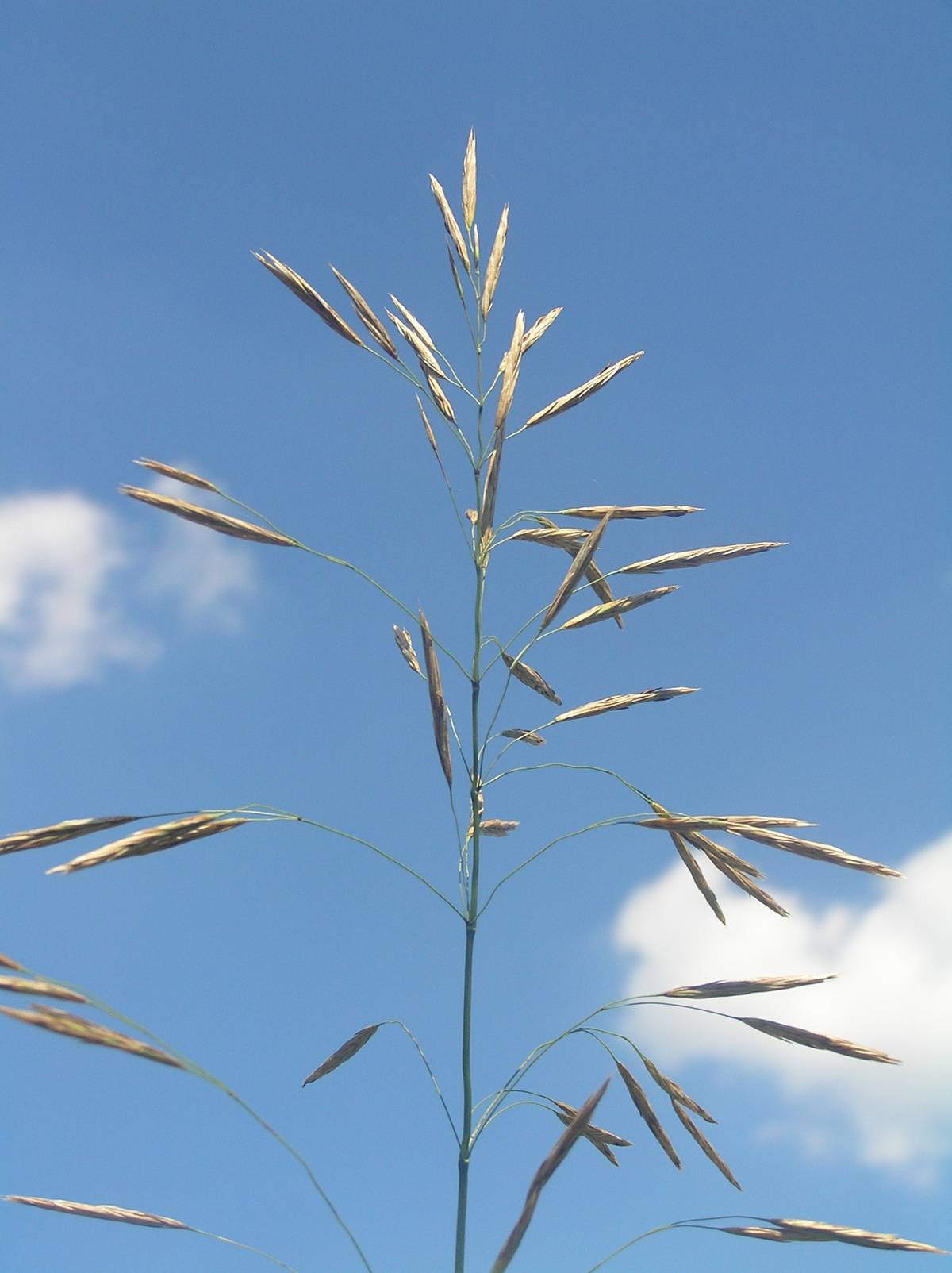
Smooth brome (Bromus inermis) is a European introduction with a documented birthday. The National Park Service records that it was brought to North America from Europe in 1884, and Utah State University Extension fills in the reason it conquered: a long-lived, sod-forming perennial with creeping rhizomes, used for hay, silage, pasture and erosion control across the upper half of the continent. The Latin name is a field hint — inermis, unarmed, because unlike its weedy brome cousins its seeds carry no sharp awns.
Its virtues are the northern virtues. Smooth brome tolerates deep cold and real drought, holds soil on ground nothing else will cover, and produces dependable forage where the growing season is short. Utah State's profile rates it hardy across the coldest planting zones in the country and lists its uses from hay and silage to mine-spoil reclamation — a grass for ground that has defeated everything else. Extension guides add a field mark worth learning: the leaf blade carries a distinctive M- or W-shaped wrinkle partway down, the "watermark" that lets a rancher name the grass at a glance in a mixed stand. Northern and southern strains were selected for different day-length regimes, spreading the planting from Canada deep into the plains. The same rhizomes that make it a perfect erosion grass make it a restless neighbour: the Park Service treats it as an invader of native prairie, where its sod can crowd out the wildflowers and native grasses conservationists are trying to keep. Like its southern analogue in our fescue pollen profile, brome is a planting that succeeded so completely it became landscape — and landscape, in this series, means pollen.
The prairie conflict is worth a paragraph of its own, because it sets northern grass season apart. In the tallgrass remnants the Park Service manages, smooth brome is not a crop but a pressure — a Eurasian sod-former advancing on the most endangered ecosystem in North America, fought with fire, grazing timing and patience. Yet step outside the preserve fence and the same sod is infrastructure, holding the road bank and feeding the herd. Brome is simultaneously a conservation problem and an agricultural foundation, and both populations flower in June. The pollen does not know which stand it came from, and neither does the counter; the northern grass index is the sum of a beloved forage and a listed invader, indistinguishable grain by grain.
Brome Pollen Season in the Northern Tier
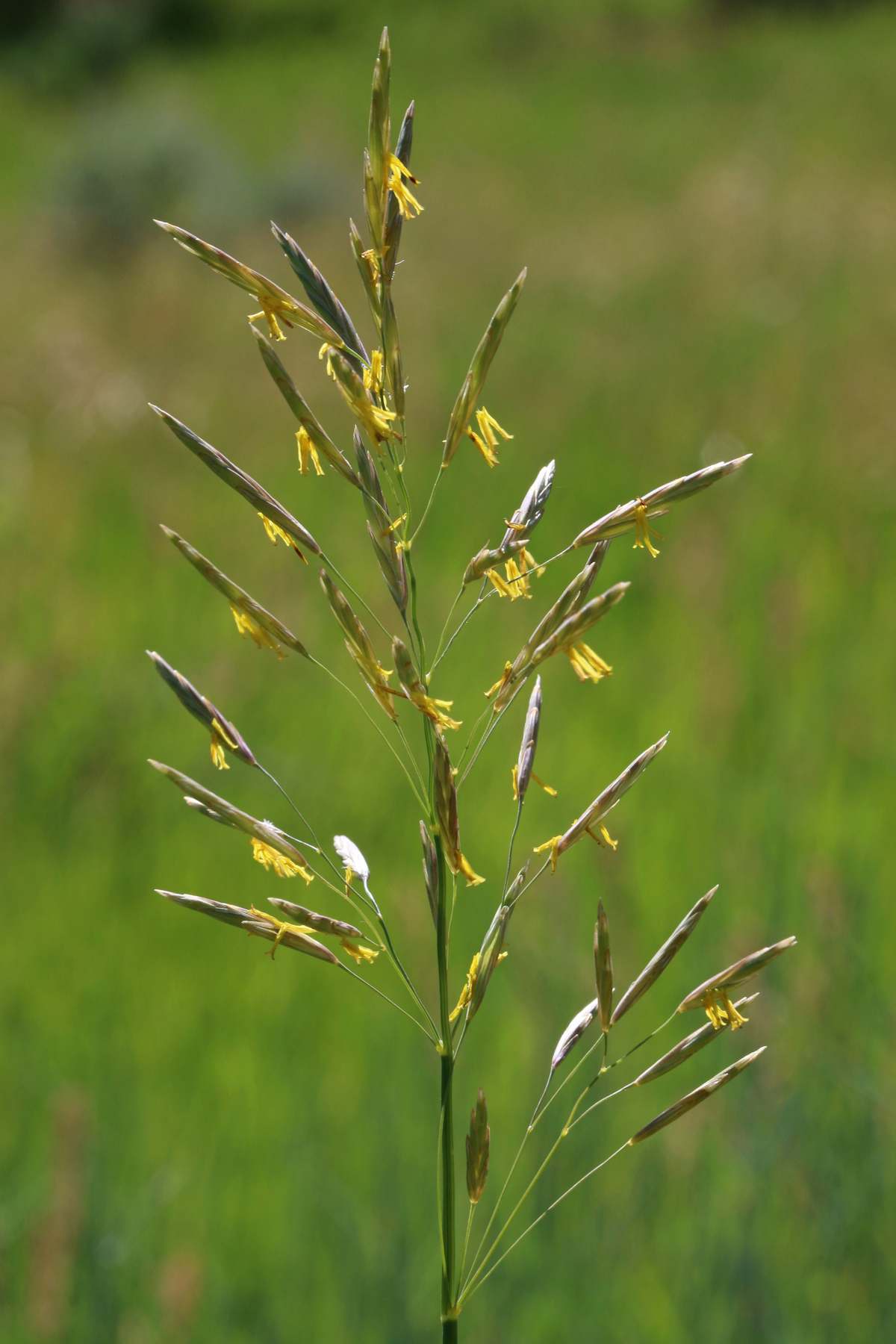
Utah State's range-plant profile gives smooth brome's flowering as late spring into early summer — May through July across its range — with a quirk worth knowing: given moisture, the plants can regrow in the fall and flower a second time. The main event, though, is the spring flush, when pastures and hayfields head out together over whole counties. Brome heads are built for wind work: open, branching panicles that hold their anthers out to the air, on a grass planted at a density wild species rarely achieve.
Pollen Atlas data shows the northern signature each year: the grass index in Omaha, Kansas City and Denver building through late spring into the Moderate band, with High-band days when dry wind coincides with peak hayfield bloom. On the heatmap the northern tier lights up a few weeks behind the transition zone to its south — the continent's grass season rolling north with the warmth, brome carrying the last long leg of it toward the Canadian border.
Haymaking writes the season's fine structure. Brome hay is cut at flowering for maximum quality, which means the same acres that shed the heaviest pollen in the morning may be mowed flat by the weekend — regional counts in brome country can crest and collapse with the haying weather rather than the botany. A wet June delays the cut, extends the bloom, and stretches the season; a dry June takes the crop early and shuts the pollen off like a switch. Northern grass sufferers learn to watch the hay forecast alongside the pollen forecast, because on the plains the two are secretly the same forecast.
| Conditions | What happens to the brome season |
|---|---|
| Normal late spring | Pastures and hayfields head out together, May through July |
| Wet June | The hay cut is delayed, the bloom extends, and the season stretches |
| Dry June | The crop is taken early and the pollen shuts off like a switch |
| Moist fall | Plants regrow and can flower a second time |
Brome Pollen Is One Grass Pollen Among Many
One clarification for northern readers before the chemistry: smooth brome is not the brome of Great Basin fire fame. That is downy brome — cheatgrass — a wispy annual cousin whose early drying turns whole landscapes into fuel and has rewired the fire ecology of the sagebrush country. The two share a genus name and little else: cheatgrass is a desert annual of a few inches' consequence, gone to seed by June, and its pollen is a footnote. Smooth brome is the perennial pasture grass, waist-high, hayed by the million acres, and the only brome whose flowering registers in a regional count. If a western headline says "brome," ask which one; for pollen, the hayfield answers.
Why does no count isolate brome? The answer is the same family chemistry that governs the whole grass pollen season. Brome belongs to the Pooideae, the cool-season grass subfamily, and a peer-reviewed review of grass allergens indexed at PubMed Central documents how thoroughly its members share their major allergen groups — Group 1 across the family, Group 5 confined to the Pooideae — producing the extensive cross-reactivity that makes "grass pollen" a single clinical category. Under the microscope the family's grains are near-identical spheres; to the immune system they are near-identical chemistry. Counters report the family, doctors test the family, and brome — for all its millions of acres — is anonymously inside both.
The practical reading for northern sufferers is a timing one. Brome's peak is later than the southern grasses' and longer than a lawn's: it runs on hayfield time, not mowing time, and it can return briefly in a wet fall when the second growth flowers. A difficult late May and June in Omaha or the Dakotas, tracking the grass index faithfully, has brome written through it whether or not the name appears. If the pattern fits and you want it named properly, finding an allergist to test the grass panel is the step that turns a regional season into a personal one. This article is general information only and is not medical advice.
There is a land-use footnote with a pollen tail. When federal conservation programmes paid plains farmers to retire fragile cropland into permanent grass cover, brome was among the grasses planted at landscape scale — the dependable sod-former of the shelterbelts-and-set-asides era. Those stands, now decades old, are mature flowering factories stitched through the farm belt's quieter acres. Conservation grass, pasture grass, ditch grass, invading-the-prairie grass: four land categories, one species, one June. The north's grass season is not a wild event that humans observe. It is a managed event that humans planted, for excellent reasons, in 1884 and every decade since.
Frequently Asked Questions
When does brome pollen fly?
Late spring into early summer — May through July across smooth brome's range — when pastures and hayfields head out together over whole counties. Given moisture, the plants can also regrow in the fall and flower a second time, though the spring flush is the main event.
Is smooth brome the same plant as cheatgrass?
No. Cheatgrass is downy brome, a wispy desert annual of the Great Basin whose pollen is a footnote. Smooth brome is the waist-high perennial pasture and hay grass planted by the million acres — the only brome whose flowering registers in a regional count.
Why don't pollen counts isolate brome pollen?
Family chemistry. Brome belongs to the Pooideae, whose members share Group 1 allergens across the grass family and Group 5 allergens confined to the subfamily, producing extensive cross-reactivity. Under the microscope the family's grains are near-identical spheres, so counters report the family and doctors test the family.
Why does the northern grass season change so much from year to year?
Because brome runs on hayfield time. Hay is cut at flowering for maximum quality, so a wet June delays the cut, extends the bloom and stretches the season, while a dry June takes the crop early and shuts the pollen off — the hay forecast and the pollen forecast are secretly the same forecast.
A hundred and forty years after a ship carried its seed across the Atlantic, smooth brome is the north's default grass — holding its soil, feeding its cattle, invading its prairies, and every June putting brome pollen over all of it. One species, one June, one habit worth building: free pollen counts and forecasts, worldwide, at PollenAtlas.com.