
Fescue Pollen: The Pasture Grass That Blanketed the Transition Zone
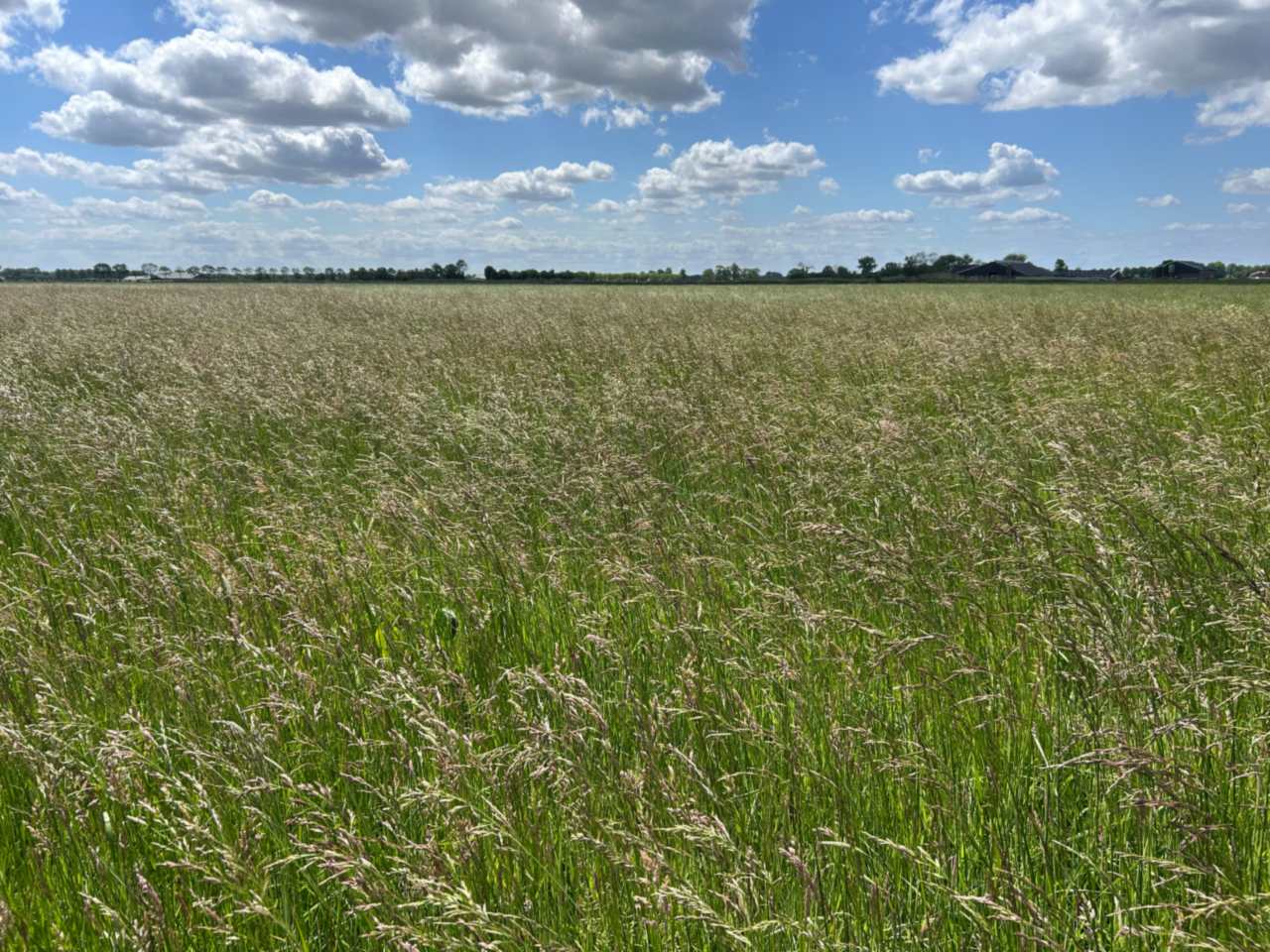
Stand in a cattle pasture anywhere from Virginia to Missouri in late May and the seedheads stand waist-high, nodding over the fence lines and road ditches: tall fescue, flowering. Fescue pollen never gets a headline — the counts just say "grass" — but behind that one word stands one of the largest deliberate plantings in American history. Tens of millions of acres of a single Kentucky grass variety blanket the transition zone between North and South, and every late spring they all flower at once. This is the story of the hillside that started it, and of why your grass reading treats a dozen species as one.
Key takeaways
- Kentucky 31 tall fescue was found on a drought-green hillside in Menifee County in 1931, released in 1943 — and by the 1950s it had been planted on more than 35 million acres.
- Tall fescue belongs to the Pooideae, the cool-season grass subfamily it shares with timothy, orchard grass, ryegrass and Kentucky bluegrass.
- The family's grasses share Group 1 allergens, and Group 5 allergens occur only in the Pooideae — which is why counts report "grass" as one unit, with no separate fescue line.
- Fescue flowers in late spring, May into June across the transition zone, and only where it is allowed to stand: pastures, hay meadows and road banks, not lawns kept mowed.
- Its fall growth flush is vegetative rather than flowering, so fescue does not meaningfully return to the air in autumn.
One Hillside in Kentucky
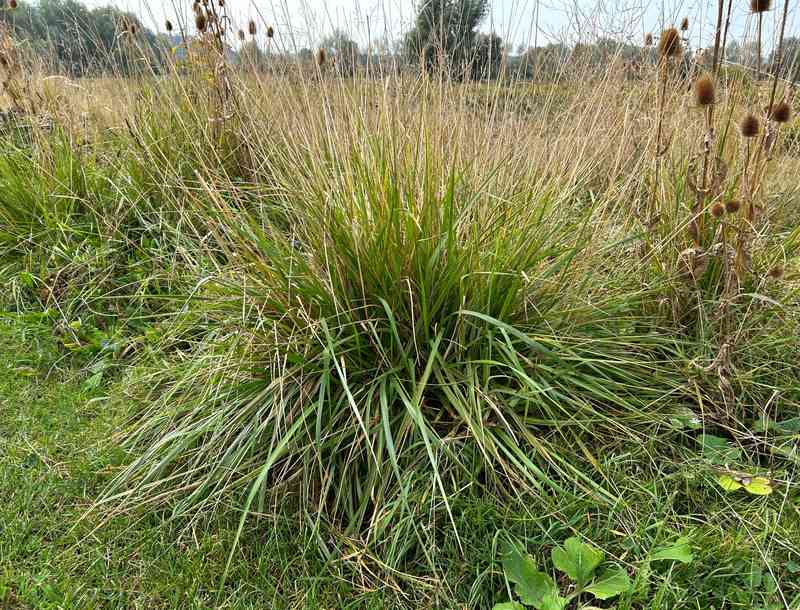
In 1931, in the middle of a drought, a University of Kentucky agronomist named E. N. Fergus found a pasture in Menifee County that had stayed green — a hillside of tall fescue thriving on worn-out land while everything around it failed. He collected its seed. The University of Arkansas Extension tells what happened next: after a decade of trials, the variety was released in 1943 under the name Kentucky 31, and it spread with missionary speed. By the 1950s it had been planted on more than 35 million acres across the Southeast and beyond. The Extension's verdict is simple: Kentucky 31 made fescue the most important forage grass in the country.
The reasons were agricultural, not allergenic. Tall fescue tolerates drought, poor soil, shade and abuse; it greens up early, holds late, and keeps cattle country fed through the transition zone's awkward climate — too hot for northern grasses in summer, too cold for southern ones in winter. It escaped the pasture almost immediately, naturalising along roadsides, waterways and waste ground, and it never left. When extension writers describe fescue today, they use the language of permanence: it is simply the grass that is there, from the Atlantic slope to the Plains' edge.
Fescue then made a second career that multiplied its footprint again: the lawn. Turf-type tall fescues — finer, darker descendants of the pasture grass, bred to stay short and dense — became the default lawn seed across the transition zone and much of the suburbs beyond it, prized for the same drought tolerance that saved Fergus's hillside. A kept lawn, mowed before it can head out, sheds little pollen; but the region's fescue is not mostly lawn. It is the un-mowed sea around the lawns — the pasture-lawn-roadside continuum stretching horizon to horizon. University of Kentucky forage histories still credit Kentucky 31 and its heirs with tens of millions of acres, and that acreage, not the subdivision turf, is what writes the late-spring air.
Why Fescue Pollen Acts Like Every Other Grass Pollen
Here is the allergy science that makes fescue matter, and it starts with family. Tall fescue belongs to the Pooideae, the great subfamily of cool-season grasses that includes timothy, orchard grass, ryegrass and Kentucky bluegrass. A peer-reviewed review of grass pollen allergens indexed by PubMed Central explains the consequence: the family's members share the same major allergen groups — Group 1 allergens, found across the grasses, and Group 5 allergens, which occur only in the Pooideae. The great majority of grass-allergic patients react to Group 1, and roughly two-thirds or more react to Group 5 as well.
Because the proteins are shared, the immune system largely treats these grasses as one exposure — and so do the counts. There is no separate "fescue" line on a pollen report because, immunologically and microscopically, the family presents as a unit. When a counter reports grass pollen, fescue is in there, indistinguishable and ordinarily unindictable on its own. The research literature treats the grasses as a unit, too, because the proteins genuinely are a set: the Group 5 allergens are the subfamily's fingerprint, present in fescue, bluegrass, timothy and ryegrass alike and found nowhere else in the wider grass family — which is why a confirmed grass allergy in fescue country is so seldom about one species alone. For the sufferer, the useful translation runs the other way: if you are grass-sensitive, the entire Pooideae neighbourhood — pasture fescue, lawn bluegrass, orchard grass in the hayfield — is one continuous season wearing different leaves, a point our grass pollen season guide follows across the calendar.
When Fescue Pollen Peaks
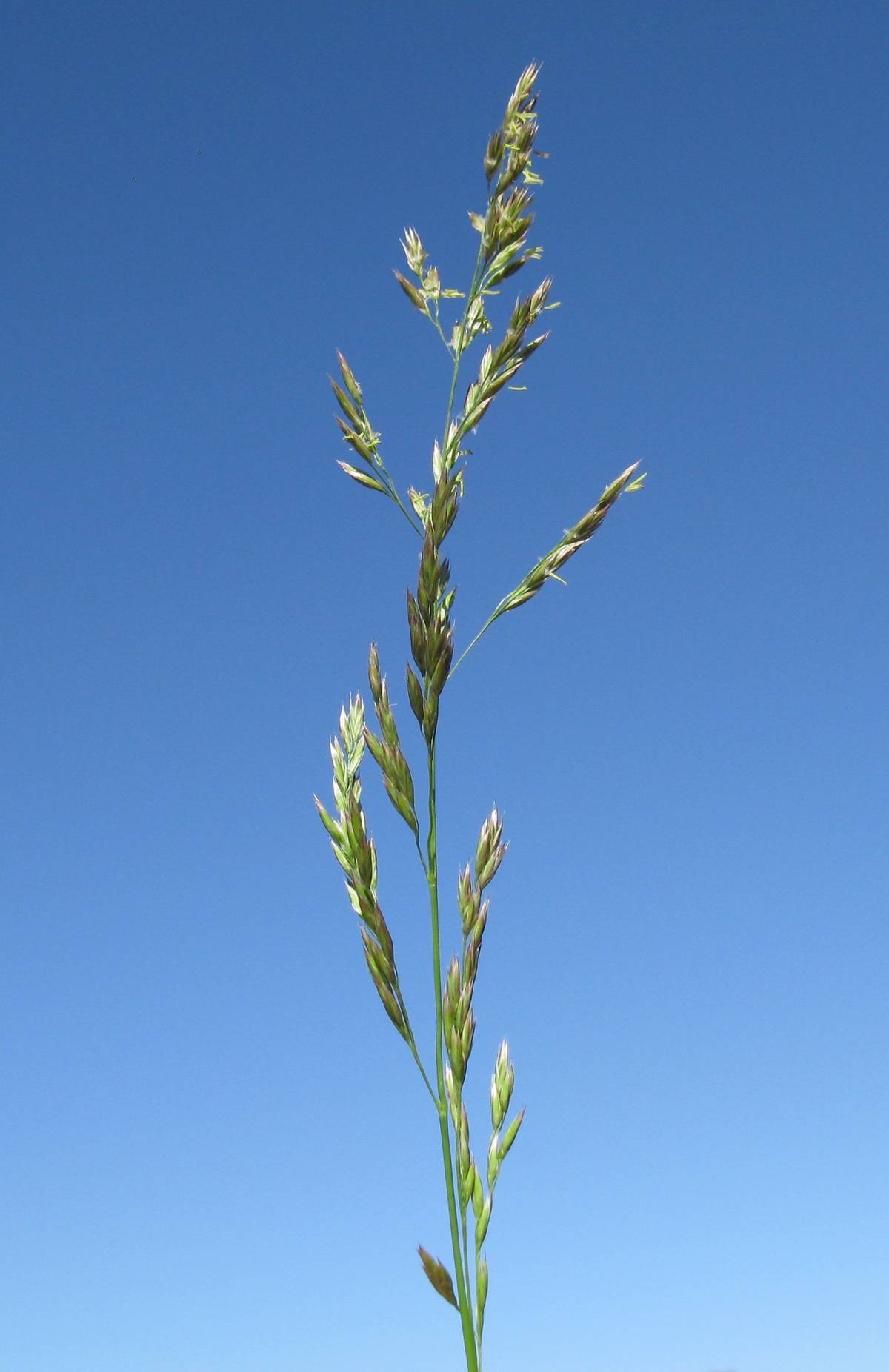
Tall fescue is a cool-season grass: it grows hard in the spring flush, flowers and sets seed in late spring, then coasts through summer heat before a second, lesser growth in fall. The flowering is the pollen event. Extension guidance for hay and seed production puts fescue's bloom in that late-spring window — May into June across most of the transition zone — and the same weeks govern the air. A lawn kept mowed sheds little; fescue flowers where it is allowed to stand: pastures, hay meadows, road banks, un-mowed field edges. The transition zone is a patchwork of exactly those places, which is why its grass season is so reliable.
Farm practice sharpens the peak. Hay is ideally cut around flowering, before seed set, so the late-spring weeks bring a double exposure across farm country: standing fescue shedding pollen at full stretch, and then cutting, raking and baling operations throwing dust and pollen back into the air field by field. Add the region's roadside mowing schedules — often timed to the same growth — and the transition zone's grass season acquires a distinctly mechanical rhythm. None of this is anyone's fault; it is a working landscape doing its work in the weeks the grass has chosen. But it explains why the grass index in fescue country can hold its plateau for week after week rather than spiking and collapsing like a single tree species' bloom.
Pollen Atlas data shows the grass index in Kansas City, Chicago and Columbus climbing into the Moderate band as the fescue belt flowers, with High-band days when dry wind works the pastures during peak bloom. Check the city rankings on a late-May morning and the transition-zone cities rise together — a regional bloom, not a local one, because the planting was regional too.
| Season | What the fescue plant does | Pollen in the air |
|---|---|---|
| Spring flush | Grows hard, flowers and sets seed in late spring | The year's one pollen event — May into June across the transition zone |
| Summer heat | Coasts through the heat | Little — the bloom is done |
| Fall flush | A second, lesser growth of leaves and tillers | None to speak of — the growth is vegetative, not flowering |
The Endophyte Footnote
One more calendar note before the footnote every fescue story owes you. The fall growth flush, though real, is vegetative — leaves and tillers, not flowers — so fescue does not meaningfully return to the air in autumn. When the transition zone's grass index ticks upward again in September, the credit belongs to other grasses and to the ragweed-season confusion that makes every September symptom feel like every other. Fescue is a one-act grass, and its act is late spring. Plan around May and June, and you have planned around fescue.
No fescue story is complete without its fungus — a plant-history footnote, not a pollen fact, but the reason fescue stayed controversial for decades. A history of the fescue toxicosis problem published through the Beef Improvement Federation recounts how researchers in the 1970s traced livestock losses on fescue pasture to a fungus living inside the plant, producing alkaloids that sicken cattle — even as the same fungus helped the grass shrug off drought and insects. Plant breeders later produced fescues carrying friendlier fungal strains, keeping the toughness without the toxins. It is a tidy parable for the whole species: the qualities that made Kentucky 31 irresistible to plant are the qualities that make it nearly impossible to remove.
If late spring is your hard season and the grass line is your trigger, the map matters as much as the medicine: know which weeks the fescue belt flowers around you, and let testing settle which grasses you actually react to. Finding an allergist who works with the grass family can turn "grass" from a shrug into a plan. This article is general information only and is not medical advice.
Frequently Asked Questions
Why is there no separate fescue line on a pollen report?
Because the Pooideae grasses present as a unit. Tall fescue, Kentucky bluegrass, timothy, orchard grass and ryegrass share Group 1 allergens across the family and Group 5 allergens within the subfamily, so immunologically and microscopically fescue is indistinguishable inside the general grass reading.
When does fescue pollen peak?
In late spring — May into June across most of the transition zone. Tall fescue is a cool-season grass that grows hard in the spring flush and flowers then; hay cutting around flowering, and roadside mowing timed to the same growth, throw additional dust and pollen into the air in the same weeks.
Does a fescue lawn shed much pollen?
Very little, if it is kept mowed — a lawn cut before it can head out sheds little pollen. The region's fescue pollen comes mainly from the un-mowed sea around the lawns: pastures, hay meadows, road banks and un-mowed field edges where the grass is allowed to stand and flower.
Does fescue pollen return in the fall?
No. The fall growth flush is vegetative — leaves and tillers, not flowers — so fescue does not meaningfully return to the air in autumn. A September uptick in the grass index belongs to other grasses, and to the ragweed-season confusion that makes fall symptoms hard to separate.
Ninety years on, one drought-proof hillside in Menifee County still writes the transition zone's late spring — acre by acre, pasture by pasture, fescue pollen on the wind every May. Pollen checks you daily. Check it back — free counts and forecasts, worldwide: PollenAtlas.com.