
Willow Pollen: The Riverbank Tree That Opens Spring
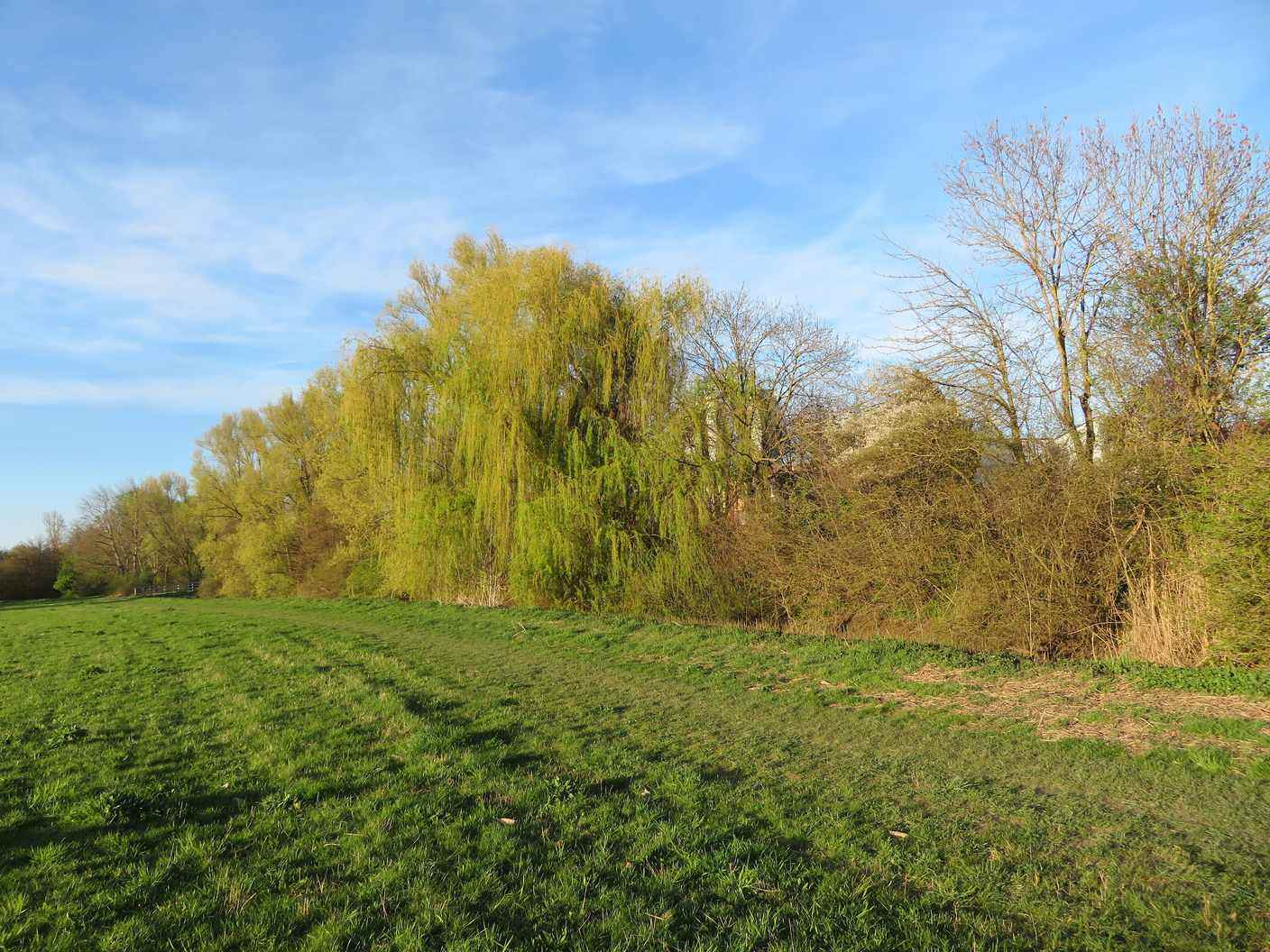
Willow pollen is one of the earliest tree pollens of the northern spring. Before most maples have opened and weeks before the oaks crest, willows standing along rivers, lakeshores, and wet ground push out their catkins and begin releasing pollen into air that is still cold. Willows hold an unusual place in the pollen world: they are pollinated by both insects and wind, a dual strategy that leaves many people unsure whether their pollen even counts. It does — counting stations register willow pollen every spring — and the story of why is a tidy lesson in how pollen actually moves.
Key takeaways
- Willow pollen appears early in spring — catkins open from March in milder regions and April further north, often before the trees leaf out — per USDA Natural Resources Conservation Service plant guides for Salix species.
- Willows are pollinated by both insects and wind, which is why the AAAAI National Allergy Bureau still records willow pollen at counting stations despite the trees' bee-friendly flowers.
- Willows concentrate along water: riverbanks, lakeshores, wetlands, and irrigation corridors carry the densest stands, and pollen exposure follows those corridors.
- Pollen Atlas data shows willow registering as an early-season contributor to the Tree Index in northern and western river cities, weeks before the oak crest.
Meet the willows
Willows belong to the genus Salix, a large group of trees and shrubs — several hundred species worldwide, dozens native to North America — united by their love of moisture. Black willow is the largest North American species, a tree of riverbanks and floodplains across the East and Midwest. Peachleaf willow lines the streams of the plains and the mountain West. The weeping willow of parks and gardens is an introduced ornamental, planted far beyond any native range. The USDA Natural Resources Conservation Service plant guides describe the shared pattern: willows root where the water is, stabilize banks with dense root systems, and grow fast.
Catkins before leaves
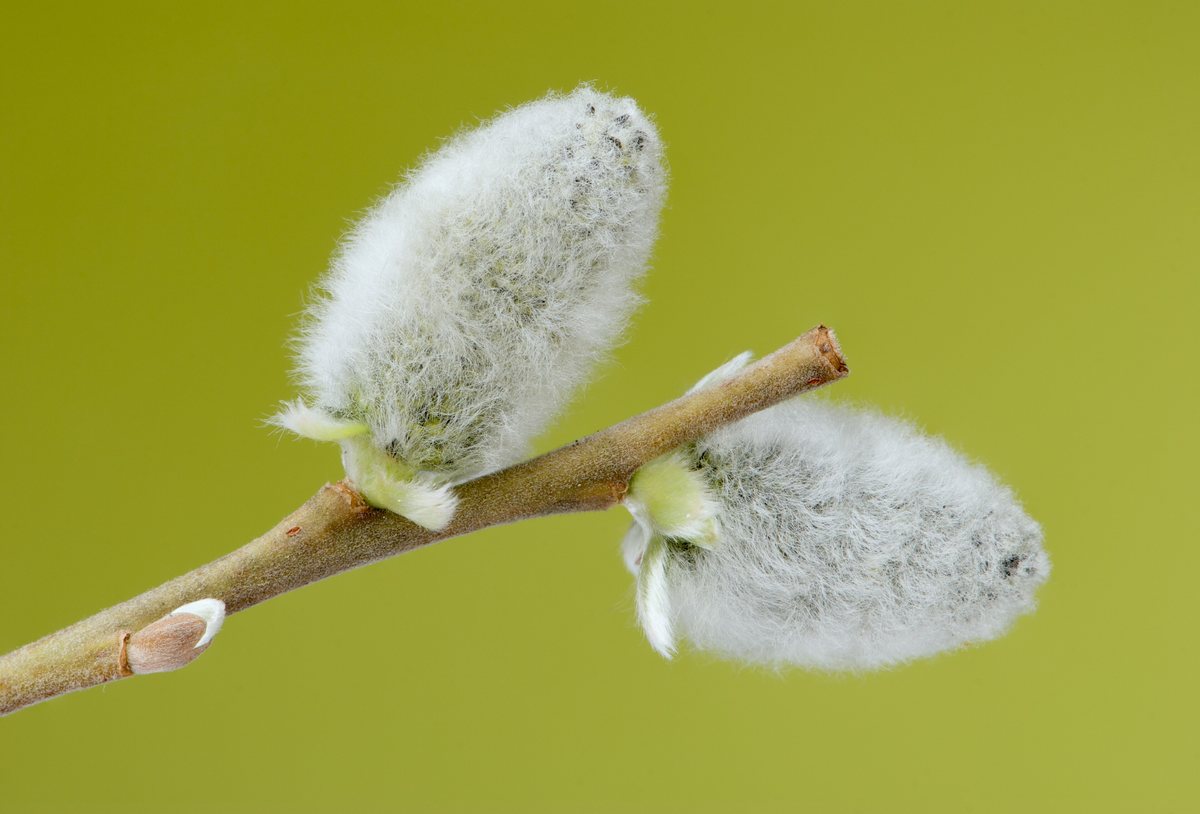
A willow's flowering runs ahead of its foliage. In early spring, slim catkins emerge on bare branches — male catkins carrying the pollen, female catkins on separate trees, since willows are dioecious, with male and female flowers on different plants. Only the male trees release pollen, a detail that matters for anyone reading a street's worth of planted willows: a row of female trees contributes none.
The dual-pollination puzzle
Built for two couriers
Most familiar allergy trees — oak, birch, ragweed among the weeds — are committed wind-pollinators, producing vast quantities of light pollen built to travel. Most showy garden flowers sit at the other pole, relying on insects and releasing little pollen to the air. Willows stand in between. Their catkins offer nectar and draw bees heavily in early spring, when few other flowers are open — beekeepers value willow as one of the first pollen and nectar sources of the year. At the same time, willow pollen is produced in quantities beyond what the bees collect, and a share of it becomes airborne, especially on dry, breezy days when catkins shed freely.
The Asthma and Allergy Foundation of America notes that insect-pollinated plants usually contribute less airborne pollen than wind-pollinated ones, and willow fits the pattern of a middle contributor: rarely the headline of a spring count, but present, early, and locally meaningful where the trees are dense. The AAAAI's National Allergy Bureau counts Salix among the tree pollens its stations identify, which settles the question of whether it registers — it does, every spring, in the season's opening weeks.
Where willow pollen concentrates
Follow the water
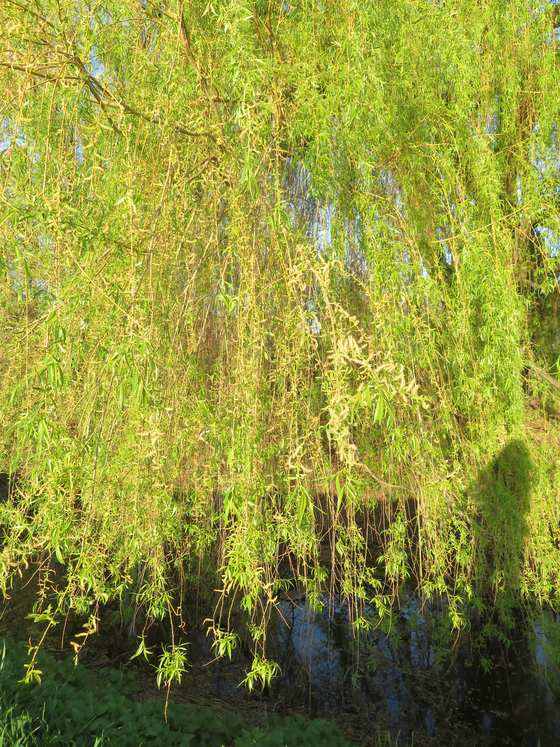
Read a map of willow and you are reading a map of water. In Minneapolis, willows line the Mississippi River, the chain of lakes, and the creek corridors that run through the metro, and their catkins open in April as one of the first tree pollens of the late northern spring. In Denver, willows follow the South Platte and the irrigation-fed greenways that stitch the city together — ribbons of moisture in a dry landscape, with pollen concentrated along them. In Chicago, the lakefront, the river branches, and the forest-preserve wetlands carry the stands.
| Setting | Typical willow presence | Pollen pattern |
|---|---|---|
| River corridors and floodplains | Dense native stands (black willow, peachleaf willow) | Strongest local readings, early spring |
| Lakeshores and wetlands | Continuous fringe plantings and wild stands | Steady early-season presence |
| Parks and gardens | Planted ornamentals (weeping willow and others) | Spotty — depends on whether trees are male |
| Dry uplands away from water | Sparse | Minimal contribution |
Willow in the spring sequence
Willow's role in the wider tree pollen season is that of an opener. It flowers alongside the earliest maples — our maple pollen guide covers that other early act — and its season is usually winding down as elm, ash, and then oak take over. For northern readers, the first willow catkins on a riverbank walk are a practical signal: the tree pollen year has begun, and the bigger acts are a few weeks behind it.
Because willow pollen is a moderate, local contributor rather than a regional blanket, its daily pattern is neighborhood-shaped. A breezy April afternoon along a river trail can carry noticeable willow pollen while a station across the city records only a trace — a reminder that counts describe the air at the sampler, and corridors concentrate what the sampler averages away.
Tracking willow pollen on Pollen Atlas
On Pollen Atlas, willow is tracked within the daily Tree Index — scored 0 to 100, Low from 0 to 33, Moderate from 34 to 66, and High from 67 to 100 — with per-plant detail on each city page showing the early-season weeks when willow is among the contributors. Watching the national city rankings in March and April shows the season's geography clearly: southern river cities register their spring openers weeks before the northern corridors thaw.
Readers interested in identifying their own pollen triggers can browse the Find an Allergist directory, kept as a directory resource. This article is general information only and is not medical advice.
Frequently Asked Questions
When is willow pollen season?
Willow pollen season is in early spring — March in milder regions and April further north. Willows flower before or as their leaves emerge, so their catkins are among the first tree pollens of the year in most regions.
Are willows wind-pollinated or insect-pollinated?
Willows are both: their catkins attract bees and other insects with nectar, and they also release pollen that becomes airborne. That dual strategy is why willow pollen appears in station counts even though the trees are valued by beekeepers as an early insect food source.
Where is willow pollen most common?
Willow pollen is most common along water — riverbanks, lakeshores, wetlands, and irrigated greenways where willows naturally concentrate. River-corridor cities such as Minneapolis and Denver see their strongest readings near those stands in early spring.
Do all willow trees release pollen?
No — willows are dioecious, meaning male and female flowers grow on separate trees. Only male willows produce pollen, so a planting of female trees contributes none, while a male ornamental can be a concentrated local source.
Conclusion
Willow pollen opens the spring season quietly, from the riverbank outward: an early, water-loving tree with a foot in both the insect and wind worlds, registering in the counts weeks before the famous crests arrive. Watch for its catkins and you are watching the tree year begin. Pollen checks you daily. Check it back — free counts and 5-day forecasts, worldwide: PollenAtlas.com
Sources: USDA Natural Resources Conservation Service, plant guides for Salix species (black willow, peachleaf willow); American Academy of Allergy, Asthma & Immunology, National Allergy Bureau counting-station network; Asthma and Allergy Foundation of America, pollen allergy education material; Pollen Atlas city index data for Minneapolis, Denver, and Chicago.