
Saltbush Pollen: The Fall Weed of the Salt Country
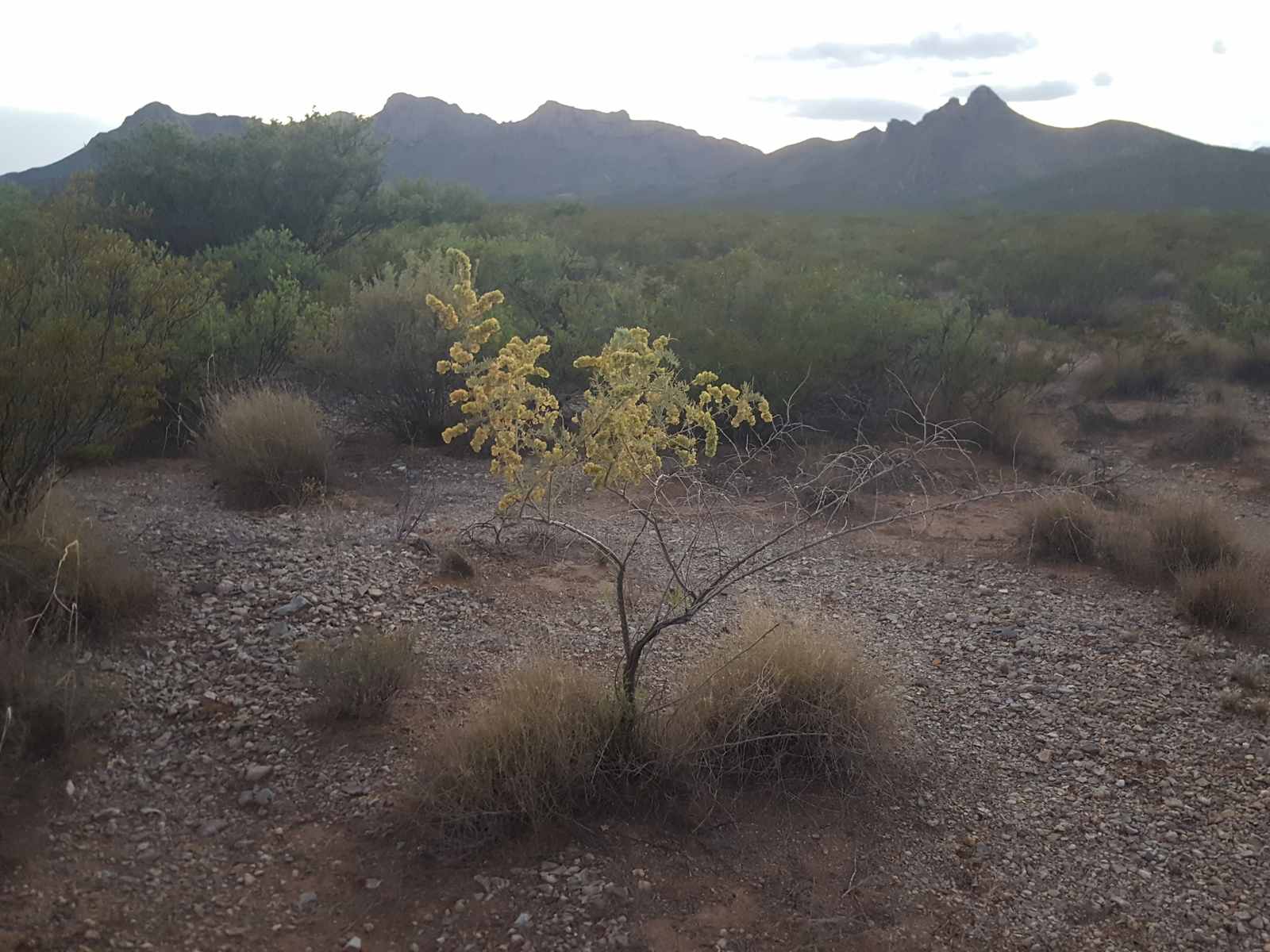
Out past the irrigated green of the desert cities, where the soil turns white with alkali and almost nothing else will grow, the gray shrubs take over. Saltbush — Atriplex, in dozens of species across the West — is the vegetation of the hardest ground in North America: salt flats, desert pavements, overgrazed range, the margins of dry lakes. It asks little and endures everything. And in the late-summer and fall air of the Southwest, saltbush pollen is one of the region's defining weed exposures — a season written not by gardens or farms but by the wild desert itself, doing what it has always done at the edge of town.
Key takeaways
- Saltbush (Atriplex) is the vegetation of the West's saltiest ground — fourwing saltbush (Atriplex canescens) grows from near the desert floor up to roughly 8,000 feet.
- Male and female flowers ride on separate plants, and only the male shrubs shed pollen — but the desert plants them by the millions.
- Fourwing saltbush flowers in summer, and related species carry the bloom from midsummer into fall: the desert's calendar is inverted, with spring given to the cities' planted trees and late summer into autumn to the open-desert weeds.
- Saltbush belongs to the chenopod-amaranth clan with pigweed, lamb's quarters, kochia and Russian thistle; the family's grains are look-alikes under the microscope, so counts report the family together.
- The University of Arizona's profile flags fourwing saltbush pollen as a severe allergen, and a year-long Phoenix survey published in 1960 found Atriplex among the heaviest contributors to the summer and fall pollen load.
Built for the Hardest Ground in the West
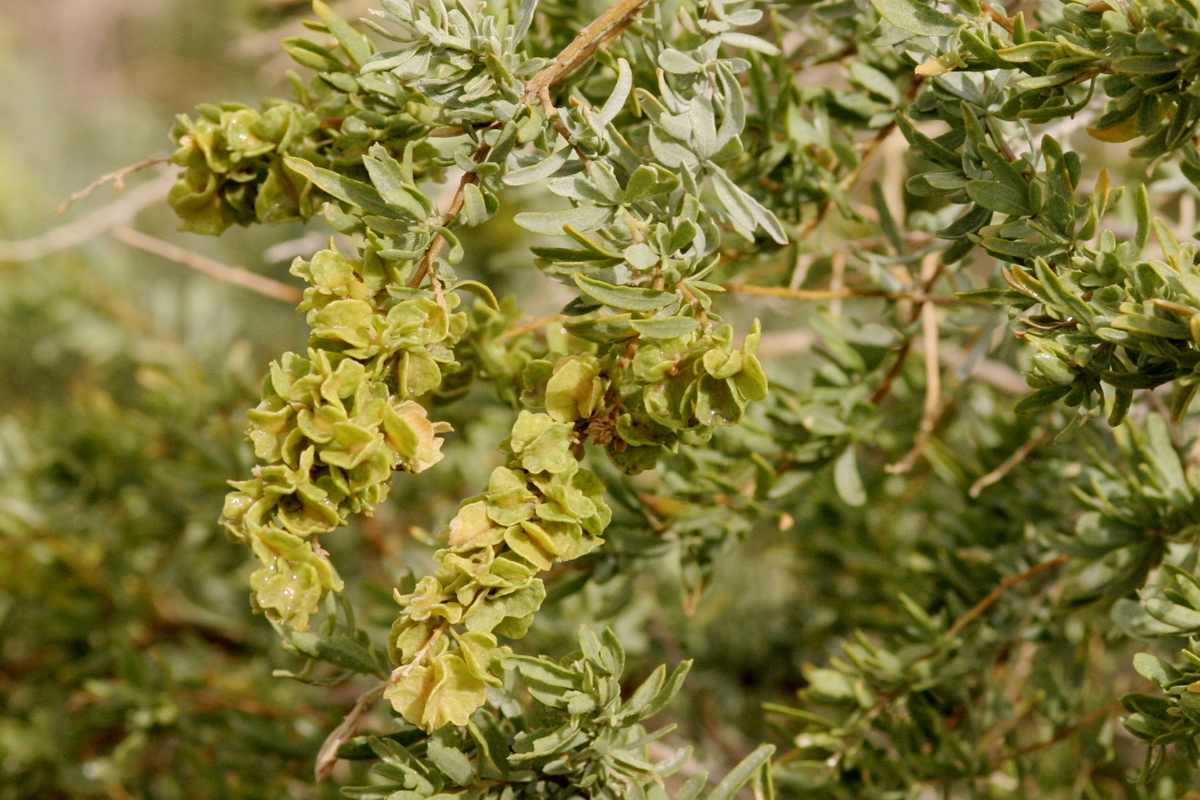
The emblem of the genus is fourwing saltbush (Atriplex canescens), profiled by the USDA Forest Service's Fire Effects Information System as one of the most widely distributed shrubs of western rangelands. It grows from the hot desert floor up into ponderosa pine country, shrugs off salty and alkaline soils that kill other shrubs, and carries a deep taproot down to water tables other plants cannot reach. Its gray-scaled leaves give whole hillsides their pale, dusty cast. The fruit is unmistakable once seen: each seed wrapped in bracts with four papery wings, produced in such numbers that the plant is a winter pantry for birds and small mammals — and a mainstay of reclamation plantings on mined and burned land.
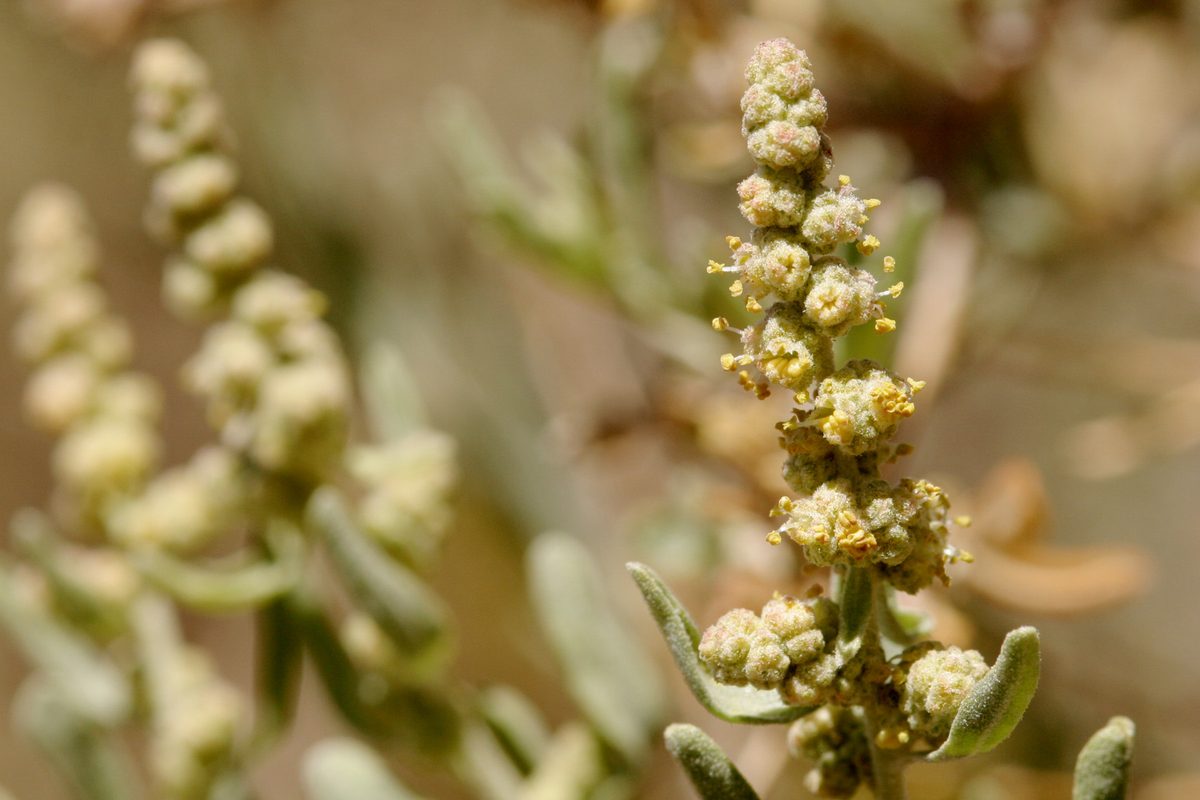
The University of Arizona's Tumamoc Hill plant profile adds the details a desert walker learns: a rounded, gray, semi-evergreen shrub of well-drained sandy and gravelly ground, its inconspicuous yellowish male flowers packed in short dense spikes along the branch tips. Male and female flowers ride on separate plants — a botanical arrangement called dioecy — which matters for pollen: only the male shrubs shed it, but the desert plants them by the millions.
Fourwing is only the best-known member of the clan. Botanists count dozens of Atriplex species native or naturalised in the United States, and the genus covers the whole elevation staircase of the interior West: the Forest Service profile puts fourwing saltbush from near the desert floor up to roughly 8,000 feet, and its relatives — shadscale in the Great Basin's salt deserts, Gardner's saltbush on the northern plains' clay flats — take the genus into country fourwing never reaches. The common thread is chemical: these are plants that drink salt water, in effect, excreting the excess through their leaves and thriving where the soil itself is the stress. Ground too salty for grass, too dry for trees, too poor for crops — in the American West, that is not marginal land. It is a substantial fraction of the map, and saltbush owns it.
Why Saltbush Pollen Rides the Fall Air
Fourwing saltbush's flowering season, per the University of Arizona profile, is summer — and across the genus, related species carry the bloom from midsummer into fall. The shrub is not merely tolerated by the desert's working landscape; it is part of the staff. The Forest Service's profile records its value as winter browse — the protein-rich twigs and persistent leaves that carry deer, livestock and jackrabbits through the lean months when the grasses are cured and gone. A plant can hardly be more woven into a region than that: holding the soil, feeding the herds, sheltering the birds. Its pollen season is the one line item on the invoice nobody itemised. That timing is the whole story. The desert's allergy calendar is inverted compared with the East: spring belongs to the planted trees of the cities, and late summer into autumn belongs to the weeds of the open desert — ragweed's western cousins, the pigweeds, the tumbleweeds, and saltbush. As the monsoon breaks and the land dries, these plants flower into cooling, breezy air that carries their pollen straight into the metropolitan basins downwind.
Saltbush also illustrates why desert weed counts are reported as families rather than species. Saltbush sits in the goosefoot alliance — the chenopod-amaranth clan that includes pigweed, lamb's quarters, kochia and Russian thistle, gathered in our pigweed and tumbleweed guide. Under the microscope, the family's grains are famously look-alike: small, round, and pocked with pores all over the surface, like tiny golf balls. Counters who cannot reliably separate the cousins report the family together. So when a Phoenix fall count rises on "chenopod" grains, saltbush from the wildlands outside the city is part of that number, sharing the air with its kin — and, researchers note, the family's members can cross-react, which is one reason the desert's fall weed season feels like a single long event rather than a series of separate ones.
There is a second reason the season feels seamless: the family's members relieve each other like runners. The pigweeds and lamb's quarters of summer hand off to Russian thistle and kochia, and saltbush — with species flowering from midsummer deep into fall — spans nearly the whole relay by itself. A sufferer waiting for a gap in the desert's weed season is waiting for a gap the flora never quite provides; the realistic target is the day's number, not the season's end. That is a counsel of realism, not despair: family-level counts exist precisely so that people can manage the whole clan at once, and the clan, for all its acreage, still obeys weather — still air after rain is the desert's gift to the sensitive, and it comes most weeks.
| Chenopod-family member | Slot in the desert's weed relay |
|---|---|
| Pigweeds and lamb's quarters | The summer leg |
| Russian thistle and kochia | The later hand-off |
| Saltbush (Atriplex) | Spans nearly the whole relay — species flowering from midsummer deep into fall |
Where Saltbush Pollen Registers
The University of Arizona's profile does not mince words about the endpoint of all this biology: fourwing saltbush's pollen is flagged there as a severe allergen. The desert has known it for a long time. A year-long survey of Phoenix's airborne pollen published in the Journal of Allergy in 1960 — from the era when the city was first learning to count — found Atriplex among the heaviest contributors to the summer and fall pollen load, sharing the season with Russian thistle. Seven decades of growth have filled in the desert's edges, but the wildland reservoir the survey measured is still out there, essentially intact, ringing every southwestern metro.
Nor is all of it wild. Because fourwing saltbush tolerates what kills other shrubs, land managers plant it deliberately — the Forest Service profiles it as one of the most widely used shrubs for reclaiming mined land, burns and road cuts across the West. Reclamation plantings put a severe-allergen shrub, by design, on disturbed ground right at the urban fringe, where it does its erosion work faithfully and its pollen work incidentally. Saltbush's combination — enormous wild acreage, planted reinforcements, wind pollination, late-season timing, and cities built directly downwind of its habitat — makes it a structural feature of southwestern fall allergies, not an occasional guest.
Pollen Atlas data shows the pattern in the season's shape: the weed index in Phoenix, Las Vegas and Albuquerque climbing into the Moderate band through late-summer and fall stretches, with High-band days when desert wind runs ahead of autumn fronts. Watch the heatmap in September and the Southwest's weed colour is lit by the open country as much as by anything in town — the one season when the desert itself, unplanted and unmanaged, out-pollinates the city. If your difficult weeks arrive as the desert cools and the usual suspects don't explain them, the chenopod family — saltbush at its head — belongs on the list to test. Finding an allergist familiar with desert flora can separate the family's members. This article is general information only and is not medical advice.
Frequently Asked Questions
When is saltbush pollen season?
Fourwing saltbush flowers in summer, and across the genus related species carry the bloom from midsummer into fall. The desert's allergy calendar is inverted compared with the East: spring belongs to the planted trees of the cities, and late summer into autumn belongs to the weeds of the open desert — saltbush among them.
Why do fall counts mention chenopods instead of saltbush by name?
Saltbush sits in the goosefoot alliance — the chenopod-amaranth clan that includes pigweed, lamb's quarters, kochia and Russian thistle — and the family's grains are famously look-alike under the microscope: small, round, and pocked with pores. Counters who cannot reliably separate the cousins report the family together, and the family's members can cross-react as well.
If only male saltbush shrubs shed pollen, is the exposure halved?
Only the male shrubs shed pollen, because male and female flowers ride on separate plants — but the desert plants the males by the millions across the wildland ringing every southwestern metro. Reclamation plantings add more, placing a severe-allergen shrub on disturbed ground right at the urban fringe.
Where does saltbush pollen register most strongly?
In the desert metros downwind of its habitat. Pollen Atlas data shows the weed index in Phoenix, Las Vegas and Albuquerque climbing into the Moderate band through late-summer and fall stretches, with High-band days when desert wind runs ahead of autumn fronts.
Nothing about saltbush is accidental. It is the native cover of the salt country, feeding wildlife, holding soil, greening after rain — and every year, on schedule, putting saltbush pollen over the cities its habitat surrounds. Salt country runs on its own calendar — read it before the wind does: free pollen counts and forecasts for Phoenix, Las Vegas, Albuquerque and cities worldwide at PollenAtlas.com.