
Privet Pollen: The Hedge Hiding in the South's Spring Air
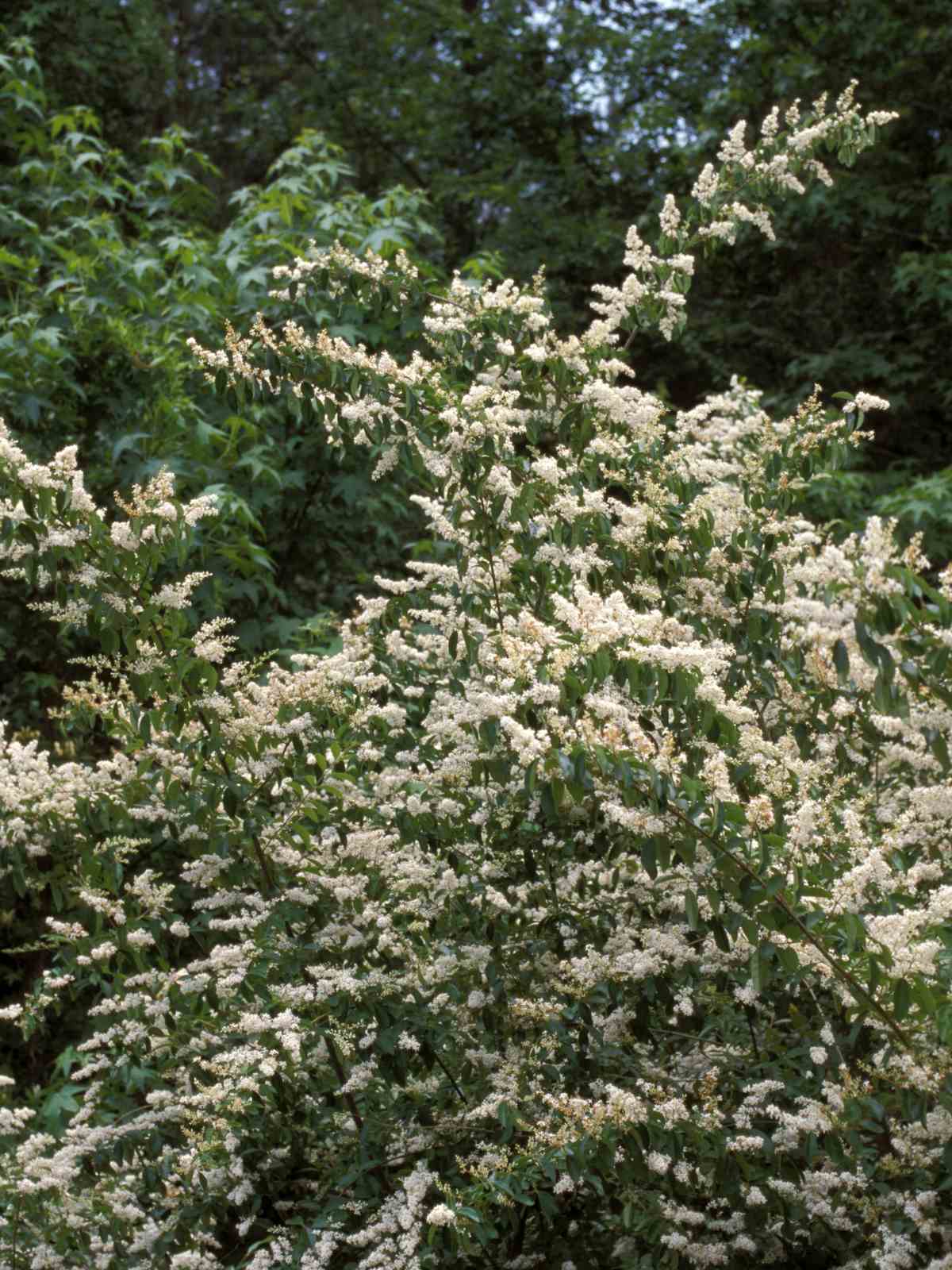
In May and June, across the American South, the hedges turn white and the air goes sweet and heavy. That is privet in bloom — Ligustrum, the default privacy hedge of the southern suburb, flowering in dense panicles of small white blossom. Most people filing past it on the sidewalk register only the scent. Allergy sufferers register something else, because privet pollen is not a minor botanical footnote. Privet belongs to the olive family, Oleaceae — the single most allergenic plant family in the temperate world — and it carries the family proteins to prove it.
Key takeaways
- Privet (Ligustrum) belongs to the olive family, Oleaceae — the plant family behind olive, ash, lilac, forsythia and jasmine pollen.
- Privet's major allergen, Lig v 1, shares roughly ninety percent of its amino-acid sequence with olive's Ole e 1 and ash's Fra e 1, which is why privet pollen cross-reacts with its relatives.
- Chinese privet was introduced to the United States as an ornamental shrub in 1852, had escaped cultivation in the Southeast by the 1930s, and now occupies more than a million hectares across a dozen states.
- Privet flowers from May through July and produces a plateau rather than a peak — and a hedge sheared hard and often flowers far less than one left to grow.
An Olive-Family Heavyweight in a Hedge's Clothing
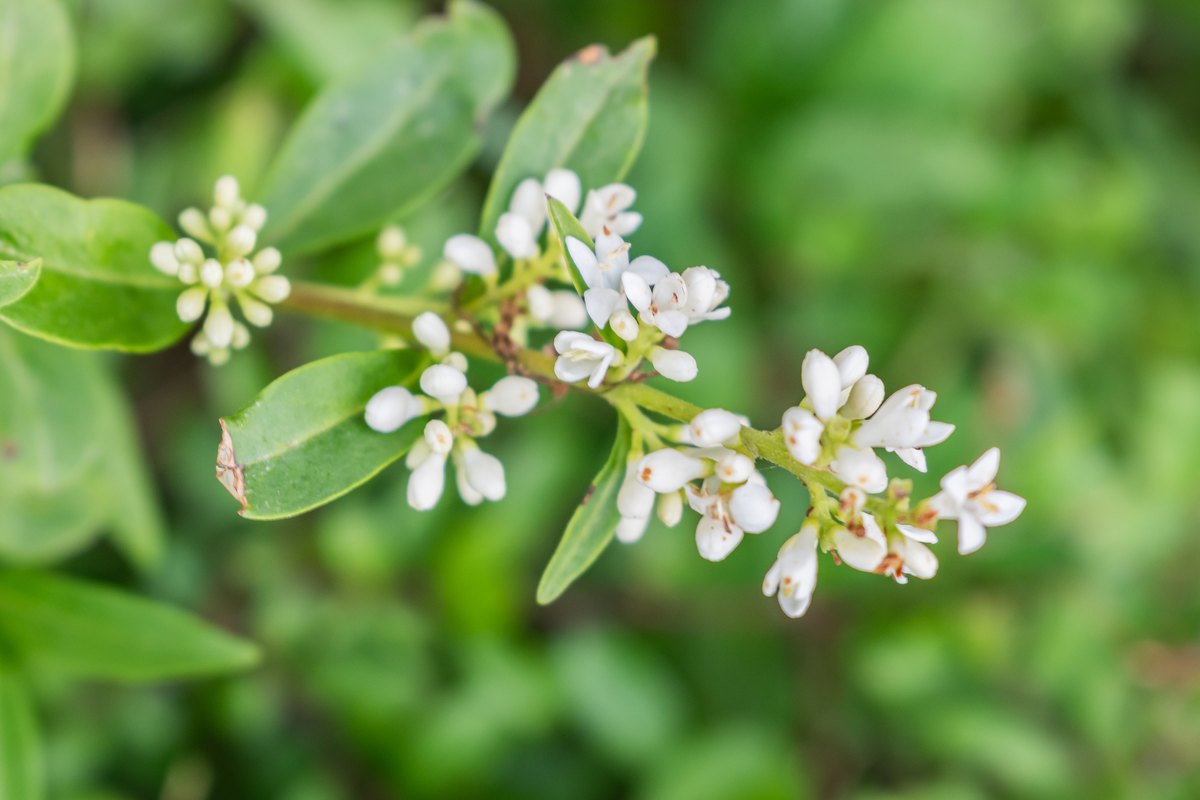
The Oleaceae roster reads like a spring allergy honour roll: olive, ash, lilac, forsythia, jasmine — and privet. A review of Oleaceae pollen allergy in the Iranian Journal of Allergy, Asthma and Immunology lays out why the family acts as a unit: the major allergens of olive, ash, privet and lilac all belong to one protein family (the Ole e 1-like proteins) and share roughly ninety percent of their amino-acid sequence. The immune system, meeting privet pollen, sees a close relative of olive and ash and often reacts accordingly.
That cross-reactivity is the practical heart of the privet story. The Pollen Information Service's plant profile states it plainly: privet pollen can trigger cross-reactions with other olive-family plants such as ash and olive because of the allergen similarity that comes with kinship. Someone whose spring misery is filed under "ash" or who reacts to olive pollen in the Southwest may find the southern privet hedge speaking the same chemical language — three different plants, one overlapping season of symptoms. Privet is also a two-way plant for pollen dispersal: its flowers court insects, but anthers positioned to shed freely mean surplus pollen takes the wind as well, particularly from large, untrimmed shrubs.
The Proteins Behind the Symptom
The Oleaceae review gives the cross-reactivity a parts list. The family's major pollen allergens each carry their own catalogue names — olive's is Ole e 1, ash's is Fra e 1, privet's is Lig v 1, lilac's is Syr v 1 — and they belong to a single protein family whose members share around ninety percent of their amino-acid sequence. Ninety percent is, to an antibody, a very convincing family resemblance. The review describes these proteins as the main sensitizers of the whole family: across the Mediterranean world, where olive is king, they drive one of the heaviest pollen-allergy burdens anywhere; in the American South, the same molecular pattern arrives wearing privet and ash.
This is why privet punches so far above its reputation. Judged as a pollen producer alone, it is a respectable but not extreme source — insect-visited flowers, moderately heavy grains. Judged as an allergen, it borrows the potency of its entire family. A person sensitised by years of southern springs may react to the privet hedge through antibodies raised by the ash trees of March, and the privet then maintains the sensitisation through June. Allergy, in the olive family, is a cumulative conversation among relatives — and privet is the relative who lives closest to the house.
| Plant | Major pollen allergen | Note |
|---|---|---|
| Olive | Ole e 1 | The family's benchmark allergen |
| Ash | Fra e 1 | A March tree pollen in the American South |
| Privet | Lig v 1 | Shed from hedges and escaped thickets, May into summer |
| Lilac | Syr v 1 | Another Ole e 1-like relative |
All four allergens belong to one protein family whose members share around ninety percent of their amino-acid sequence.
How Privet Pollen Got Everywhere
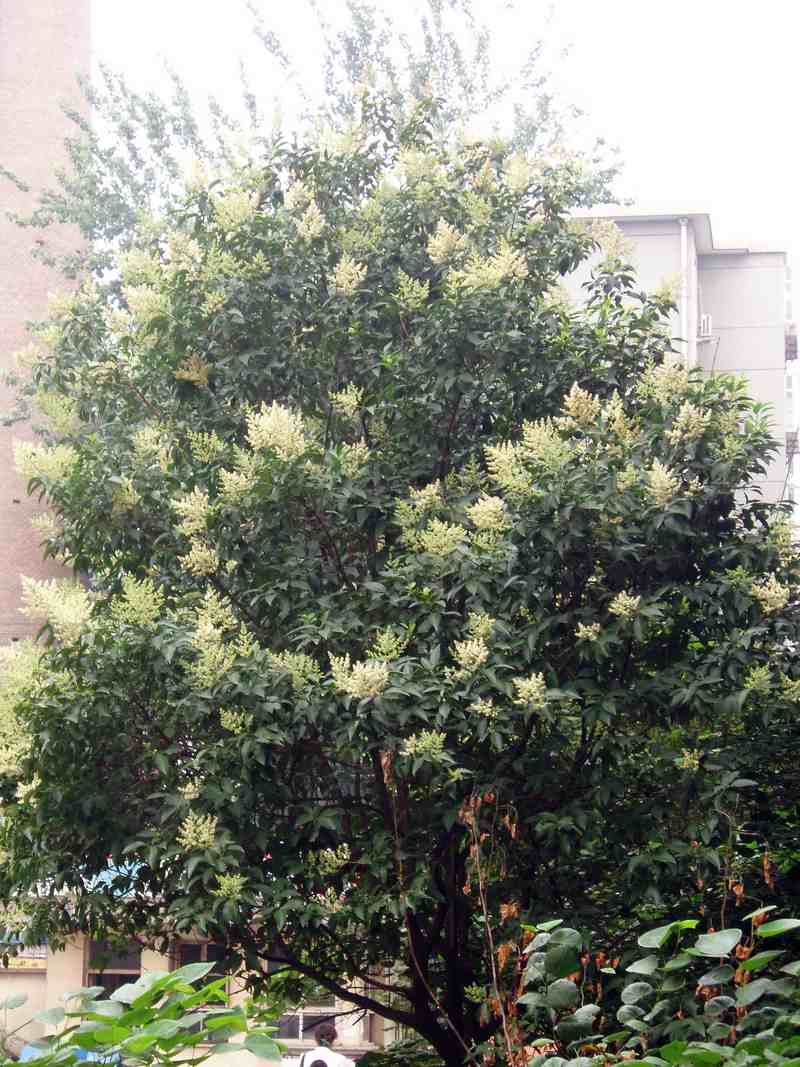
Privet's range was not an accident of nature; it was a landscaping decision, repeated millions of times. The University of Florida's IFAS Center for Aquatic and Invasive Plants records that Chinese privet (Ligustrum sinense) was introduced to the United States as an ornamental shrub in 1852 and had escaped cultivation in the Southeast by the 1930s. Japanese privet followed the same path into southern gardens. Birds ate the dark berries and planted the seeds everywhere birds perch, and privet — tolerant of shade, poor soil and neglect — did the rest.
Invasive-plant references estimate that Chinese privet alone now occupies more than a million hectares across a dozen states, from Virginia to Florida and west to Texas. The University of Florida calls it one of the major weeds of woodland habitats in the Southeast: in floodplain forests it forms dense, single-species thickets that shade out native understory. Florida has gone further: Chinese privet sits on the Florida Noxious Weed List (added in 2014) and in Category I of the Florida Exotic Pest Plant Council's rankings — the council, now the Florida Invasive Species Council, reserves that top category for the invaders doing the most ecological damage — a formal acknowledgement that the ornamental of 1852 is now an ecological problem in its own right. Forestry crews cut it, herbicide it and still lose ground to the birds replanting it from every ornamental hedge in town.
For pollen, the consequence is a double source. The planted city supplies privet by the mile — hedges, screens, foundation plantings — and the feral countryside behind it supplies thickets nobody planted at all. There is no landscaping ordinance against a forest.
When Privet Pollen Peaks in the South
Privet flowers late in the spring sequence, after the oaks and pines have had their say — roughly May into June across most of the South, later within the spring allergy season than the trees that open the year. The Pollen Information Service's profile gives the genus a flowering window running May through July, and the South plants several species whose schedules overlap without quite matching: Chinese privet on the early edge, the larger Japanese privet selections later, the feral thickets on their own wild timing. The result is not a peak but a plateau — week after week in which some privet, somewhere in the neighbourhood, is in bloom and shedding into air already carrying the family's cross-reactive load. Pollen Atlas data shows the tree-and-shrub layer of spring counts in Atlanta, Charlotte and Houston holding in the Moderate band through long late-spring stretches, with High-band days when privet's bloom overlaps the tail of the trees and the start of the grasses under hot, dry, breezy weather. Zoom out on the heatmap in late May and the Southeast glows as one continuous shrub-and-grass landscape — because, botanically, it now is one. The pattern repeats on the West Coast, where privet hedges line the suburbs: the Thousand Oaks pollen count today shows the same shrub-and-grass overlap building through late spring.
One household detail matters more than any other: a privet hedge sheared hard and often flowers far less than a privet left to grow. Formal hedges clipped through spring may never bloom at all, while the same species gone wild at the wood's edge flowers in clouds. Much of the South's privet pollen burden comes not from tidy gardens but from the escaped thickets along creeks, fence lines and vacant lots — sources no single homeowner controls.
Privet exposure also has a geography that county-level counts flatten out. Because the flowers are built for insects, a good share of the pollen is comparatively heavy and settles near the shrub; the sharpest exposures are local — the untrimmed hedge along your walking route, the flowering thicket behind the school, the privet screen around the patio. Two streets can share one pollen count and live in different privet worlds. That local character is worth knowing before you blame a distant forest: walk your own block in late May, look for the white panicles and the bees working them, and you have found your likeliest source. If your worst stretch of spring coincides with those hedges blooming and the standard tree suspects have already finished, privet belongs on your list of candidates; finding an allergist who tests the olive family can confirm whether the hedge is your problem. This article is general information only and is not medical advice.
Frequently Asked Questions
When does privet pollen peak?
Privet flowers late in the spring sequence, roughly May into June across most of the South, and the Pollen Information Service gives the genus a flowering window running May through July. Because several planted and feral species overlap without quite matching, the result is a plateau — week after week in which some privet is in bloom — rather than one sharp peak.
Why does privet pollen cross-react with ash and olive?
The major allergens of olive, ash, privet and lilac all belong to one protein family, the Ole e 1-like proteins, and share roughly ninety percent of their amino-acid sequence. To an antibody, that is a very convincing family resemblance, so a person sensitised by ash in March can react to the privet hedge through June.
Does trimming a privet hedge reduce its pollen?
A privet hedge sheared hard and often flowers far less than a privet left to grow, and formal hedges clipped through spring may never bloom at all. Much of the South's privet pollen burden comes instead from escaped thickets along creeks, fence lines and vacant lots — sources no single homeowner controls.
Where is privet pollen exposure worst?
Close to the shrub. Privet flowers are built for insects, so a good share of the pollen is comparatively heavy and settles near the plant; the sharpest exposures are local — an untrimmed hedge along a walking route or a flowering thicket behind a school. Two streets can share one pollen count and live in different privet worlds.
The privet story is the planted landscape turning out to have a pollen budget of its own — one we wrote ourselves, hedge by hedge, over a hundred and seventy years. Privet pollen blooms late in the sequence, borrows the potency of the whole olive family, and is not going anywhere. Know before you head out — free pollen counts and 5-day forecasts for Atlanta, Charlotte, Houston and everywhere else at PollenAtlas.com.