
Pecan Pollen: The Hickory Relative That Drives Southern Spring Counts
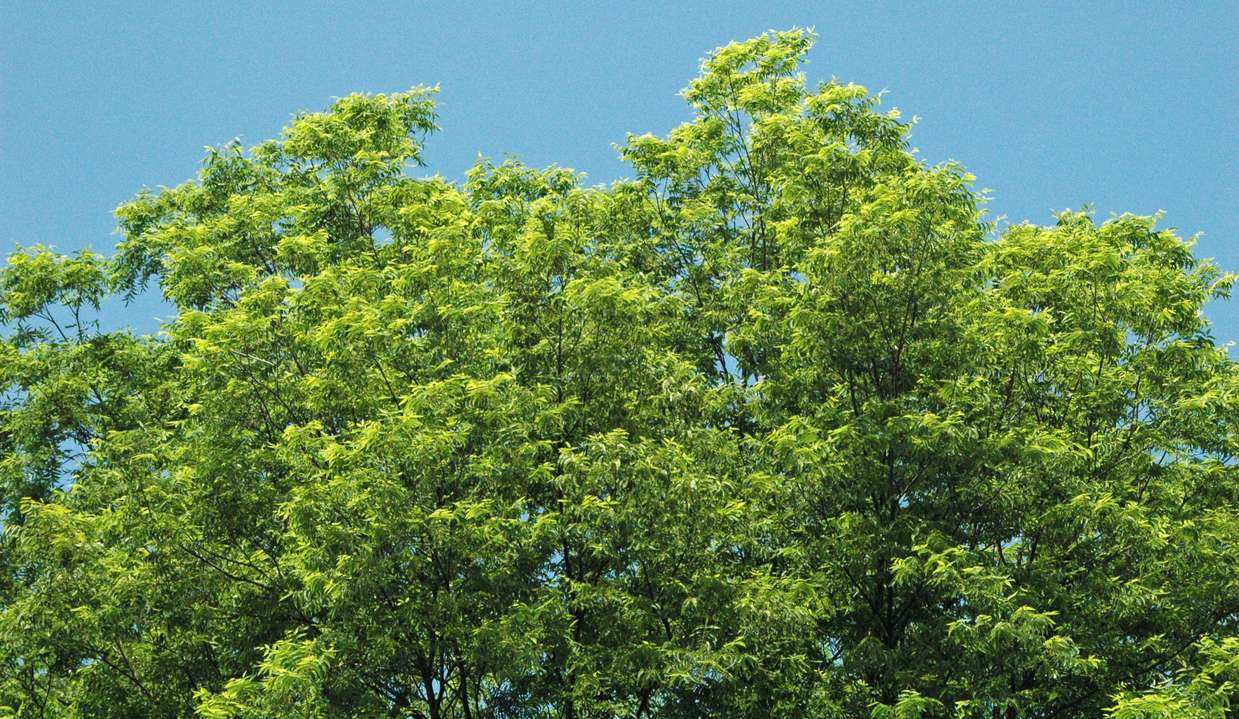
In the South, spring has a heavy hitter that northern readers rarely hear about: pecan pollen. The pecan is Texas's state tree, a commercial orchard crop across the southern tier, and a beloved backyard shade tree from Georgia to New Mexico — and pecan pollen, released from dangling catkins each spring, is a major tree allergen in the region's counts. Where pecans are planted at scale, they can lead the Tree Index for weeks.
Key takeaways
- Pecan pollen comes from catkins that open in spring, and the tree is a member of the hickory genus Carya — the USDA PLANTS Database lists it as Carya illinoinensis, a close relative of the true hickories.
- Pollen Atlas data shows pecan registering as a leading Tree Index contributor in Texas metros during April, overlapping the tail of oak season.
- The AAAAI National Allergy Bureau counts pecan among the significant spring tree pollens at its southern stations, where orchard and landscape plantings coincide.
- Planted geography decides exposure: Pollen Atlas data shows cities ringed by commercial pecan orchards recording stronger and longer pecan readings than cities where the tree is only ornamental.
When and how pecan pollen is released
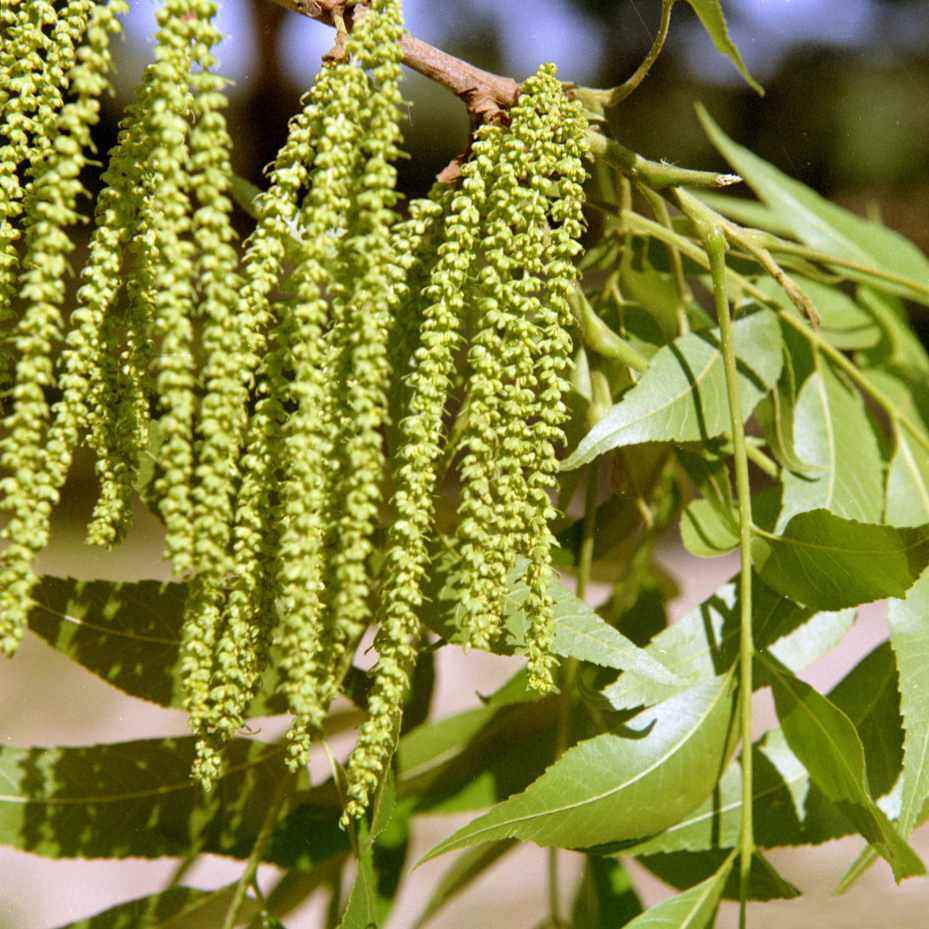
Pecans flower as their leaves emerge in spring. Male flowers form long, hanging catkins that release pollen to the wind; female flowers sit separately on the same tree, waiting to receive it and eventually produce the nuts. Timing runs from March in the warmest districts into April and May further north and inland, with the peak for most of Texas falling in April. A single mature tree carries catkins in profusion, and an orchard block multiplies that by hundreds of trees flowering in the same weeks, by design and by breeding.
Catkins, cultivars, and a synchronised orchard season
Commercial pecans are grafted cultivars, selected in part for how their pollen release and female receptivity overlap, so orchards are engineered — unintentionally, from an allergy standpoint — to flower together. Different cultivars shed at slightly different times, which stretches an orchard's total release across several weeks even as each tree's own window stays brief. Home and street trees add a second, less synchronised layer through the same months. The Texas allergy season guide sets pecan within the state's full spring sequence, from cedar through oak to pecan and grass.
The hickory family connection
Pecan is a hickory. Its genus, Carya, also includes shagbark, pignut, and other true hickories, and the family's pollen shares structural features that counting stations group and that allergy research treats as related. The practical consequence is cross-reactivity as a general scientific pattern: proteins shared across Carya species mean the region's wild hickories and its planted pecans speak a similar chemical language. Our hickory pollen guide covers the wild side of the family, which dominates in eastern forests where orchard pecan is scarce.
Why family trees matter in a count
Microscope counts identify pollen to genus or family level by grain structure, so a station's hickory-family figure in pecan country is substantially a pecan figure, and in forest country substantially a wild hickory figure. Reading a count with the local landscape in mind — orchards versus bottomland forest — tells you which tree is actually behind the number. The walnut family, Juglandaceae, extends the same logic one step further to pecan's cousins, the walnuts.
Where planted pecan dominates the count
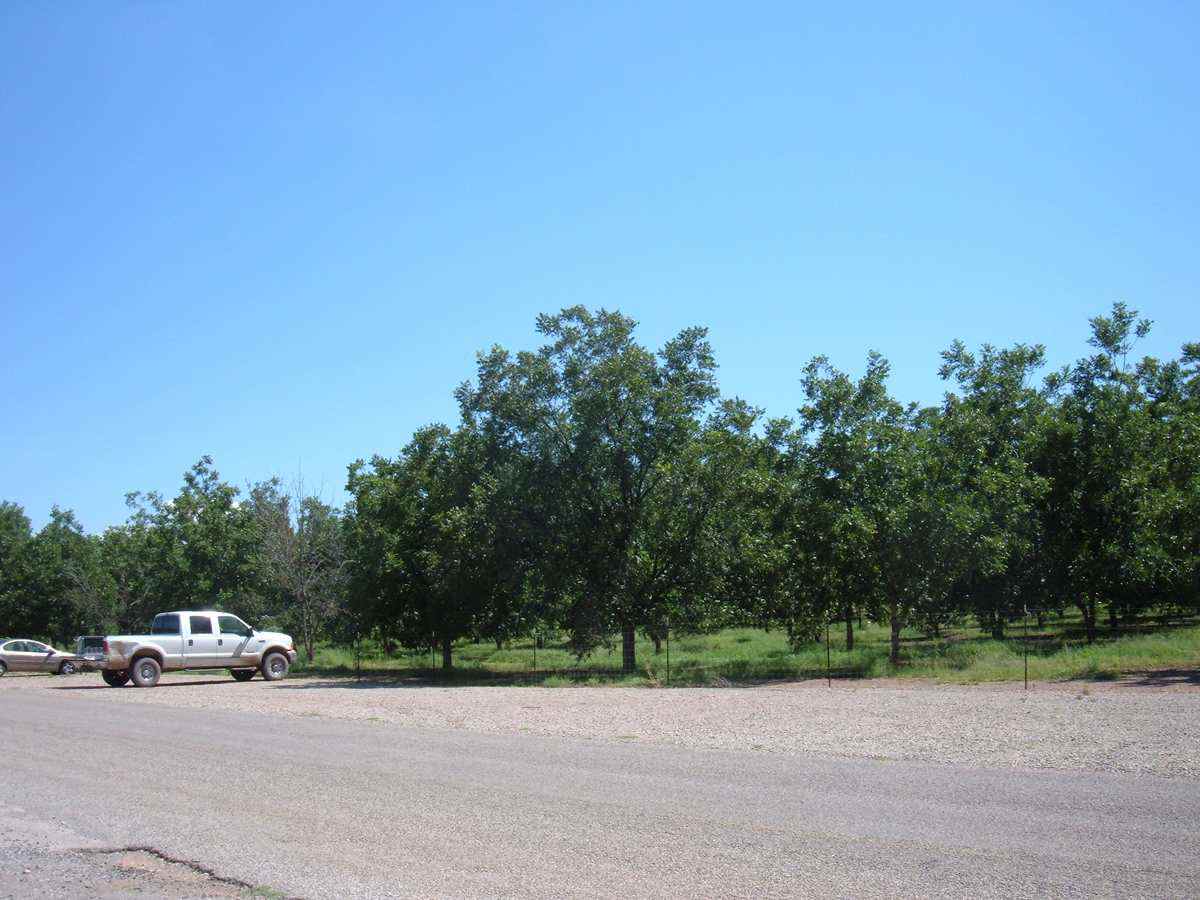
Pecan's map is a planting map. Texas is the tree's heartland — its state tree, state nut, and a fixture of river bottoms, yards, and orchards — and Georgia, New Mexico, and other southern states carry major commercial groves. In Dallas, Texas, pecan is a standard shade and legacy orchard tree across the metro, and its April wave closes the main tree season. In San Antonio, Texas, pecan follows the famous oak peak and extends spring by weeks. In Houston, Texas, pecans in older neighbourhoods and surrounding groves add a strong local layer to a Gulf Coast season already rich in oak and grasses.
| Setting | How pecan appears | Season character |
|---|---|---|
| Commercial orchards | Blocks of grafted cultivars flowering together | High, synchronised April peak |
| City shade trees | Street and yard trees across older neighbourhoods | Moderate to high, spread over more weeks |
| River bottoms and wild stands | Native trees along waterways | Moderate, mixed with wild hickory family pollen |
A tree people plant on purpose
Unlike wind-blown weeds, pecan exposure is a land-use choice renewed every generation: orchards are expanded, shade trees are planted, and old trees are protected for their nut crops and canopy. The AAFA Allergy Capitals research regularly places southern metros with heavy tree scores in its upper ranks, and pecan is one of the reasons the southern tree season runs longer than visitors expect.
Reading pecan pollen on Pollen Atlas
On Pollen Atlas, pecan is tracked within the daily Tree Index, scored from 0 to 100, with per-plant detail showing when pecan itself is leading. The pattern to expect is a spring build behind oak, an April crest in most Texas and southern metros, and a handoff to grasses as pecan finishes. The national city rankings in April show the pecan belt — Texas and the southern plains — holding high tree readings after the Southeast's oak peak has passed.
The CDC's pollen overview notes that tree pollen is a principal spring allergen category nationally; pecan is the southern specialist within that category. If spring in pecan country affects you every year, the Pollen Atlas Find an Allergist directory lists Texas and southern specialists who can identify your specific triggers. This article is general information, not medical advice.
The pecan rule of thumb
When the catkins hang long and the weather turns dry and breezy in April, expect pecan to lead the count anywhere the trees are planted thick — and expect orchard country to run the strongest readings of all.
Frequently Asked Questions
When do pecan trees release pollen?
Pecan trees release pollen in spring — from March in the warmest districts through April and into May further north — when their hanging catkins open as the leaves emerge.
Is pecan pollen related to hickory pollen?
Yes. Pecan is a member of the hickory genus Carya, so its pollen is closely related to wild hickory pollen and the two are grouped together in counting and share cross-reactive proteins.
Where is pecan pollen worst?
Pecan pollen is strongest where the trees are planted at scale — Texas above all, plus Georgia, New Mexico, and other southern states with commercial orchards and widespread shade plantings.
Why does pecan season last so long in orchards?
Different grafted cultivars shed pollen at slightly different times, so an orchard's combined release stretches across several weeks even though each individual tree flowers briefly.
Sources
AAAAI National Allergy Bureau (accessed 2026); Asthma and Allergy Foundation of America, Allergy Capitals reports (2025–2026); Centers for Disease Control and Prevention, Pollen and Your Health (accessed 2026); USDA PLANTS Database entry for Carya illinoinensis (accessed 2026).
Conclusion
Pecan pollen is the southern spring's closing argument: a hickory in orchard clothing, planted by the million for nuts and shade, flowering in synchronised April waves from Dallas to San Antonio to Houston. Know its catkin timing and its family ties, watch the Tree Index as oak hands over, and pecan pollen becomes one of the most predictable chapters of the southern season — a state tree with a count to match its stature.
Pollen checks you daily. Check it back — free counts and 5-day forecasts, worldwide: PollenAtlas.com