
Kochia Pollen: The Tumbleweed's Other Payload
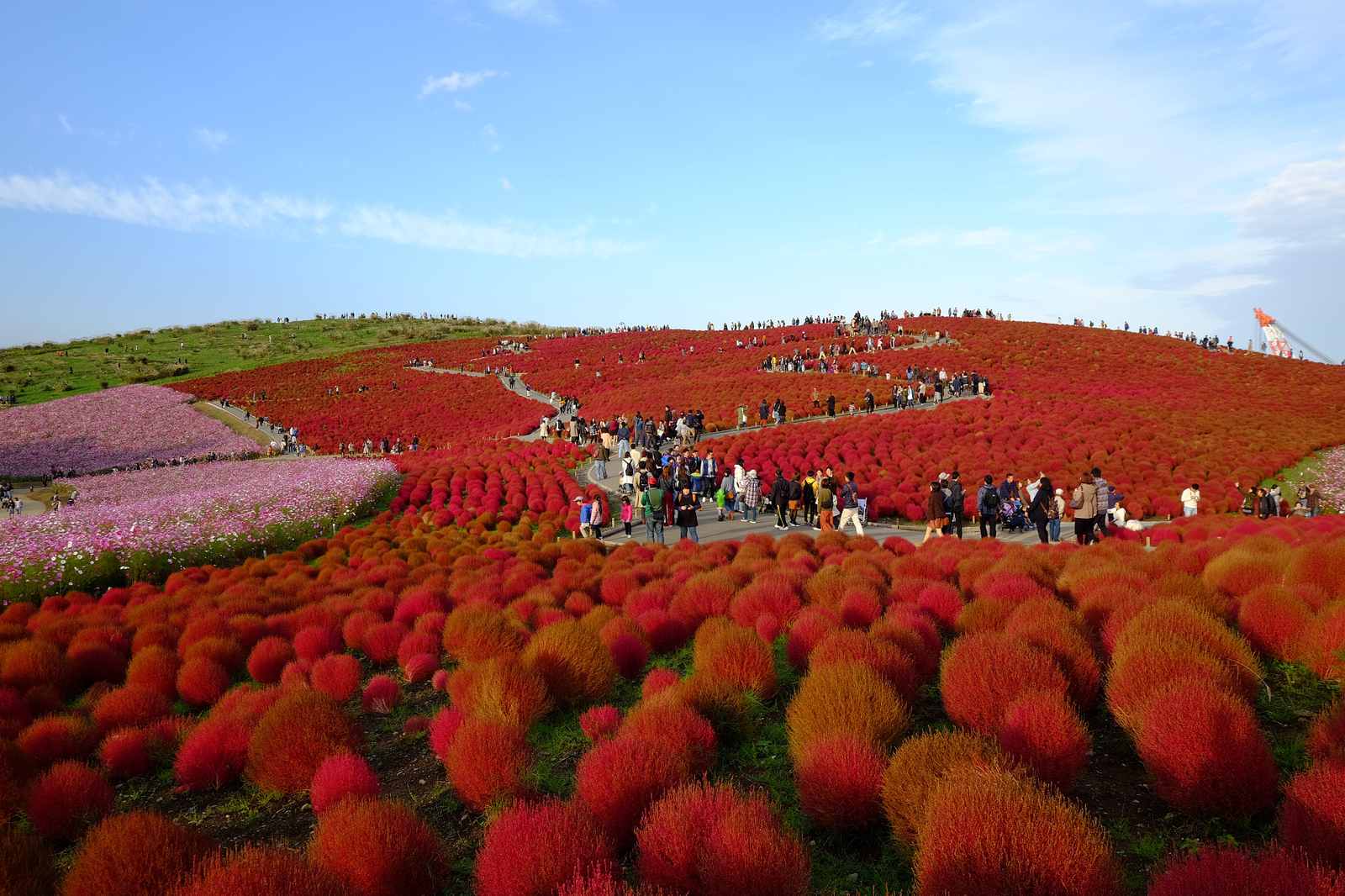
The tumbleweed is the West's most famous plant traveller, and kochia is its understudy — a feathery Eurasian annual that colonised the plains so thoroughly that most people assume it was always here. But the tumble is only the finale. Weeks before a kochia bush snaps off and rolls, it flowers — small, green, unglamorous flowers along every stem — and puts kochia pollen into the late-summer air of the farm belt. For the fall allergies of the high plains, this imported ornamental turned super-weed is one of the season's quiet engines.
Key takeaways
- Kochia (Bassia scoparia) arrived from Eurasia in the mid-to-late 1800s as an ornamental, and Cornell rates it the highest-spreading introduced weed in the western United States.
- A typical plant produces ten thousand to thirty thousand seeds, then snaps off at the base and sows them as it tumbles — and because the seed survives only a year or two in the soil, every year's stand is freshly sown.
- Kochia flowers on shortening day length in late summer; its pollen is an allergen and is counted together with its goosefoot-amaranth cousins, whose grains are near-identical under the microscope.
- Kochia's contribution crests from August into the first frosts, holding the weed index in the Moderate band across plains cities through late-summer stretches.
A Weed Engineered by Accident
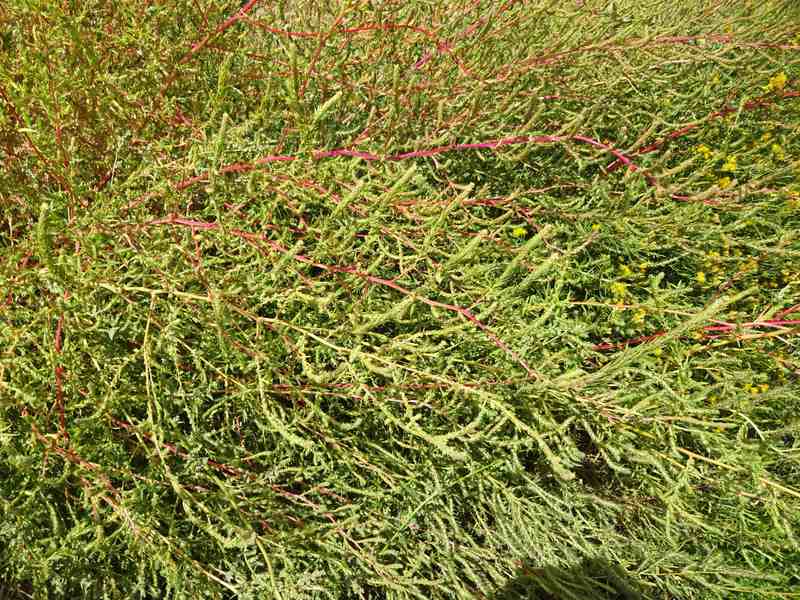
Kochia (Bassia scoparia, long filed as Kochia scoparia) arrived from Eurasia in the mid-to-late 1800s, brought as an ornamental — its feathery foliage and autumn colour that turns flame-red earned it garden names like burning bush and Mexican fireweed, and the Forest Service's profile lists "mock cypress" among its aliases, a reminder that seed catalogues once sold its tidy, pyramidal form as a quick annual hedge. (Gardeners should note the shared nickname: the ornamental "burning bush" of eastern foundation plantings is a different plant entirely, a Euonymus shrub — kochia's claim to the name is strictly a plains matter.) It escaped immediately, because everything about the plant is a dispersal strategy. Cornell University's weed profile counts the seed output at ten thousand to thirty thousand seeds per plant, with exceptional plants going far higher, and the USDA Forest Service's Fire Effects Information System profile puts a typical plant's annual production in the same five-figure range. Then the mature stem breaks at the base, and the whole bush — seeds still aboard — rolls before the wind, sowing as it goes. Cornell's assessment is blunt: kochia has the highest rate of spread of any introduced weed in the western United States.
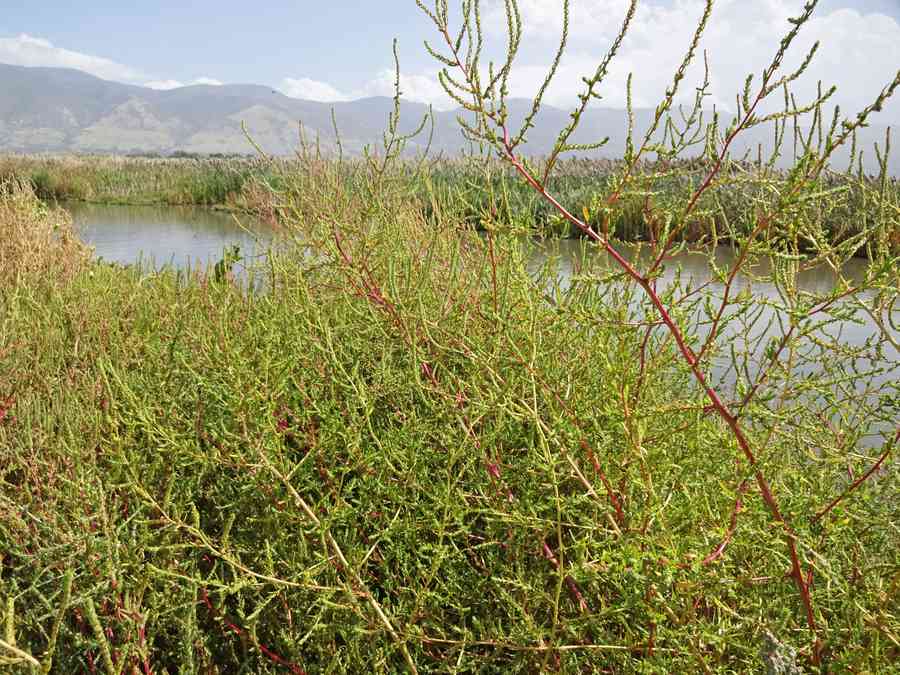
The rest of the profile reads like a spec sheet for survival. Kochia is a C4 plant, built for heat; it germinates at soil temperatures low enough to be first out of the ground in spring, emerging over a long window that defeats a single cultivation pass; it tolerates drought and salty ground; and Colorado State University Extension notes it as one of the region's most troublesome weeds precisely because populations have evolved resistance to multiple herbicide families. Farms fight it in wheat, corn, soybean and sugar beet. Rail corridors, ditch banks and vacant lots host it for free. By August, across the plains states, kochia is simply everywhere a seed could roll.
One trait makes its persistence more remarkable: its seed does not keep. Extension profiles note that kochia seed survives only a short time in the soil — a year or two rather than the decades some weeds manage — so the plant cannot coast on an old seed bank. Every year's stand is freshly sown, which means the tumble is not a stunt; it is the entire reproductive strategy, executed annually at continental scale. A single rolling bush shedding seed across a mile of fenceline does the work of a planted crop. Farmers who clear a field completely can still watch it refill from the road ditch by July, courtesy of last autumn's travellers. And everything said here about the seed applies one season earlier to the pollen: a plant this committed to wind dispersal does nothing by halves.
| Trait | Kochia |
|---|---|
| Origin and arrival | Eurasia; brought to North America as an ornamental in the mid-to-late 1800s |
| Seed output | Ten thousand to thirty thousand seeds per typical plant |
| Seed survival | Only a year or two in the soil — no long-lived seed bank |
| Dispersal | The mature stem breaks at the base and the whole bush sows seed as it tumbles |
| Flowering trigger | Shortening day length, so the bloom arrives in late summer on schedule |
| Weed status | Resistant to multiple herbicide families in plains populations |
When Kochia Pollen Drifts
Kochia takes its flowering cue from the calendar rather than the thermometer: as Cornell's profile notes, flowering is triggered by shortening day length, so the bloom arrives in late summer on schedule even in cool years. The flowers themselves are nothing to look at — tiny, green, petal-less clusters in the leaf axils — but they open across millions of acres within the same few weeks, and the plant is wind-pollinated enough to matter: botanical reviews of the species record a moderate rate of wind-driven cross-pollination alongside its self-pollination, and state the allergy point directly — kochia pollen is an allergen.
It also does not travel alone. Kochia belongs to the same goosefoot-amaranth alliance as the pigweeds, lamb's quarters and Russian thistle covered in our pigweed and tumbleweed pollen guide, and the family's grains are near-identical under the microscope, so counting stations group them. The practical effect is a shared season: where kochia stands thick along the field edges, it adds its weight to the family's late-summer and fall totals, and the family's documented cross-reactivity means sensitive people often experience the whole clan as one long exposure rather than separate species events. Russian thistle — the other great tumbleweed — is the closest famous company it keeps: the two share the family's pollen season almost week for week, so the plains' late-summer weed readings are usually a duet, and a season blamed on one tumbleweed is frequently owed to both. For anyone keeping a symptom diary in wheat country, that duet is the practical unit: late-summer plains air is a family product, and kochia is one of its two loudest instruments.
Where Kochia Pollen Registers on the Plains
Pollen Atlas data shows the signature in the plains cities' autumns: the weed index in Denver, Boise and Omaha holding in the Moderate band through late-summer stretches, with High-band days when harvest-season wind works the field margins and ditch lines where kochia stands densest. On the heatmap the pattern is geographic honesty: the farm belt lights up at weed season not because of anything planted in the cities, but because of what grows, uninvited and uncountable, between them.
The plains have even tried to eat the problem. Botanical reviews of the species note that young kochia, cut or grazed before it hardens, makes serviceable emergency forage in dry years — a genuine feed value, balanced by cautions about its chemistry that keep it a ration of last resort rather than a staple. It is a fitting arrangement for a plant of extremes: too useful to dismiss, too wild to trust, harvested in desperation and cursed in the same season. None of that grazing touches the pollen arithmetic, of course. The acres that matter for the air are the un-grazed and un-sprayed ones — the ditch banks, rail sides and field corners where kochia grows to full, flowering size undisturbed by anything but wind.
Kochia also has a second career that keeps it in the news long after pollen season: it is a case study in herbicide resistance. Plains extension services document kochia populations that have shrugged off one herbicide family after another — the triazines early, then others, with glyphosate resistance confirmed across the wheat belt in the past decade — forcing farmers back to tillage, cover crops and layered chemistry. The resistance story matters here only as a population guarantee: a weed that chemical agriculture cannot reliably remove is a weed whose acreage, and therefore whose pollen, is a fixed feature of the plains' future. The tumbleweed is not a problem being solved. It is a neighbour being accommodated.
For plains residents, the useful habit is timing. Kochia's contribution crests from August into the first frosts — overlapping ragweed season in the eastern plains and preceding it in the drier west — and it ends only when hard cold kills the annual plants outright. If your late-summer symptoms outlast the ragweed explanation or begin before it, the chenopod bench, kochia included, is worth a conversation; finding an allergist who tests the weed families of the plains can name your actual trigger. This article is general information only and is not medical advice.
Frequently Asked Questions
When does kochia pollen fly?
In late summer. Flowering is triggered by shortening day length rather than temperature, so the bloom arrives on schedule even in cool years, and kochia's contribution crests from August into the first frosts — ending only when hard cold kills the annual plants outright.
Is kochia a tumbleweed?
Yes — one of the two great tumbleweeds of the plains, alongside Russian thistle. The two share the goosefoot-amaranth family's pollen season almost week for week, so the plains' late-summer weed readings are usually a duet, and a season blamed on one tumbleweed is frequently owed to both.
Why is kochia pollen counted together with other weeds?
Kochia belongs to the same goosefoot-amaranth alliance as the pigweeds, lamb's quarters and Russian thistle, and the family's grains are near-identical under the microscope, so counting stations group them. The family's documented cross-reactivity means sensitive people often experience the whole clan as one long exposure.
If kochia seed only lives a year or two, why does it keep coming back?
Because the tumble replaces the seed bank. A single rolling bush sheds seed across a mile of fenceline, farmers who clear a field can watch it refill from the road ditch by July, and populations resistant to multiple herbicide families keep the weed's acreage — and its pollen — a fixed feature of the plains.
The tumbleweed gets the glory, but the pollen came first — a whole invisible season of kochia pollen riding the August wind over the fields, weeks before the first bush breaks loose and rolls. Know before you head out — free pollen counts and forecasts, worldwide: PollenAtlas.com.