
Dock Sorrel Pollen: The Weed That Fills the Season's Gaps
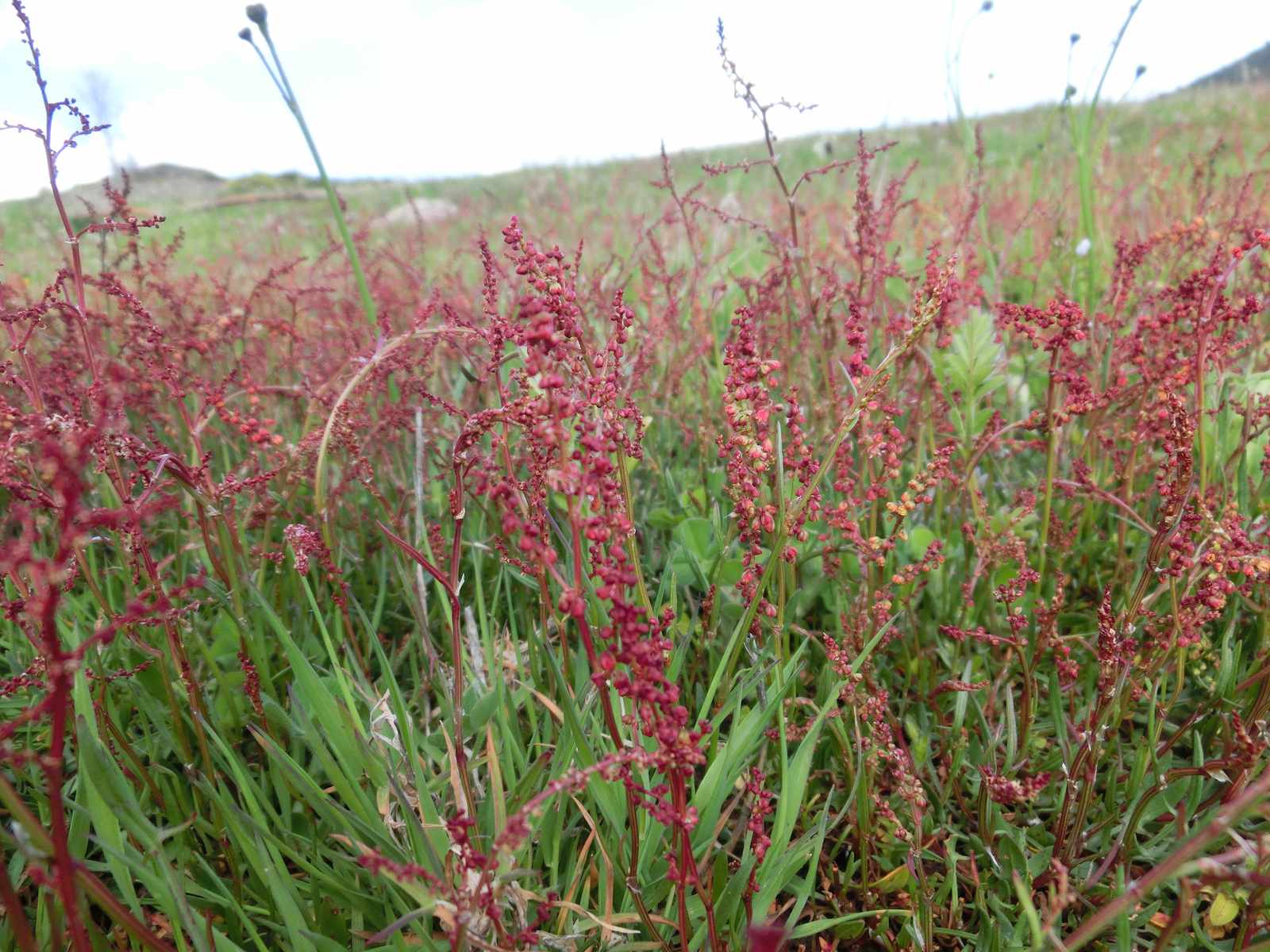
Dock sorrel pollen never gets top billing, but it may be the hardest-working weed pollen of the summer. It comes from the docks and sorrels — a clan of tough, weedy Rumex plants that colonise lawns, vacant lots, riverbanks and rail lines across North America. Instead of one dramatic peak, the family flowers in relay from late spring into autumn, quietly holding up the summer weed picture in the weeks between grass season and ragweed.
That long, low season is what makes dock sorrel pollen worth understanding. It is a real, recurring part of the late-spring and summer weed picture across much of the United States, it behaves differently from the fall weeds most people know, and it explains a stretch of the season that sufferers often blame on the wrong plant entirely.
Counters and allergy panels report these grains as "dock sorrel mix," because the pollen of the dock and sorrel species is near-identical under the microscope and is counted as a group rather than split into species nobody can reliably tell apart. If that label showed up on your allergy panel or in a pollen report, what the dock sorrel mix entry means is covered in our panel guide.
Key takeaways
- Dock sorrel pollen is the combined output of the docks and sorrels (Rumex), reported as "dock sorrel mix" because the species' grains are near-identical under the microscope.
- The family flowers in relay from late spring into autumn, filling the gap between grass season in May and June and ragweed from August to the first frost.
- Sheep sorrel (Rumex acetosella), a Eurasian plant now naturalised across temperate North America, thrives in acidic, sandy soils and can flower from spring well into autumn in mild climates.
- On Pollen Atlas city pages, dock sorrel shows up in the per-plant breakdown behind the Weed index — a flat, stubborn Moderate reading in July is its signature.
The Rumex family behind dock sorrel pollen
The Rumex genus belongs to the buckwheat family, Polygonaceae, and it is a big, weedy clan. It includes the broad-leaved docks that colonise field edges and waste ground, curly dock with its tall rust-coloured seed heads, and the sorrels — smaller plants with arrow-shaped, lemony-tart leaves. The species most often named in North American references is common sheep sorrel (Rumex acetosella), a low, spreading perennial of acidic, sandy soils. The USDA Forest Service's Fire Effects Information System species review describes it as a Eurasian plant now naturalised across temperate North America, flowering over an exceptionally long window — in mild climates, from spring well into autumn. North Carolina State University's Extension Gardener Plant Toolbox profile of red sorrel paints the same picture: a plant of roadsides, thin lawns and poor soils, essentially everywhere east of the Mississippi and well beyond it.
Meet the plants: sheep sorrel and the docks
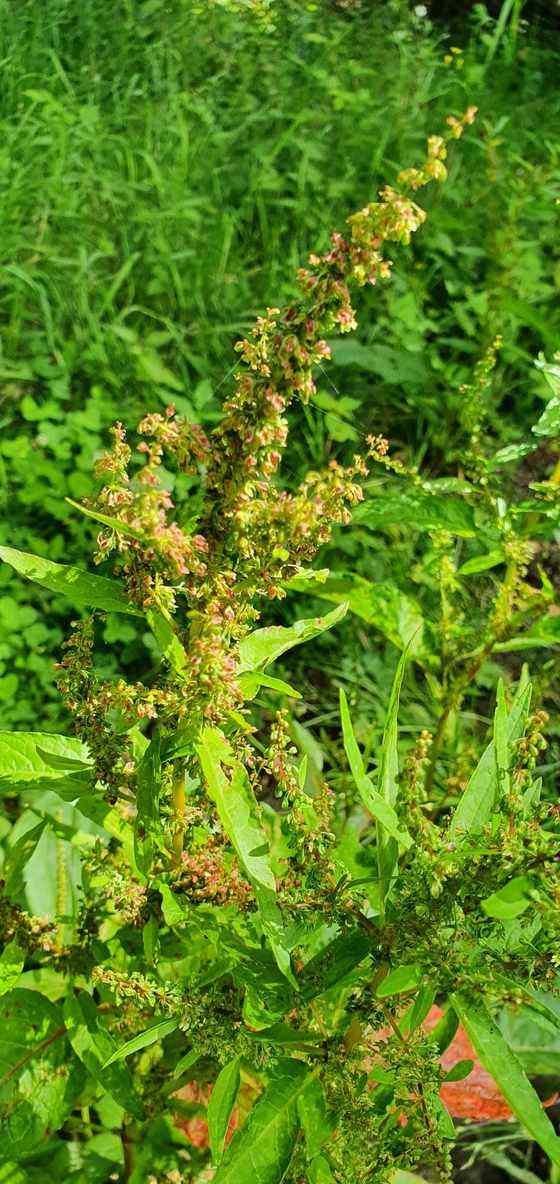
Sheep sorrel is the member of the group you have most likely stepped on. It forms mats in neglected turf, sends up wiry stems topped with tiny flowers — yellowish-green on male plants, reddish on females — and turns whole patches of poor ground a rusty red when it seeds. Gardeners know it as an indicator of acid soil; the North Carolina Extension notes its leaves carry the sharp, lemony bite of oxalic acid, the same compound that makes rhubarb stalks tart.
The docks are bolder plants. Curly dock and broad-leaved dock stand waist-high along ditches, rail lines and pasture fences, and a single plant carries thousands of flowers on branching stalks. When several Rumex species flower in the same district across overlapping weeks, their combined output is exactly what counters capture when they group this family together: not one species' season, but a relay of cousins passing the baton.
When dock sorrel pollen peaks — and why it fills a gap
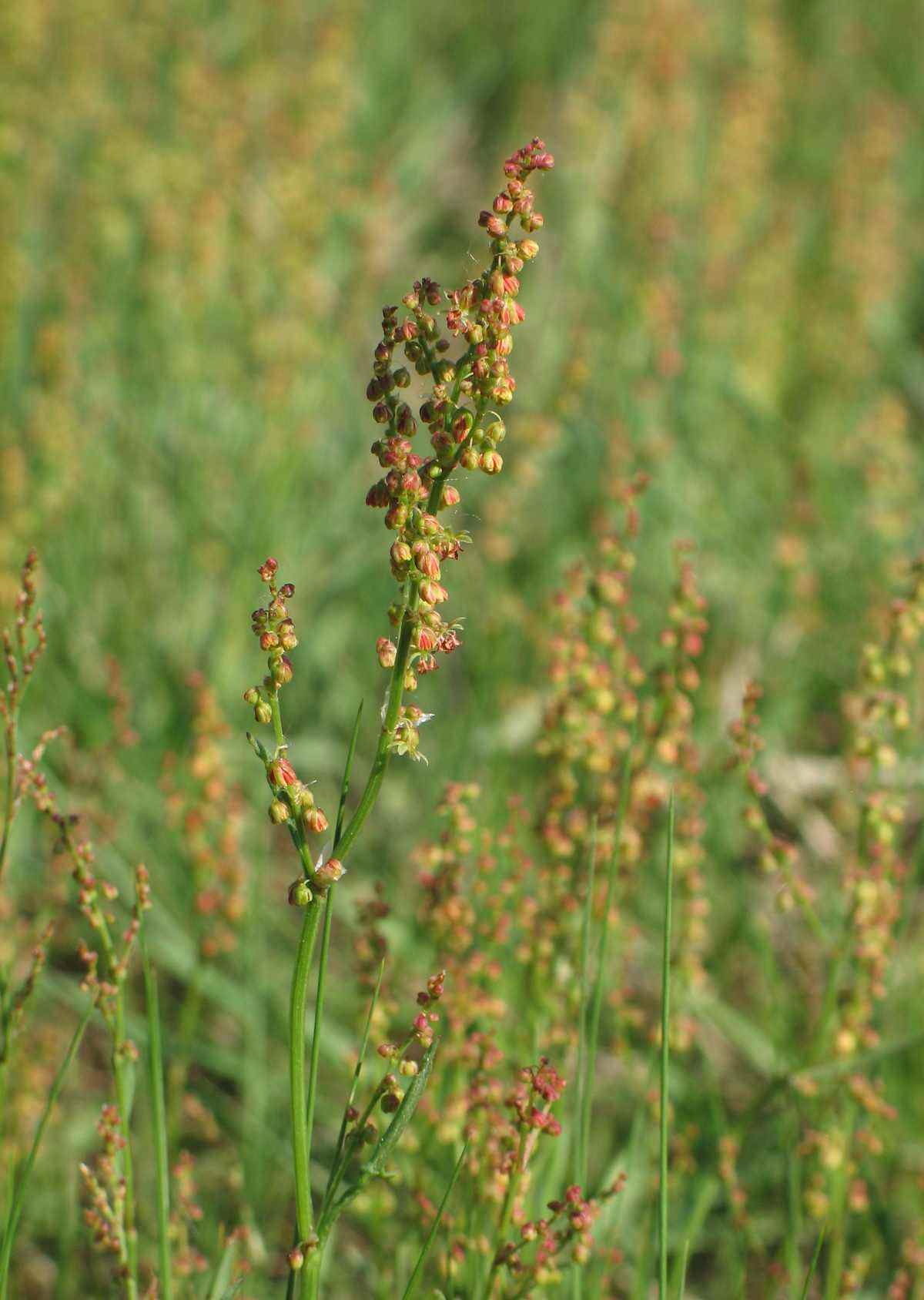
Tree pollen owns March and April in most of the country. Grass takes over in May and June. Ragweed waits for August. Dock sorrel pollen lives in the seams of that calendar. Rumex species begin flowering in late spring, build through early summer, and keep contributing — at lower levels — for months, because the family flowers opportunistically whenever conditions allow rather than in one tight burst.
This is why it matters out of proportion to its fame. A sufferer whose symptoms ease after the grass peak, then return in a milder key in July, is often told "it's just summer allergies." Sometimes it is this: a background weed pollen, present week after week, raising the total load on days when grass is also moderate. Pollen Atlas data shows how often the Weed index sits in the Moderate band through midsummer in the Northeast and Mid-Atlantic even while the headline weeds are quiet — dock sorrel is a big part of that story. If your personal season has a long, low second act, what a pollen count actually measures — and which plants feed each index — is worth understanding properly.
| Pollen | Season role | When it flies |
|---|---|---|
| Tree pollen | Opens the warm season | March and April in most of the country |
| Grass pollen | The early-summer headline | May and June |
| Dock sorrel pollen | The gap-filler | Late spring into autumn, in a relay across species |
| Ragweed | The fall flood | August to the first frost |
Where dock sorrel pollen shows up in city data
Because Rumex thrives in the disturbed soils of cities and suburbs — vacant lots, rail corridors, riverbanks, tired lawns — it is a genuinely urban weed pollen. On Pollen Atlas, the per-plant detail on city pages breaks the broad Weed index down into the plants behind it, and where the per-plant reporting includes the Rumex group, dock sorrel is the plant to look for. Readers in New York can watch the weed breakdown through the summer; Philadelphia, ringed by dock-friendly riverbanks and rail land, tells the same story; and Rochester shows how the mix behaves in a cooler, lake-influenced climate where the season starts later and stretches longer. The national pollen heatmap makes the geography visible at a glance: its home turf lights up as a broad eastern and midwestern wash rather than a single hotspot.
One caution about reading it: because several Rumex species contribute, its season on any given page is their combined season. An early species may fade while a later one is still building, so the readings can plateau instead of peaking and crashing the way ragweed does. A flat, stubborn Moderate reading in July is not a data error. It is the signature of a family affair. The dock sorrel reference page collects the species, the season and the count data in one place.
Dock sorrel pollen is not ragweed — and the timing proves it
The most common misreading of a summer report is to lump every weed pollen into the ragweed story. Ragweed is a short-day plant: it flowers as days shorten, floods the air from August to the first frost, and dominates the fall. Our full explainer on ragweed season covers that arc. Dock sorrel belongs to the other half of the year. Its grains are in the air while ragweed plants are still knee-high and flowerless, and by the time ragweed peaks, the sorrels have largely handed over. If your worst weeks land in June and July rather than September, dock sorrel — alone or stacked on grass — deserves a place on your suspect list. The American Academy of Allergy, Asthma & Immunology's outdoor allergens library makes the same structural point: weed pollens are a procession of different plants across the whole warm season, not a single fall event.
If the pattern fits every year and you want certainty rather than inference, testing is the step that separates the cousins. An allergist can distinguish a Rumex sensitivity from grass or ragweed with a standard panel, and the Pollen Atlas allergist directory will find specialists near you, filterable by insurance and distance. This article is general information only and is not medical advice.
Frequently Asked Questions
What is dock sorrel pollen?
It is the combined pollen of the docks and sorrels — weedy Rumex plants of lawns, vacant lots, riverbanks and rail lines. Counters report it as "dock sorrel mix" because the grains of the different species are near-identical under the microscope, so the family is counted as a group rather than split into species.
When is dock sorrel pollen in the air?
Rumex species begin flowering in late spring, build through early summer, and keep contributing at lower levels for months; in mild climates, sheep sorrel can flower from spring well into autumn. That long window fills the seam between grass season in May and June and ragweed from August.
Is dock sorrel pollen the same as ragweed?
No. Ragweed is a short-day plant that floods the air from August to the first frost, while dock sorrel pollen is in the air when ragweed plants are still knee-high and flowerless. By the time ragweed peaks, the sorrels have largely handed over.
Why does the Weed index stay Moderate for weeks in summer?
Because several Rumex species flower in relay: an early species may fade while a later one is still building, so the combined reading plateaus instead of peaking and crashing. A flat, stubborn Moderate reading in July is the signature of that family relay, not a data error.
The bottom line on dock sorrel pollen
Dock sorrel pollen is not a mystery ingredient. It is the combined pollen of the docks and sorrels — common, weedy Rumex plants of lawns, lots and riverbanks — counted as a group because their grains are near-identical under the microscope. It builds across late spring and summer, fills the gap between grass season and ragweed, and keeps the summer weed picture honest in cities from New York to Rochester. Once you know the plants behind it, that long, flat showing in the weed numbers becomes one of the most informative signals of the season.
Check the mix before it checks you — see today's weed breakdown, the plants behind your city's indexes, and the 5-day outlook, free at PollenAtlas.com.