
Alder Pollen: The Season Opener Most People Miss
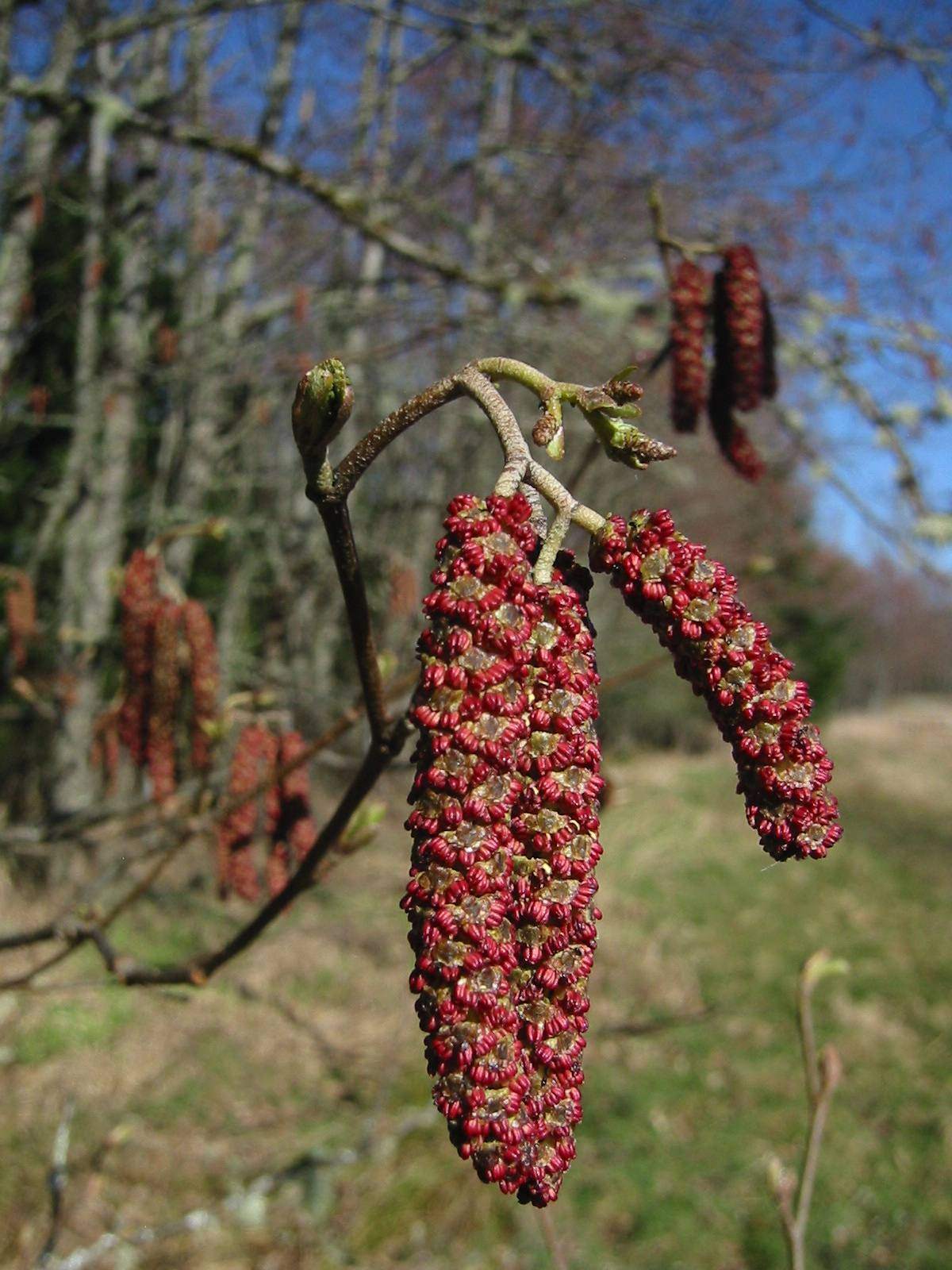
While most people are still waiting for spring to begin, alder pollen has already started the season. Alder pollen comes from a group of water-loving trees in the birch family that release pollen from catkins formed the previous autumn — in mild regions as early as January, and across much of the country in February and March, weeks before the famous spring trees flower. That head start makes alder the opening act of the tree pollen year, especially in the Pacific Northwest, where red alder is one of the most common hardwoods in the landscape. If your symptoms reliably begin before anything looks like spring, alder is the first suspect worth knowing.
Key takeaways
- Alder pollen is among the earliest tree pollens of the year, released from catkins that form in autumn and open in late winter — a pattern described in USDA Forest Service species accounts of North American alders.
- Alders belong to the birch family, Betulaceae, and share allergen families with birch and hazel, including profilins of the Bet v 2 family noted in the cross-reactivity literature.
- Pollen Atlas data shows alder opening the Tree Index season in the Pacific Northwest and inland Northwest, weeks ahead of oak and other spring headliners.
- The American Academy of Allergy, Asthma & Immunology's National Allergy Bureau stations in the Northwest characteristically report alder among their first tree pollens of each year.
The tree behind alder pollen
Alders are fast-growing, relatively short-lived trees and large shrubs of wet places — streambanks, floodplains, lakeshores, and damp slopes. Red alder dominates lowland forests west of the Cascades and is one of the most abundant hardwoods in the Pacific Northwest, while speckled alder fills wetlands in the Northeast and Great Lakes, and other species follow watercourses through the mountains and the South. The USDA Forest Service species material describes red alder as a pioneer tree that colonises open, moist ground quickly — which is why it lines so many roads, creeks, and clearing edges close to where people spend time outdoors.
Catkins made the autumn before
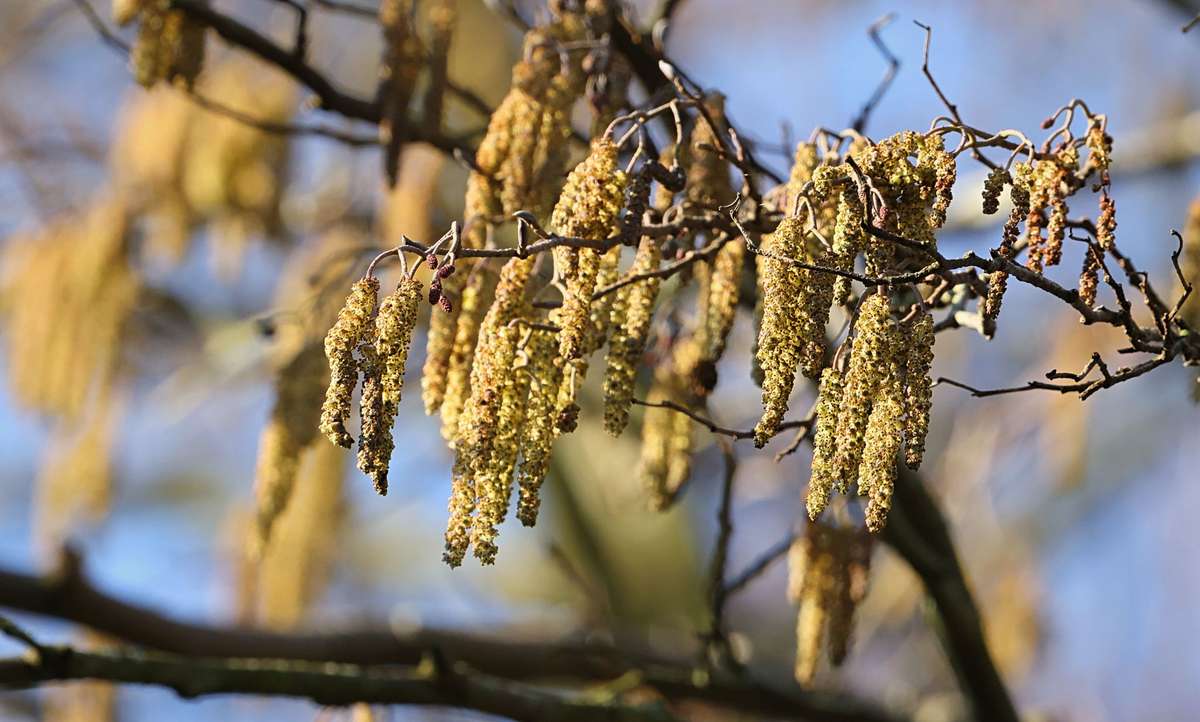
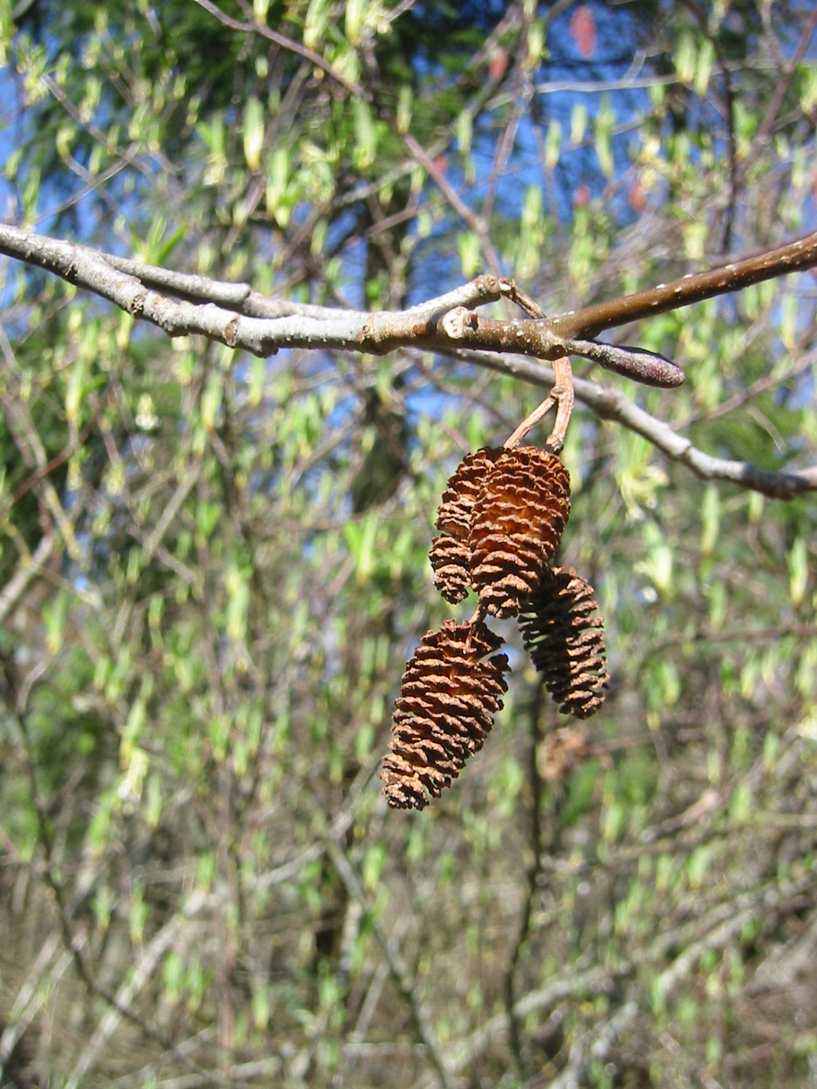
Alder's earliness is built into its anatomy. The male catkins — long, dangling clusters — form in the autumn and hang on the bare branches all winter, fully made and waiting. When late-winter conditions arrive, they elongate, open, and release pollen, all before the tree has produced a single leaf. Female catkins are smaller and woody, maturing into the little cone-like fruits that persist on branches and make alders easy to identify in winter. A tree that builds its flowers months ahead does not need spring to be well advanced; it needs only a mild spell and dry air. That is why alder can pollinate during a February warm break while the rest of the forest still looks asleep.
The birch family resemblance
Alders sit in Betulaceae alongside birch and hazel, and the family resemblance is chemical as well as botanical. The allergy literature documents cross-reactivity among these relatives: their pollens share allergen components, including profilins — the family that includes birch's Bet v 2 — as well as other shared protein families. Our guide to birch pollen covers the family's most potent member. The general-science takeaway is that the birch family's season is longer than any one tree's: alder opens it in late winter, hazel overlaps, and birch carries it into late spring. This is general information about allergen families; only testing can describe an individual's sensitivities.
When alder pollen season runs
Alder's window is the earliest of the major tree pollens, and it slides with winter severity. In the mild coastal Northwest, release can begin in January during warm spells. Inland and further north, February and March are typical, and cold continental areas may wait until late March. The season for any one stand is fairly compact — a few weeks — but stands at different elevations and latitudes stagger it across two months regionally.
| Region | Typical alder pollen window | Common local species | Notes |
|---|---|---|---|
| Coastal Pacific Northwest | January into March | Red alder | Earliest major tree pollen of the year |
| Inland Northwest | February into April | Red alder, mountain alder | Elevation stretches the window |
| Northeast and Great Lakes | March into April | Speckled alder | Wetland stands drive local counts |
| Mountain West waterways | March into April | Mountain alder, thinleaf alder | Follows creeks and canyon bottoms |
The Northwest pattern is visible in city data: Spokane's daily pollen page shows tree readings stirring in late winter as alder and other early catkin-bearers open the season, and Boise's pollen page reflects the foothill-and-river version of the same early wave. On the other side of the country, speckled alder contributes to the first tree readings of the year around the Northeast, visible in the early-season detail on New York's pollen page.
How alder fits the wider spring
Alder rarely acts alone for long. Its late-winter window overlaps hazel and the earliest maples and elms, and it hands off to poplar, ash, and then the oak-birch main event. The Asthma and Allergy Foundation of America spring resources describe tree pollen season as a sequence rather than a single bloom, and alder is that sequence's first chapter in the regions where it grows. The full order of appearance is mapped in our tree pollen season guide.
A stop-start season
Weather writes alder's daily script. A mild, dry, breezy spell in February can produce counts that look like April's; a cold snap can shut release down again for a week. That stop-start quality is the signature of the early season — and the reason a calendar date is a poor guide compared with the daily index.
Reading alder pollen on Pollen Atlas
On Pollen Atlas, alder is tracked within the daily Tree Index on every city page — scored 0 to 100, Low from 0 to 33, Moderate from 34 to 66, and High from 67 to 100 — with per-plant detail that shows alder's early contribution before the headline trees begin. In late winter, when most sources still describe the season as weeks away, the per-plant view is often the only place the season's actual start is visible. The national city rankings show the same story geographically, with northwestern cities appearing on the board while most of the country still reads zero.
If your symptoms reliably start in late winter and you want to know which early pollens are involved, an allergist can test across the tree panel — search the Pollen Atlas Find an Allergist directory by city and specialty. This article is general information about a pollen pattern, not medical advice.
Frequently Asked Questions
When does alder pollen season start?
Alder pollen season starts in late winter, earlier than almost any other tree pollen. Mild coastal areas can see release in January, most regions follow in February and March, and the coldest areas may wait until late March.
Why does alder pollinate so early?
Alders form their male catkins in the autumn and carry them, fully made, through the winter. When a mild, dry spell arrives in late winter, the catkins only need to open — no leaves or new growth are required first.
Is alder pollen related to birch pollen?
Yes — alder and birch are both members of the birch family, Betulaceae, and their pollens share allergen components, including profilins of the Bet v 2 family. The family's members pollinate in sequence, alder first and birch later in spring.
Where is alder pollen most important?
Alder pollen matters most in the Pacific Northwest, where red alder is one of the region's most common hardwoods. It also contributes in the inland Northwest, the Northeast and Great Lakes wetlands, and along mountain waterways in the West.
Conclusion
Alder pollen is the season's quiet starting gun: a birch-family tree, flowering from last autumn's catkins, weeks before spring looks like spring. For anyone whose symptoms begin in the grey end of winter, alder pollen is the explanation the calendar was missing. See what your city is breathing this week — free counts and forecasts at PollenAtlas.com.
Sources
- USDA Forest Service, species and silvics material for Alnus (red alder distribution, pioneer habit, and autumn catkin formation).
- American Academy of Allergy, Asthma & Immunology (AAAAI), National Allergy Bureau early-season reporting on alder and other catkin-bearing trees.
- Asthma and Allergy Foundation of America (AAFA), spring allergy resources on the tree pollen sequence; cross-reactivity literature on Betulaceae allergen families, including Bet v 2 profilins.