
Cottonwood Pollen: Why the White Fluff Is Not the Pollen
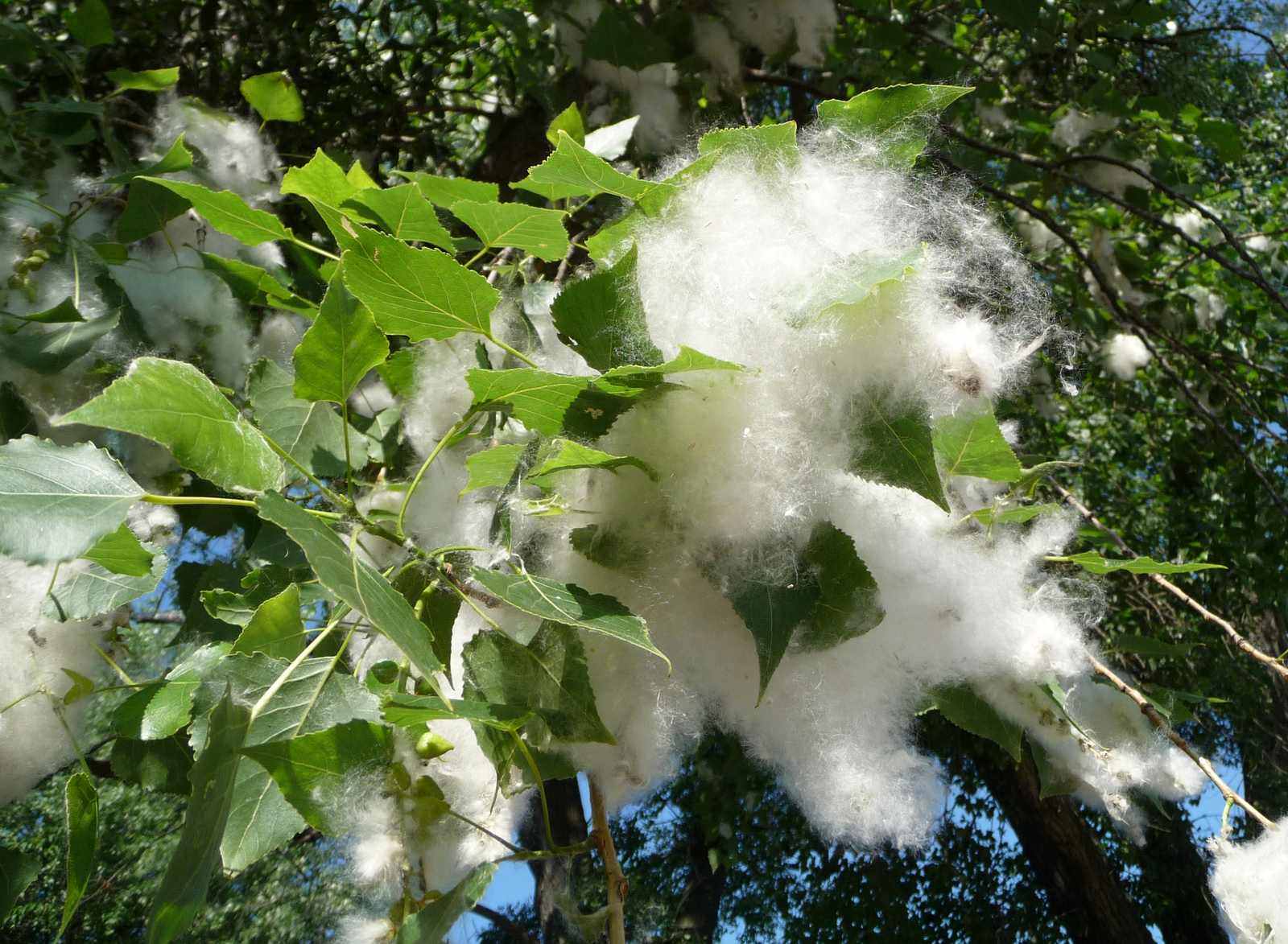
Every late spring, cottonwood pollen gets blamed for the white fluff drifting through Plains and river-valley towns — yet cottonwood pollen itself is almost never what people are seeing. The fluff is seed packaging, released weeks after the real pollen has already flown. That timing gap explains a puzzle many people describe each year: symptoms that flare in April, calm down, and then a visible snowstorm of fluff in May that seems far worse than it feels.
Cottonwoods are fast-growing members of the poplar genus, planted for shade and naturally rooted along rivers, floodplains, and irrigation corridors. Because the trees are either male or female, only some of them make pollen at all. Sorting out which tree does what, and when, turns a confusing season into a short, readable one — and it is the first step to reading a daily count with confidence.
Key takeaways
- The white fluff is seed, not pollen: the CDC's pollen overview notes that pollen grains are tiny wind-carried seeds of flowering plants, while cottonwood fluff is the much larger seed hair a female tree releases later.
- Pollen Atlas data shows cottonwood registers inside the Tree Index weeks before fluff appears, so the count rises while the air still looks clear.
- Only male cottonwoods produce pollen, according to the USDA PLANTS Database profile of the genus — female trees produce the seed fluff instead.
- In Denver, Kansas City, and Minneapolis, the cottonwood window is a spring event that overlaps oak, ash, and elm rather than standing alone.
Cottonwood pollen arrives weeks before the fluff
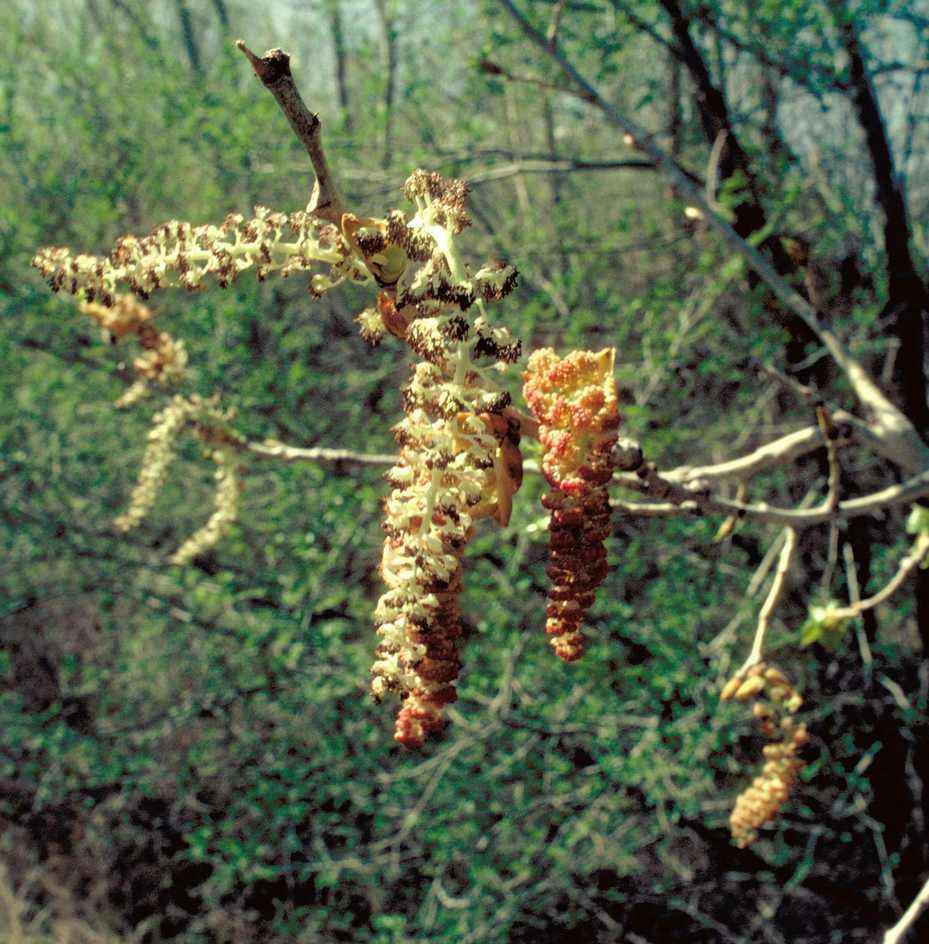
Cottonwoods flower early. In much of their range the male trees open their catkins in spring, often before the leaves fully expand, and release pollen into air that is frequently dry and windy. That is an efficient design for a wind-pollinated tree: no leaves blocking the breeze, and warming spring air to carry grains toward female trees downstream or across town. The pollen phase is brief for any single tree, but a valley full of cottonwoods of different ages and exposures stretches it into a season of several weeks.
The fluff belongs to a later chapter. After pollination, female trees mature their seed capsules and release seeds attached to silky hairs — the cotton that gives the tree its name. By the time sidewalks look snowed on, the male trees finished their work long before. People who react to cottonwood often notice the mismatch: their hardest weeks come when nothing is visible, and the fluff weeks feel comparatively mild.
Male and female trees do different jobs
Botanists call cottonwoods dioecious, meaning pollen and seed are made by separate trees. A street planted heavily with male selections can produce a strong pollen season and almost no fluff, while a riverbank of female trees can blanket a neighbourhood in cotton and contribute no pollen at all. Landscaping choices made decades ago therefore still shape a city's spring. Older Plains towns, where cottonwoods were planted as fast shade along streets and creeks, often carry a heavier male-tree legacy than newer suburbs planted with mixed species.
The fluff itself is mostly a nuisance rather than an allergen: the fibres are far too large to behave like pollen grains. It can, however, carry other pollens and dust on its travels, and it clogs screens, filters, and pond surfaces — one more reason it draws blame out of proportion to its role.
Where cottonwood pollen matters most
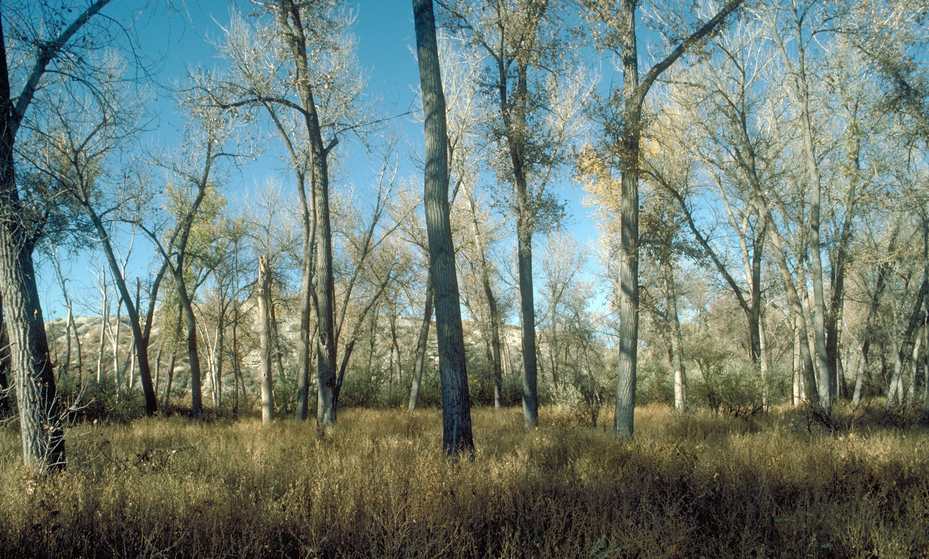
Cottonwood follows water. The eastern cottonwood ranges across the Great Plains and Midwest along rivers and moist low ground, and its relatives line western streams and irrigation ditches. That geography explains the city pattern: the strongest cottonwood seasons tend to occur in river towns and Plains cities rather than in dry uplands or dense coastal metros. In Denver, Colorado, cottonwoods trace the South Platte and its tributary creeks through the metro. In Kansas City, Missouri, the Missouri and Kansas river bottoms carry thick stands. In Minneapolis, Minnesota, the Mississippi corridor and city lakes do the same work.
River corridors concentrate the trees
Concentration matters because wind-pollinated trees dose a whole airshed, not just the block beneath them. A corridor of mature cottonwoods upwind of a city can raise the Tree Index for neighbourhoods that have no cottonwood in sight. That is also why two nearby towns can report different springs: a bend in the river, a reservoir shoreline, or a shelterbelt planting changes the local tree mix. The poplar pollen guide covers cottonwood's closest relatives, which share the same genus and much of the same season logic.
Cottonwood rarely acts alone, either. Its window overlaps elm and ash early and oak later, so a high Tree Index day in April is usually a blend in which cottonwood is one strong voice among several. A full spring sequence guide sets out how those overlapping waves are ordered.
When cottonwood pollen peaks, region by region
Latitude sets the clock. Southern Plains cottonwoods flower first, in early spring, and the wave moves north as soils warm. Elevation delays things in the interior West, where a cold spring can hold catkins closed and then release them in a compressed rush. The table summarises the typical pattern; any single year can shift by a week or more with the weather.
| Region | Typical pollen window | Fluff timing |
|---|---|---|
| Southern Plains (Oklahoma, Kansas) | March into April | Late April into May |
| Central Plains and Midwest river valleys | April into early May | May into early June |
| Upper Midwest (Minnesota) | Late April into May | Late May into June |
| Interior West river corridors | April into May, later at elevation | May into June |
A short, sharp spring window
Compared with grasses or ragweed, cottonwood's season is short. Individual trees finish quickly, and even a corridor of trees usually spends its pollen within a few weeks. Warm, dry, breezy afternoons produce the peak days; a late frost can damage catkins and trim a season, while a cool, wet spring can stretch the same release over more, milder days. The AAAAI National Allergy Bureau describes how certified counting stations identify tree pollens under the microscope — the method behind the seasonal patterns stations report year after year.
That brevity cuts both ways. A short season is easier to plan around, but a compressed one concentrates exposure: when a cold April suddenly turns warm, a whole corridor can flower at once, and counts jump from quiet to high within days rather than building gradually.
Reading cottonwood pollen in a daily count
On Pollen Atlas, cottonwood is tracked inside the daily Tree Index, scored from 0 to 100, alongside the other spring trees active in your city. The practical reading is simple: a climbing Tree Index in the weeks before any fluff appears is the cottonwood signal, and per-plant detail on a city page shows when cottonwood itself is a leading contributor. Comparing your city with the national city rankings shows whether a spike is a local river-corridor event or part of a regional warm-up lifting many cities at once.
What to watch instead of the fluff
Watch catkins, not cotton. The dangling flower clusters on male trees in early spring — and spent catkins collecting under trees a little later — mark the true pollen window far better than the seed drift that follows. Our pine pollen guide tells a parallel story about a different tree whose visible dust is also widely mistaken for its whole pollen output.
If spring symptoms return every year and you want to know which tree is responsible, the Pollen Atlas Find an Allergist directory lists specialists by location and focus. This article is general information about a pollen pattern, not medical advice.
Frequently Asked Questions
Is cottonwood fluff the same as cottonwood pollen?
No. The fluff is the silky hair attached to seeds released by female trees, and it appears weeks after male trees have released the actual pollen.
When do cottonwoods release pollen?
Cottonwoods release pollen in spring — March into April on the Southern Plains and April into May further north and at elevation — usually before the leaves fully open.
Why do my symptoms start before any fluff is visible?
Symptoms can start before the fluff because the pollen phase comes first. The invisible spring release, not the visible seed drift, is when cottonwood pollen is in the air.
Are cottonwoods and poplars the same family?
Yes, in the same genus. Cottonwoods are poplars in the genus Populus, so their pollen season and tree behaviour closely resemble those of other poplars and aspens.
Sources
Centers for Disease Control and Prevention, Pollen and Your Health (accessed 2026); AAAAI National Allergy Bureau counting guidance (accessed 2026); USDA PLANTS Database entry for Populus deltoides (accessed 2026).
Conclusion
Cottonwood pollen is a useful reminder that the most visible part of a tree's spring is not always the part that matters. The real season is early, invisible, and short: male trees along rivers and creeks release pollen weeks before female trees send out the famous fluff. In Denver, Kansas City, Minneapolis, and river towns like them, learning that offset turns a confusing spring into a predictable one — watch the Tree Index and the catkins, not the cotton.
Check the pollen before it checks you — free counts and forecasts, worldwide: PollenAtlas.com